Reviewing plans in PDF format
If you mainly review plans, the right application, file format and a well-positioned screen are important factors to consider. Make sure there’s room for your computer, screen and input devices on your standing desk.


If you mainly view and annotate plans as PDFs, choose a desktop based on the application you need, the right screen connections and the space available on your standing desk. You don’t automatically need a high-end 3D configuration. For editing DWG files or working with larger BIM models, check the operating system, memory and graphics in the specific PC configuration against your software and project requirements. You may need to buy a screen, keyboard and mouse separately with a compact workstation.
If you mainly review plans, the right application, file format and a well-positioned screen are important factors to consider. Make sure there’s room for your computer, screen and input devices on your standing desk.
If you open or edit drawings and models in a particular specialist application, the PC components you need will depend on the software version and project size. Autodesk Support lists application-specific requirements for Revit and AutoCAD.
If you’re setting up a permanent workstation but need to weigh up desk space and potential future upgrades, compare the exact case size, what’s included and the slots actually available.
A good fit if: You mainly review PDFs and existing plan views, and want to arrange the screen and input devices yourself.
Consider: A small case doesn’t replace a suitable screen or checking that your chosen application and file formats will work.
A good fit if: You work on projects in a Windows application and have limited space on your standing desk.
Consider: Specifications and graphics vary between versions of the same model range. Check the configuration you’re ordering and whether peripherals are included.
A good fit if: You have room for a larger case and are planning future changes to memory, storage or graphics.
Consider: Check the available slots, power supply and graphics actually fitted in the specific model. Potential for an upgrade doesn’t mean the component is already installed.
| Buying priority | What to check before buying | Who is this especially important to? |
|---|---|---|
| File format and software | Check the application, version, file formats and operating system for the specific PC model. | If I need to open DWG files in a particular application, I want to know first whether the software version and operating system are compatible. Around 29% of consumers put software compatibility first. |
| Plan readability and screen setup | Allow for a screen and check the type and number of video outputs on the specific PC. | If you want to read labels and lines clearly at an adjustable-height desk, pay attention to the screen display and its position. Around 29% of consumers prioritise a clear view of their plans and a suitable screen setup. |
| CAD and BIM projects | Compare your software version and typical model size with the RAM and graphics actually fitted. | If I want to work on more demanding drawings or models, I want to match the configuration to my projects. Around 21% of consumers say CAD or BIM performance is their top buying priority. |
| Space and expandability | Check the case dimensions, what’s included and the usable slots on the model you’ve chosen. | If you need to fit a computer, screen and plans on a limited desk space, while considering future changes, size and upgrade options matter. Around 21% of consumers put this first. |
Autodesk Support sets out different requirements for each application and version. For example, Autodesk lists 16 GB RAM as usually sufficient for a typical Revit 2026 session with a single model of up to around 300 MB. For AutoCAD 2026, it lists 8 GB as the minimum and recommends 32 GB. These figures relate to the specific software and don’t replace checking what’s right for your workflow and projects.
Autodesk Support lists 16 GB RAM as usually sufficient for a typical Revit 2026 session with a single model of up to around 300 MB. That doesn’t guarantee it will be enough for every model or workflow.
Before choosing a configuration, check your software version and typical projects against the requirements.
The Lenovo ThinkStation P3 Tiny Gen 2 configuration listed by Lenovo has integrated graphics, although versions with NVIDIA graphics are also available in the range.
Check the product number and graphics specifications of the exact configuration you’re planning to buy.
For the Lenovo ThinkStation configurations listed, the screen, keyboard and mouse are sold separately.
Before ordering, check what’s included against the screen you already have and the input devices you need.
The Z2 Mini range includes compact workstations for a space-saving setup with separately arranged peripherals.
The ThinkStation P3 Tiny Gen 2 and P3 Ultra SFF Gen 2 are Windows workstation configurations in different compact sizes.
The desktop range includes compact computers and tower-style Precision workstations.
The ExpertCenter D9 Mini Tower D901MDR is an example of a larger business desktop with documented internal slots.
The models below include compact desktops for viewing plans and a compact Windows workstation for CAD or BIM tasks. Whether a model is right for your application depends on its specific configuration and the requirements of your projects.
 No image available
This compact Windows workstation is an option if you’re looking for a space-saving configuration for CAD or BIM applications. Check its specifications against your software and projects.
This configuration is listed with Windows 11 Professional, 128 GB RAM, integrated Radeon 8060S graphics and two Mini DisplayPort outputs. The case measures 200 × 85.5 × 168 mm.
 No image available
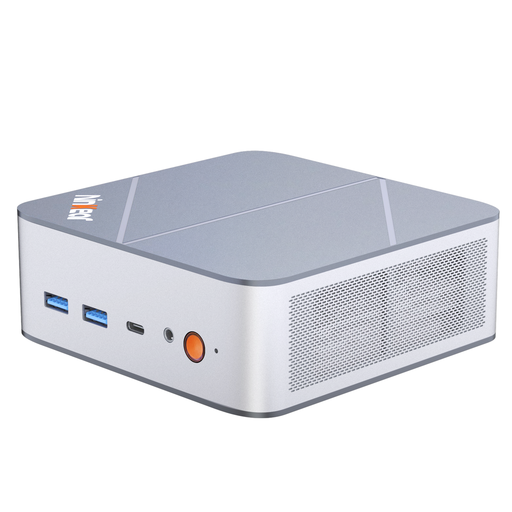
This Mini PC is worth considering if you’re looking for a compact desktop for viewing plans. First, check that the listed operating system supports the application you need.
The product title lists Windows 10/11, 16 GB DDR5, a 1 TB SSD and dimensions of 130 × 127.5 × 52 mm.
 No image available
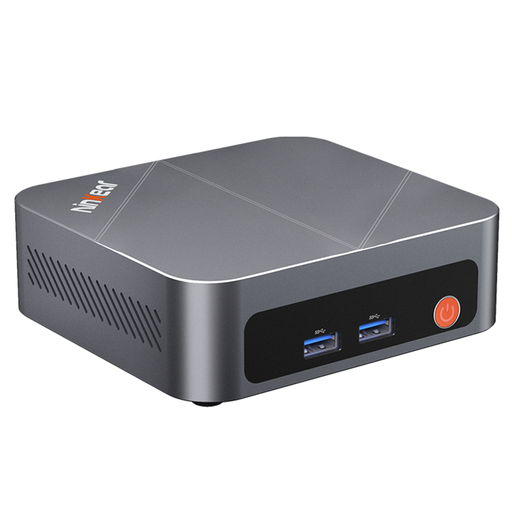
This compact option may suit you if you want to view plans across multiple screens. Check the connections and compatibility for your particular screen setup.
The product title lists Windows 10/11, Ubuntu compatibility, 16 GB DDR4, a 512 GB SSD and support for three displays.
 No image available
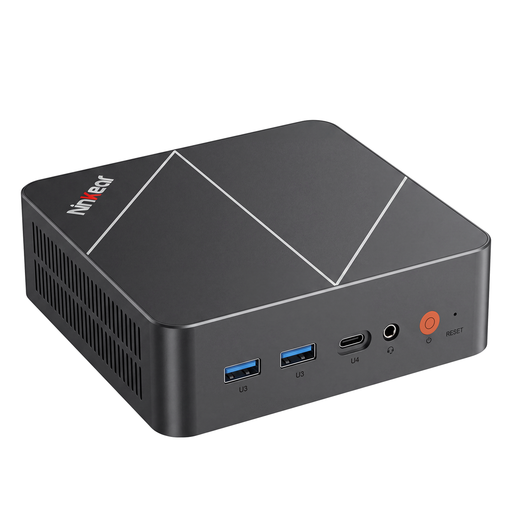
This Mini PC is a compact option for a multi-screen workspace. Check the specific SSD option and your screen setup before choosing.
The product title lists Windows 11, support for three 4K screens and a case volume of 0.66 l. The listed SSD capacities are 512 GB/1 TB.
 No image available
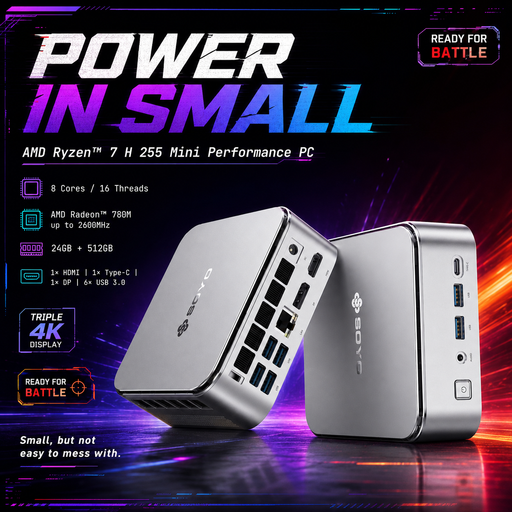
This Mini PC may suit you if you’re looking for a compact computer with the listed video outputs for your screen setup. Check that the connections match your displays.
This configuration is listed with Windows 11, integrated Radeon 780M graphics, and HDMI 2.0, DP 1.4 and Type-C video outputs. It measures 128 × 128 × 47.6 mm.
Not just because you’re reviewing building plans. What matters is whether you’re only viewing plans or editing them in a particular CAD or BIM application. Check the requirements for your software version and projects.
Allow space for your screen, input devices and plans laid out on the desk, and check the video connections and cable routing when you adjust the height. For workplace screen-based work, ASR A6 sets out the German Workplace Ordinance within its scope. It isn’t a general minimum PC specification for home desks.
Adjust the screen display to suit the task and your viewing distance, and change position rather than working only while standing. The Federal Institute for Occupational Safety and Health notes that standing for long periods can be tiring and is less suitable for tasks requiring high levels of concentration.
Check whether a screen, keyboard and mouse are included. If you buy as a consumer from a business seller, your statutory rights against the seller apply; these are separate from a voluntary guarantee. The consumer advice centre explains the difference. For a business purchase, don’t assume that consumer rules apply without checking.
ASR A6 doesn’t set out general CPU, RAM or GPU requirements for buying a PC for home use. It sets out requirements for screen-based work within its workplace scope. The requirements of your planning software need to be checked separately.