If you already have a suitable monitor, a Windows mini PC or Mac mini is a space-saving option, provided its operating system, memory and ports meet the needs of your layout software. If you need to buy a screen and computer together, an all-in-one is worth considering. A larger desktop makes sense mainly if you need the specific upgrade options it offers. If you’re creating a calendar for print, check the printer’s specifications too, and confirm what’s included in the exact product configuration you’re considering.
Which type of PC suits your needs?
Designers with an existing monitor
If you want to keep using your existing screen, you could choose a mini PC or Mac mini. First, check that the computer’s ports are compatible with your monitor and that its operating system and specifications work with the layout software you use.
Designers creating work for print
If your calendar is going to be printed, the printer’s specifications matter just as much as your layout software. Adobe distinguishes between print marks for commercial printing workflows and those for digital or office printing. Check the required settings before exporting your file.
Buyers looking for a complete workspace
If you’re buying a computer and monitor together, an all-in-one is an alternative to a mini PC with a monitor you choose separately. Compare the dimensions of the complete unit with the space available on your desk.
What should you check before buying?
Windows mini PC with a separate monitor
A good fit if: you want to keep using a monitor or choose one separately, and use Windows software. For InDesign 21.3 and later, Adobe specifies at least 8 GB of RAM on Windows and recommends 16 GB.
Consider: the computer takes up little desk space, but you’ll still need room for a screen and peripherals. Specifications and what’s included vary by configuration.
Mac mini with a separate monitor
A good fit if: the software you need and your existing devices are compatible with macOS, and you’re looking for a compact computer.
Consider: according to Apple, the memory in the Mac mini with M6 can’t be upgraded. You’ll also need to budget separately for a screen and peripherals. Choose the memory you need for the specific configuration before buying.
All-in-one PC
A good fit if: you also need a screen and the overall dimensions and screen position will work on your desk. For example, one HP configuration available in Germany combines a 27-inch QHD screen with a PC.
Consider: an integrated computer doesn’t necessarily mean a narrower overall unit or a screen position you can adjust freely.
Larger desktop PC
A good fit if: you have a suitable place for it beyond your small desk, and need specifications or internal upgrade options that a compact computer can’t offer.
Consider: the case needs extra room, and a larger PC isn’t automatically necessary just to design a calendar.
When planning an event calendar on a small desk, different buying priorities may matter most to different people. The percentages below show which question is the top priority in this particular scenario.
| Buying priority |
What to check |
Who is this especially important to? |
| Desk space and a complete workspace |
Dimensions and positioning of the computer, monitor and peripherals; display ports on the specific configuration. |
If desk space is limited, I want to plan for the footprint of the entire setup. Around 25% of consumers put available space first. |
| Software compatibility and specifications |
Check the specific software version against the operating system; compare RAM and available SSD storage with the requirements. For InDesign 21.3 and later, Adobe specifies at least 8 GB of RAM on Windows and recommends 16 GB. |
If I need to rely on particular calendar or layout software, I check its requirements for my operating system. Around 25% of consumers put software compatibility first. |
| Clear design and print output |
Check the monitor size, resolution and connections at your workspace; agree on bleed and print marks with the printer. |
If I want to review dates clearly and prepare a calendar for print, I also check the output requirements. Around 20% of consumers put print preview first. |
| Future upgrade options |
Check the RAM and SSD slots on the specific configuration; choose the memory before buying the Mac mini with M6. |
If I’m planning to work on more projects or files in future, I look at the available storage upgrades. Around 15% of consumers put upgrade options first. |
| What’s included and how much setup is needed |
Check what you already own against what’s included; for barebone configurations, check which components and operating system you’ll need. |
If I want to buy and set up as little extra equipment as possible, I check exactly what’s included. Around 15% of consumers put this first. |
Common misconceptions when buying a PC
-
A small computer makes for a small workspace
A mini PC doesn’t replace a monitor. With an all-in-one, it’s the width of the entire unit that helps determine whether it will fit on your desk.
Before choosing a type of PC, plan out the complete setup on the available space, including the screen and peripherals.
Depending on what you already have, you may also need to allow for a monitor, keyboard, mouse or suitable cables.
-
A barebone PC is ready to use straight away
The term may refer to a configuration supplied without RAM, an SSD or an operating system. It’s different from a fully equipped PC.
Check the full configuration name against the components actually included.
With the GMKtec barebone configuration, you’ll need to provide the RAM, SSD and operating system, and allow time for setup.
-
Today’s RAM will automatically be enough for future projects
Whether you can upgrade depends on the specific model. According to Apple, the memory in the Mac mini with M6 is integrated and can’t be upgraded.
Consider the software you actually plan to use and any projects you may take on later. Check upgrade details for the specific configuration rather than assuming they apply to every version.
-
A calendar that looks finished on screen is automatically ready to print
Bleed and print marks depend on the printing workflow. Adobe describes them for commercial printing and advises against assuming they’re needed for digital or office printing.
Ask your printer for its specifications before exporting. For digital-only output, don’t add print marks unless you have a specific reason to.
If you don’t check the requirements in advance, you may need to make corrections and do extra work as part of the printing process.
Brands worth considering
GEEKOM
The A5 Pro range includes compact Windows mini PCs. The German product page describes the A5 Pro 2026 Edition as having a Ryzen 5 7530U.
- COMPUTER BILD describes the tested model, with 16 GB of RAM and a 1 TB SSD, as compact and upgradeable.
- The tested device didn’t include a keyboard or mouse. The review doesn’t necessarily apply to every A5 Pro configuration.
MSI
The Cubi NUC 1M range is designed for a compact Windows workspace with a monitor chosen separately.
- MSI lists two RAM slots and several storage options for the range.
- The processor and operating system vary by configuration. An independent review of one tested device doesn’t necessarily apply to every version.
Apple
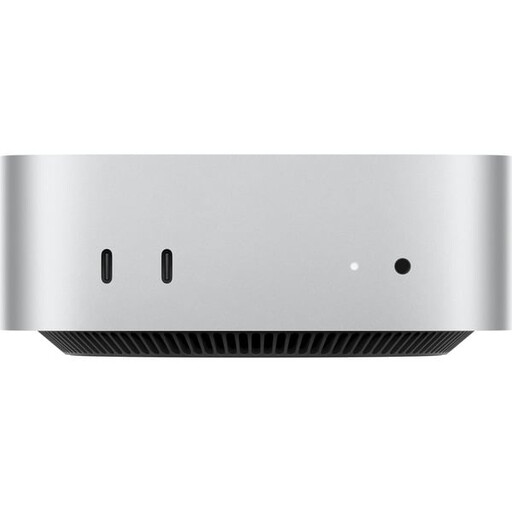
The Mac mini is a compact macOS computer for use with a separate screen, provided it’s compatible with the software you use.
- Apple lists the M6 model as measuring 12.7 × 12.7 × 5.0 cm.
- According to Apple, its integrated memory can’t be upgraded. You’ll need to plan separately for a screen and peripherals.
HP
HP offers a compact computer in the Pro Mini 400 G9, as well as the OmniStudio X all-in-one, which has an integrated screen.
- One OmniStudio X configuration available in Germany combines a 27-inch QHD screen with 16 GB of RAM.
- Components in the Pro Mini 400 G9 may vary by configuration. Check that the all-in-one’s screen size will fit on your desk.
GMKtec
The NucBox M6 Ultra is available as a compact Windows PC or barebone option.
- The manufacturer specifically offers a barebone version, letting you choose the components for your setup.
- This version doesn’t include RAM, an SSD or an operating system. Check what comes with the specific configuration.
Joybuy products for a compact workspace
This selection includes mini PCs for a workspace where you’ll need to plan separately for a screen, including Windows and Mac mini configurations. Before buying, check the product details for the specific version intended for the German market, as well as software compatibility, what’s included and the available ports.
 No image available
SOYO Y5Pro mini PC, Intel Core i5 8250U/8350U, 8 GB DDR4, 256 GB SATA SSD, Windows 11
A Windows mini PC option for a workspace with a monitor chosen separately. Check the exact processor configuration against your software.
Specifications listed in the product name: Intel Core i5 8250U/8350U, 8 GB DDR4, 256 GB SATA SSD and Windows 11.
View at Joybuy
 No image available
Apple Mac mini M6, 16 GB Unified Memory, 256 GB SSD
A macOS option for a workspace with an external screen, provided your layout software is compatible with macOS.
Specifications listed in the product name: M6 with 12-core CPU and 12-core GPU, 16 GB Unified Memory, 256 GB SSD, Thunderbolt 4 and HDMI. You’ll need to plan separately for a screen, keyboard and mouse.
View at Joybuy
 No image available
Apple Mac mini M6, 24 GB Unified Memory, 512 GB SSD
A macOS option for designing calendars with a separately connected screen, provided it’s compatible with the software you need and the devices you already own.
Specifications listed in the product name: M6 with 12-core CPU and 12-core GPU, 24 GB Unified Memory, 512 GB SSD, Thunderbolt 4 and HDMI. You’ll need to plan separately for a screen, keyboard and mouse.
View at Joybuy
 No image available
Apple Mac mini A3534 M6, 24 GB Unified Memory, 1 TB SSD
This Mac mini configuration is designed for a workspace with a separate screen. Check your layout software’s compatibility first.
Specifications listed in the product name: M6 with 12-core CPU and 12-core GPU, 24 GB Unified Memory and 1 TB SSD. According to the product description, the Mac mini and power cable are included. Other accessories and a screen are included only if explicitly stated for the version on sale.
View at Joybuy
 No image available
Apple Mac mini MHQN4ZD/A_CTO M5 Pro, 24 GB Unified Memory, 512 GB SSD
A macOS option for a workspace with an external screen, provided the software you need and your existing devices are compatible.
Specifications listed in the product name: M5 Pro with 18-core CPU and 20-core GPU, 24 GB Unified Memory, 512 GB SSD and 2.5 Gbps Ethernet. A screen, keyboard and mouse are included only if explicitly stated for the version on sale.
View at Joybuy
Frequently asked questions
Do I need a dedicated graphics card for InDesign?
Adobe’s general minimum requirements for Windows don’t make a dedicated graphics card compulsory across the board. Adobe lists additional GPU requirements for optimum GPU performance. Check these if you need that feature, and compare the requirements with the specific version of the software you use.
Should I always enable crop marks for a printed event calendar?
No. Print marks aren’t needed for every type of output. Adobe recommends checking your print provider’s requirements and distinguishes between commercial printing workflows and digital or office printing.
Can I upgrade the memory in a Mac mini with M6 later?
No. Apple says the memory in this model is integrated into the chip package and can’t be upgraded. Choose the right configuration before buying the specific version.
What are my rights when buying online in Germany if the device isn’t suitable or is faulty?
For online purchases by consumers, you generally have a 14-day right to cancel, although exceptions apply and you should check when the cancellation period starts. The Verbraucherzentrale distinguishes this right from statutory rights against the seller if an item is faulty, and from a voluntary guarantee. These consumer rules don’t automatically apply to business purchases.
What should I look for in a desktop PC for the German market?
Check the information for the specific product configuration, including any required markings and German-language instructions for use and safety. The Bundesnetzagentur lists CE marking, product and manufacturer identification, and required information among the points checked during market surveillance. The CE mark is a manufacturer’s declaration, not an independent quality mark.


