If you're preparing several portions
If you want to purée enough for a family meal in one go, compare the usable capacity of the specific container with the amount your recipe makes – not just the bowl's stated capacity.


For preparing several portions for the family and tackling regular chopping or grating jobs, a food processor could be a good fit, provided its usable capacity and the accessories included match your recipe. If you mainly want to purée peas that have already been cooked and don't need any other functions, a hand blender may offer a more direct way to get the job done. With either type of appliance, check the temperature rating of the specific container and how much cleaning it involves.
If you want to purée enough for a family meal in one go, compare the usable capacity of the specific container with the amount your recipe makes – not just the bowl's stated capacity.
If consistency matters to you, check which blades, pulse functions or blending attachments come with the model, and what the manufacturer recommends it for.
If you regularly chop, slice or grate ingredients as well as making purée, extra accessories could come in handy. Weigh up what's included against the space it takes up and the cleaning involved.
A good fit if: you want one appliance system for making pea purée and tackling regular chopping or grating jobs.
Things to consider: The bowl and accessories need to be fitted, stored and cleaned. The stated capacity doesn't tell you how much purée you can make.
A good fit if: you want to blend as well as chop, and the chosen model comes with a blending jug.
Things to consider: The work bowl and blending jug have separate capacities. Extra parts need space and have to be cleaned.
A good fit if: you mainly purée cooked peas or other soft vegetables and don't want to transfer the contents to a separate work bowl.
Things to consider: A hand blender won't automatically replace a food processor's chopping and grating functions.
| What to consider | What to check | Who is this especially important to? |
|---|---|---|
| Amount per batch | Compare the usable processing and liquid capacity of the specific container with the amount your recipe makes. | If I'm preparing several portions for a family meal, I want to avoid having to keep topping it up. Around 36% of consumers prioritise getting the right amount per batch. |
| Desired texture | Check what the blade, pulse function or blending jug is designed for, as well as the guidance for the specific container. | If I want my purée to have a particular texture, I need to know what the specific appliance can achieve. Around 29% of consumers put their desired purée result first. |
| Other kitchen tasks | Compare what's included with the exact model variant against the chopping, slicing or grating you regularly do. | If I want to use the appliance for other prep jobs too, the right attachments matter more than a large accessory set. Around 21% of consumers prioritise versatility. |
| Cleaning and storage space | Check the appliance's dimensions, how many parts you'll actually use and the cleaning guidance for the specific model. | If I'm short on space or want to keep washing up to a minimum after a meal, I can do without functions I rarely use. Around 14% of consumers focus first on cleaning and storage space. |
Bowl capacity and the permitted liquid capacity may be listed separately. The stated capacity alone doesn't tell you the permitted fill level or how much pea purée you can make in one go.
Compare your portions with the permitted processing or liquid capacity in the instructions for the specific model. For example, Kenwood FDM73.850SS lists a 3.0 l bowl capacity and a separate 1.5 l liquid capacity for the work bowl.
If your recipe exceeds the permitted fill level, you may need to work in batches and do extra cleaning.
The work bowl, blending jug, lid and blade may each have different temperature and cleaning guidance. A feature of one container doesn't automatically apply to the others.
Check the instructions for the exact container and accessories you plan to use. Don't assume dishwasher guidance or temperature resistance applies to the whole appliance without checking.
A food processor can handle other prep jobs as well as puréeing. If you only purée occasionally, a hand blender may offer a more direct way to get the job done. The two types of appliance don't replace each other for every function.
Only opt for extra attachments if you regularly plan to do the jobs they're designed for. Remember to consider storage space and cleaning, too.
MultiPro models combine a work bowl with other food-preparation functions. Some variants also include a blending jug.
Braun offers both food processors with blending jugs and hand blenders. These are different types of appliance with different ways of working.
The Food Processor 5KFP0719EBM is an option for buyers who want to combine puréeing with other food-preparation tasks.
This selection includes electric choppers and a food processor for making purée and tackling other food-preparation tasks. For each model variant, check that its intended use, containers and accessories are right for your recipe.
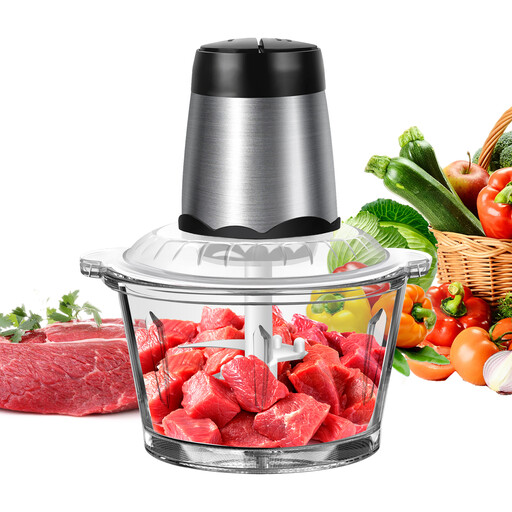 No image available
Could be worth considering for smaller prep jobs. Before using it to make pea purée, check the product details and instructions to confirm it's designed for this purpose.
The product name specifies a 2-l glass bowl and stainless steel blades.
 No image available
Only consider it for pea purée if the model details confirm it's designed for this type of processing and the ingredients have cooled sufficiently.
The product name specifies two glass bowls, with capacities of 2 l and 0.6 l, and 300 W. According to the product details, the bowls and lids aren't heat-resistant; avoid sudden temperature changes of more than 50 °C.
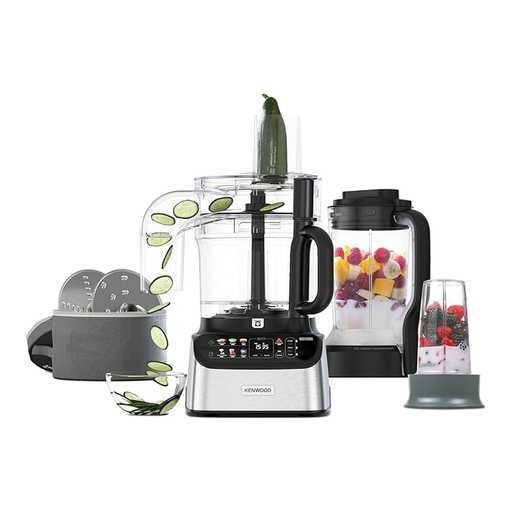 No image available
Could be a good fit if you want to tackle other prep jobs as well as making purée. Check that the containers, capacities and attachments included with the specific variant suit your recipe.
The product name describes it as a food processor, with model variant FDM73850SS.
 No image available
Before choosing it for pea purée, check that the model's stated use and recommended fill level suit the way you plan to prepare it.
The product name specifies three stackable stainless steel bowls with capacities of 2.5 l, 2.2 l and 1.8 l, and 350 W. According to the product details, pulse operation is designed for up to 30 seconds per cycle.
 No image available
Only consider this model for purée if the intended use of the specific variant is suitable for cooked peas and the amount you want to prepare.
The product name specifies a 2-l bowl, 300 W, two speeds and stainless steel blades. According to the product details, continuous operation is limited to 40 seconds, followed by a break of at least 2 minutes. The appliance should be allowed to cool down after three cycles.
No, you can't tell from the nominal capacity alone. Kenwood Germany lists a 3.0 l bowl and a 1.5 l liquid capacity for the work bowl of the FDM73.850SS. Compare the amount your recipe makes with the limits in the instructions for the specific model.
First, check the temperature rating of the specific container you plan to use and read the instructions for the model. Guidance for a blending jug doesn't automatically apply to the work bowl. For example, Kenwood describes the FDM72.990SS as having a Thermoresist glass blending jug, but you shouldn't assume this applies to other parts.
The German Federal Institute for Risk Assessment recommends cooling cooked leftovers to below +7 °C within a few hours, storing them in the fridge and eating them within two to three days. This is food-safety advice, not a feature of the appliance.
Regulation (EC) No 1935/2004 sets requirements for materials that come into contact with food. Under normal or foreseeable conditions of use, they must not transfer amounts of their components that could endanger health or unacceptably alter food. This doesn't confirm anything about an individual model. According to Your Europe, CE marking is required only for products covered by EU harmonisation rules that explicitly require it.
If the product is faulty, your statutory rights apply against the seller; these are separate from any voluntary guarantee. The consumer advice organisation Verbraucherzentrale also notes that online purchases generally come with a 14-day right to cancel, starting from the date you receive the goods. The terms of your specific purchase may affect your rights.