Batch-cooking with one soup pan
If you’re making several portions in one pan, check whether you can turn the heat down to a suitable level once the soup has come to the boil. Also make sure the pan and cooking zone are a good match.


Choose your hob based first on the base of your pan, its diameter and the space available for a full soup pan. One suitable single hob is enough for one pan; if you want to cook soup and a side dish at the same time, two cooking zones make sense. Induction requires a suitable magnetic pan base. According to the German Environment Agency, it is particularly efficient when heating up, while the efficiency difference becomes smaller when food is kept warm for longer. A hob is no substitute for cooling and refrigerating portions safely.
If you’re making several portions in one pan, check whether you can turn the heat down to a suitable level once the soup has come to the boil. Also make sure the pan and cooking zone are a good match.
If you want to keep using your current soup pan, choose your hob based on the material and diameter of its base. Induction requires a suitable magnetic pan base; Bosch Home Appliances explains this requirement for induction hobs.
If you want your soup and another dish to be ready at the same time, weigh up the convenience of a second cooking zone against the extra space it takes up. The Severin DK 1014, for example, has two separate controls.
For pea soup, maximum power isn’t the only thing that matters. The right heating technology, easy-to-manage settings for simmering and enough room for a full pan are all important.
| What matters | What to check before buying | Who should pay particular attention |
|---|---|---|
| Controlling the heat while simmering | The controls and power settings of the specific model; don’t mistake a timer for temperature control. | If I want to leave the soup to cook after it has come to the boil, I need settings that work well with my pan. Around 36% of consumers put ease of adjustment first. |
| Using a pan I already own | Check that the pan is suitable for induction and compare its base diameter with the cooking zone specifications. | If I want to keep my soup pan, its heating technology needs to match the hob. Around 29% of consumers prioritise compatibility with their existing pan. |
| Space and pan weight | Check the appliance dimensions, cooking zone size and, where applicable, maximum load capacity separately. | With a large, full soup pan, I need a stable surface and must stay within the stated load limit. Around 21% of consumers put space and weight requirements first. |
| Cooking two dishes at once | Check the number and size of the cooking zones, whether they can be controlled separately, the space available and the appliance connection requirements. | If I want to cook soup and a side dish at the same time, a second cooking zone is important, even though it takes up more space. Around 14% of consumers prioritise having two cooking zones they can use at the same time. |
Glass ceramic describes the surface, not the heating technology. The Rommelsbacher CT 2010/IN uses induction, whereas the CT 2203/TC TM uses HiLight radiant heating elements.
Check the heating technology and whether your pan base is suitable by looking up the exact model number.
Cooking zone size, appliance dimensions and maximum load capacity each tell you something different. With a full soup pan, both the pan and cooking zone need to be a good match, and the weight must be within the limit stated for the model.
Compare the pan base diameter and the weight of the filled pan with the manufacturer’s specifications, and measure the available space.
An automatic shut-off timer stops the heating, but it won’t cool down your finished soup. The German Federal Institute for Risk Assessment recommends cooling leftovers to below +7 °C within a few hours and eating them within two to three days.
As well as cooking time, plan for portioning, cooling, refrigerated storage and transporting your lunch to work.
The models considered include an induction hob and a glass ceramic hob with radiant heating.
The hobs considered range from single cast-iron cooking zones to double hobs with cast-iron or induction technology.
The Touch 2000 considered here is a portable single induction hob for compatible pans.
The EKI 3569 considered here is a single induction hob.
The Einzel Elégance 58105 considered here is a portable induction hob for compatible cookware.
The selection below includes hobs with one or more cooking zones for making soup and, if you like, a side dish.
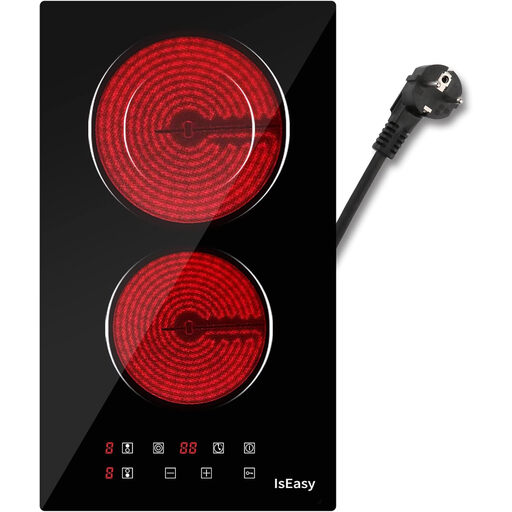 No image available
Two cooking zones are worth considering if you want to make soup and a side dish at the same time. Check that the installation type and available space suit your kitchen.
3200 W; two cooking zones; nine power settings; 1–99-minute timer.
 No image available
This could suit a single soup pan if its base is induction-compatible and its diameter falls within the model’s specifications.
2100 W; nine power settings; suitable magnetic cookware with a diameter of 12–26 cm; 28 cm glass ceramic surface; timer up to 8 hours.
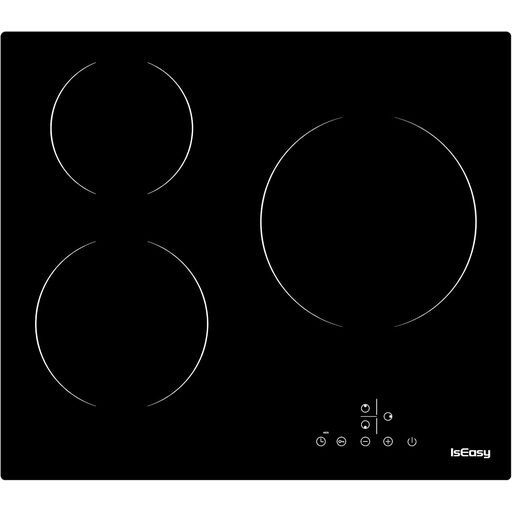 No image available
Three cooking zones are an option if you want to use several pans at once. Measure the space available before buying.
60 cm wide; 5500 W; three heating zones; nine power settings; timer.
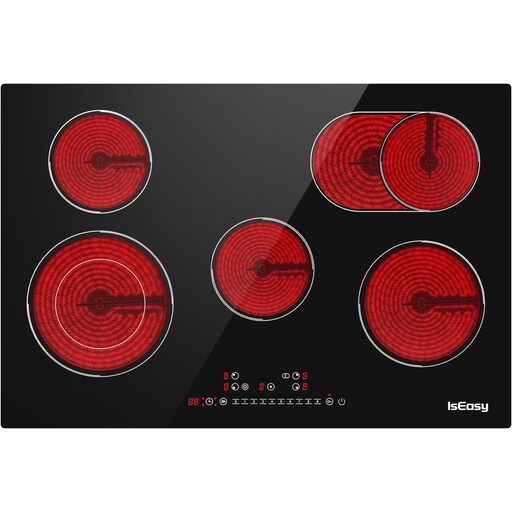 No image available
Five heating zones are designed for using several pans at once. Check that the width and installation type suit your cooking area.
77 cm wide; 8600 W; five independent heating zones; nine power settings; programmable timer; pause function.
 No image available
Two independently controlled zones could suit you if you want to cook soup and a side dish at the same time. Both pans must be suitable for induction.
Two cooking zones rated at 1500 W and 1000 W; five temperature settings; according to the product description, also designed for simmering and slow cooking at a low heat.
According to the German Federal Centre for Nutrition, split peas do not need soaking; dried peas with their skins on should be soaked overnight. Follow the cooking time on the packet rather than relying on a hob setting.
No. The pan base must be suitable for induction and fit the diameter range specified for the particular model. You should also check the stated load capacity when using a large, full pan; for example, CASO specifies a maximum of 6 kg for the Touch 2000.
Divide larger quantities between several shallow containers to help them cool, then refrigerate the portions. The German Federal Institute for Risk Assessment recommends cooling leftovers to below +7 °C within a few hours and eating them within two to three days. Make sure they stay cool during transport and until you’re ready to eat.
No. According to the European Union’s Your Europe website, the manufacturer is responsible for ensuring that a product meets the relevant EU requirements and carries the required CE marking; it is not an independent test certificate. If something goes wrong, statutory rights against the seller are separate from a voluntary guarantee, as explained by the consumer advice centre.