
Lieferung heute & morgen

Qualitätsgarantie

Willkommens-Angebote freischalten: KOSTENLOSE Lieferung | Bis zu 80 % RABATT | Kostenlose 30-Tage-JoyPlus-Testphase
App herunterladen
Peach iced tea is available in Germany as a ready-to-drink beverage, multipack, powder or concentrate. The differences are not limited to flavour; they also include sugar content, serving size, tea base, packaging and storage. Anyone choosing solely based on the eye-catching peach label or a low price per pack may overlook important details.
A multipack may look affordable at first glance. However, the price per litre is more meaningful. For example, a carton containing 12 bottles of 0.4 litres holds 4.8 litres, while six bottles of 1.5 litres provide 9 litres in total. For households, offices or events, you should therefore always compare the total quantity in litres.
With individual servings such as 190- or 230-millilitre pouches, the price per litre is often higher. However, these formats are ideal for taking with you, keeping at your desk or enjoying as a controlled small portion.
Many products combine water, sugar, tea extract and flavouring. The actual peach juice content may be low. For example, according to the product information, Pfanner Peach Iced Tea 8x0.75L contains 1% peach juice from concentrate. Other products declare a content of 0.1 or 1%.
If you are looking for a pronounced fruit flavour, you should therefore check the ingredients list. Terms such as peach flavouring, peach juice from concentrate and peach extract describe different ingredients and should not be treated as equivalent.
Some drinks contain less sugar but are not sugar-free. According to the product data, AriZona Peach Iced Tea contains 4.6 g of sugar per 100 ml. In a 0.5-litre bottle, this equates to 23 g of sugar. Fuze Tea Peach contains 6.9 g of sugar per 100 ml, while the Fuze Tea Peach-Rose No Sugar variant contains 0 g of sugar and 1 kcal per 100 ml according to the stated information.
In sugar-free peach iced tea, sweeteners such as sucralose, acesulfame K, cyclamate or steviol glycosides replace the sugar. This changes the flavour profile. If you want to avoid sweeteners, you should read the full ingredients list.
Nutritional values are generally given per 100 ml. In everyday use, however, the actual amount you drink is more relevant:
For families and events, a large pack of iced tea containing 1.25 or 1.5 litres may be practical from a logistical point of view. For taking with you, 0.33-, 0.4- or 0.5-litre bottles are easier to portion.
Peach iced tea may be based on brewed black tea, soluble tea extract or simply a flavoured tea drink. Pfanner and BraTee specifically state that they use brewed black tea. According to the product description, INSTICK Iced Tea Drink Powder Peach contains 25% black tea extract and highlights caffeine.
If you want to reduce your caffeine intake, you should check the specific product labelling. Tea drinks are not automatically caffeine-free. The information on the packaging is particularly important for children, pregnant women and people who are sensitive to caffeine.
Storage is also part of the selection process. Unopened products should generally be stored in a dry, cool place away from direct sunlight. Opened bottles or cartons should be kept in the fridge and, depending on the packaging, consumed within a few days.
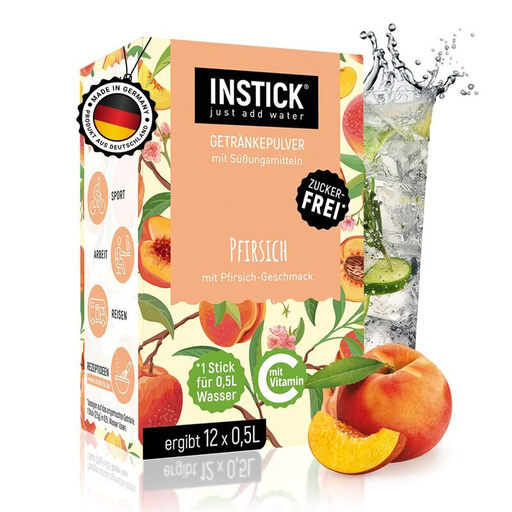
Why this product suits this profile: Depending on the dosage, twelve sticks make 6 to 12 litres of drink. The powder is suitable for use at home, in the office or on the go when water is already available.
The yield is stated in litres per stick. This makes it easier to plan your actual requirements than relying solely on the pack price.
According to the product information, it is sugar-free, vegan and contains vitamin C. You can adjust the intensity by changing the amount of water.
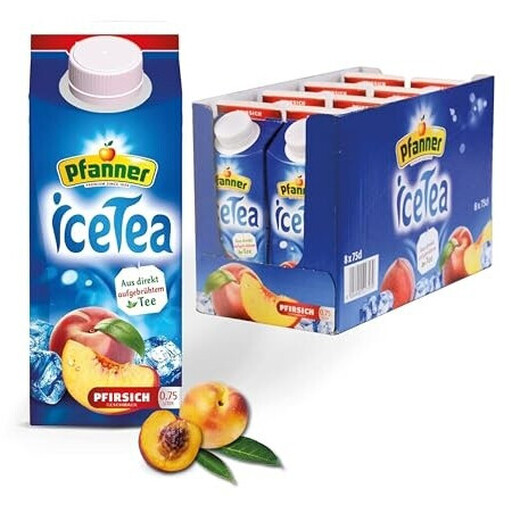
Why this product suits this profile: The recipe specifies brewed black tea, rosehip, hibiscus and 1% peach juice. Eight bottles provide 6 litres in total.
The tea base and declared juice content are clearly specified in the product data. With 25 kcal and 6.2 g of sugar per 100 ml, the nutritional values are easy to verify.
Brewed tea, 0.75-litre bottles and, according to the product information, no allergens requiring declaration.
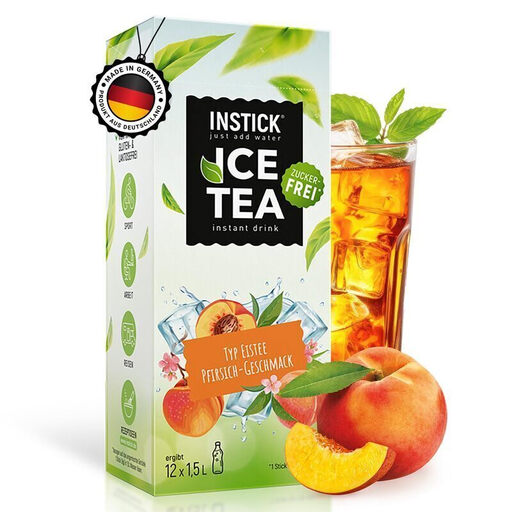
Why this product suits this profile: Each stick is designed for 1.5 to 2.5 litres; according to the product information, up to 30 litres are possible in total. This makes it suitable for offices, parties and regular consumption.
The yield is stated not only per pack but also per stick. This allows you to adjust the amount of water to suit your preferred flavour and the occasion.
According to the product description, it is sugar-free and vegan. It contains black tea extract and caffeine; the stated 50 mg per serving should be taken into account when planning consumption.
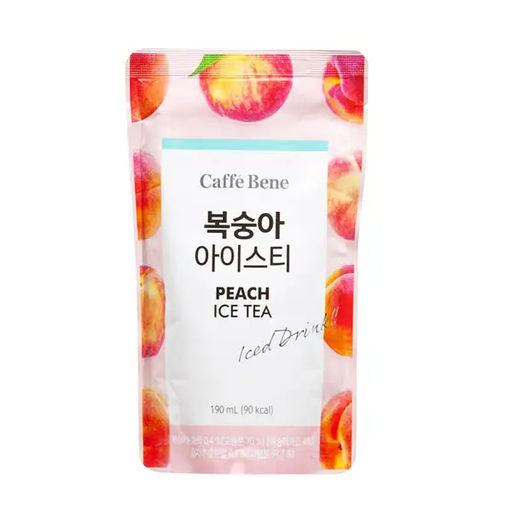
Why this product suits this profile: The 190 ml pouch from South Korea is an individual serving and, according to the product description, can be served chilled or over ice.
The serving size means you do not have to open a large carton and then store it for several days. The ingredients and nutritional values are available on the product page.
Compact 190 ml format, made in South Korea and, according to the product information, 49 kcal and 10.5 g of sugar per 100 ml.
We have put together a complete, regularly updated list of products that fully meet these strict selection criteria and the safety regulations applicable in the EU.
Sugar-free options such as INSTICK or Fuze Tea Peach-Rose No Sugar contain no sugar according to the respective product information. They are sweetened with sweeteners. To make the right choice, you should consider both the nutritional table and the ingredients list.
Once opened, ready-to-drink iced tea should be refrigerated and consumed promptly. Several product descriptions state two to three days or ‘within a few days’. The instructions on the relevant packaging are decisive. Powder and unopened concentrates generally do not need to be refrigerated, but should be stored dry, sealed and protected from heat.
This depends on the specific product. The product information states that the INSTICK powder and Pfanner Peach Iced Tea 6x2L are suitable for vegans. For other products, you should check the manufacturer’s labelling, particularly with regard to flavourings, additives and any information about the production process.