
Lieferung heute & morgen

Qualitätsgarantie

Willkommens-Angebote freischalten: KOSTENLOSE Lieferung | Bis zu 80 % RABATT | Kostenlose 30-Tage-JoyPlus-Testphase
App herunterladen
Peach iced tea is one of those practical drinks for home, the office, university and on the go. The selection ranges from classic peach iced tea made with black tea to oolong varieties, peach and hibiscus iced tea, powder sticks and bulk packs.
However, the product name alone says little about the ingredients, sweetness or actual yield. If you are looking to buy peach iced tea, you should therefore look beyond the brand and packaging design.
Many drinks contain only a low single-digit percentage of peach juice from concentrate. For example, Fuze Tea Black Tea Peach Hibiscus lists 1% peach juice and 0.12% black tea extract. The flavour also comes from added flavourings and other ingredients.
Other products differ considerably. According to the product specifications, Senpure Meco Peach Pomelo Juice Tea Drink contains 15.5% peach juice concentrate, 7.5% apple juice concentrate and 2% grapefruit juice concentrate. This does not automatically make the drink suitable for every palate, but it does show why checking the ingredients list is worthwhile.
A sugar-free iced tea may contain sweeteners or sugar substitutes. Product descriptions and nutrition tables should also be considered together. NAYUKI Peach Oolong Tea is described as a sugar-free option, yet its nutritional information lists 4.8 g of sugar per 100 ml, while the ingredients include fructose syrup. These details should be checked against the current packaging before purchase.
Preparation is also important for powders and concentrates. A more concentrated mix may have different nutritional values per serving than a preparation diluted with one litre of water.
A 0.33-litre iced tea is ideal for individual servings and can be consumed immediately after opening. A 0.5-litre iced tea fits easily into a backpack, bag or cup holder. Bottles holding 0.75, 1.25 or 2 litres are suitable for families, offices and stocking up, but require more refrigerator space once opened.
Before choosing a bulk pack of iced tea, it is therefore worth doing a simple calculation: the total volume, number of people and expected consumption should all match.
Peach black tea usually has a bolder, more distinctly tea-like taste. With directly brewed varieties, the tea character is often more pronounced. Peach oolong tea is frequently described as more aromatic and mellow, while hibiscus and rosehip can add tart or floral notes.
Look for specific details such as:
Comparing values per 100 ml is more meaningful than looking at the figures for an entire bottle. In the available product data, the values range from 19 kcal and 4.6 g of sugar per 100 ml for Fuze Tea Peach Hibiscus to 37 kcal and 8.8 g of sugar for Durstlöscher Peach Iced Tea.
Anyone looking to reduce their sugar intake should specifically seek a reduced-sugar or sugar-free recipe. When sweeteners such as sucralose, acesulfame K, steviol glycosides or cyclamate are used, the ingredients list is decisive. Terms such as “light” or “mindful” are no substitute for checking the nutritional information.
Cans or small bottles are convenient for individual consumption. A pack of 24 cans at 0.33 litres each contains 7.92 litres in total and can be a sensible choice for offices, households or events. Families often opt for 1.5- or 2-litre bottles, but should follow the instructions regarding refrigeration and consumption after opening.
Powder sticks and concentrates reduce transport and storage volume. However, they require water, a suitable mixing container and accurate dosing.
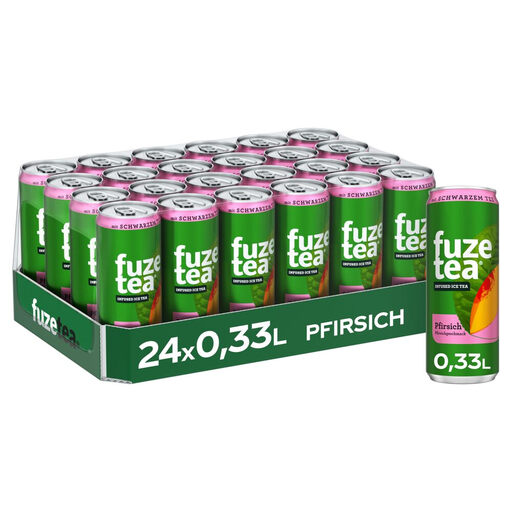
Why it is a good fit: The individual servings are ideal for travel, the workplace or the refrigerator in a shared household.
The volume per can and the total quantity of 7.92 litres are clearly stated. According to the product data, the sugar content is 6.5 g per 100 ml.
24 cans of 330 ml each; black tea drink with 1% peach juice from concentrate.
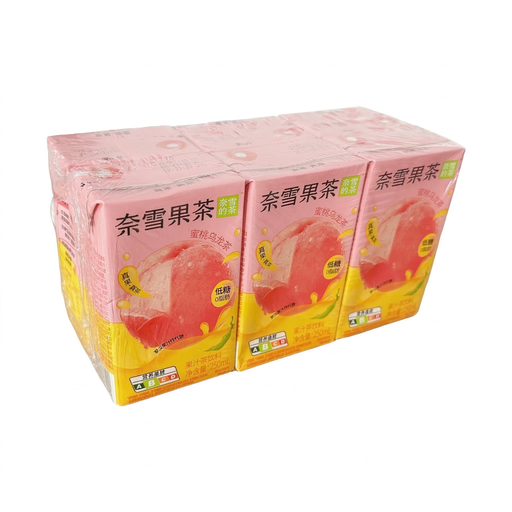
Why it is a good fit: The compact pack contains six servings and combines oolong tea with apple and peach juice.
Before buying, check the seemingly contradictory claims of “sugar-free” and the stated 4.8 g of sugar.
Stated oolong tea content of at least 4 g/l and a total fruit content of at least 10%.
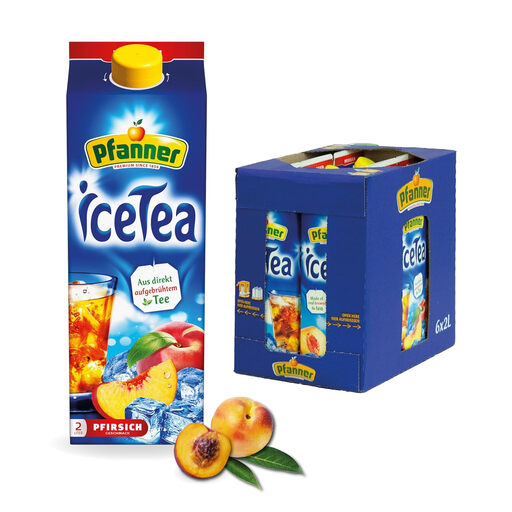
Why it is a good fit: With a total volume of 12 litres, this pack is designed for regular consumption at home or in the office.
The quantity should match the available refrigerator space and expected consumption. According to the product information, the drink should be refrigerated and consumed promptly after opening.
Six 2-litre containers, directly brewed black tea and peach juice from concentrate.
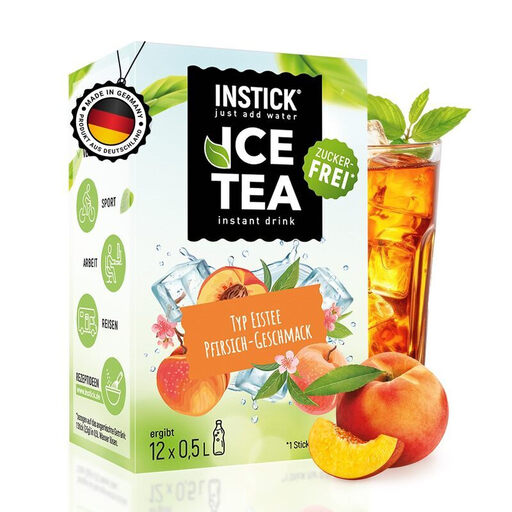
Why it is a good fit: Depending on the dilution, twelve sticks make 6 to 12 litres of drink and are easy to store.
Pay attention to the required amount of water and the sweetener list. The product information also contains differing references to caffeine, so the packaging label should be treated as authoritative.
Powder format, twelve individual sticks, sugar-free according to the product description and adjustable to 0.5–1 litre of water.
The full range of peach iced tea includes different tea types, serving sizes, recipes and pack quantities. Check the latest product information before buying.
For individual breaks, 0.33-litre cans or 0.4-litre bottles are convenient. For several people, a multipack with 0.75, 1.25 or 2 litres per container may be more economical. Refrigerator space, consumption levels and the instructions for use after opening are the key considerations.
Yes, some products are marketed as sugar-free or reduced-sugar options, including powders and concentrates. However, always check the ingredients list, nutrition table and current packaging information. Sweeteners or sugar substitutes may be present even when no table sugar has been added.
This depends on the product. Several manufacturers recommend refrigerating opened bottles and consuming them within a few days. Small cans are intended to be consumed immediately. The specific manufacturer’s instructions on the label take precedence.