Hosts making several glasses
If you’re making peach lassi for several friends, check the usable capacity and fill markings, and allow for the possibility of blending in batches.


For several glasses of peach lassi, compare the total amount you plan to make with the blender jug’s usable capacity. With compact cups, you may need to blend in several batches. If your recipe includes frozen peaches or ice, check that the specific model is explicitly suitable; this isn’t automatically a deciding factor for fresh, soft ingredients. Also check which parts can be cleaned between batches.
If you’re making peach lassi for several friends, check the usable capacity and fill markings, and allow for the possibility of blending in batches.
If you want to use frozen peaches or ice, check that the specific model is explicitly approved for those ingredients.
If you’re blending portions one after another, find out in advance how the cup, lid and blades can be cleaned.
First, compare the amount you need with the usable fill limit. Then check that the ingredients the blender can handle, its cleaning requirements and its size suit your recipe and kitchen.
When choosing a blender for peach lassi to serve to guests, these are the key considerations.
| Consideration | What to look for when buying | Who it matters most to |
|---|---|---|
| Enough lassi for everyone | Compare the fill markings and usable capacity with the amount of drink you plan to make per batch. | If I’m preparing several glasses, I want to know whether I’ll need to blend another batch. Around 39% of consumers say having enough for all their guests is their main concern. |
| Frozen ingredients | Check the ingredient guidance for the specific model; wattage alone doesn’t confirm that it’s suitable for ice. | If frozen peaches or ice are a key part of my recipe, I need the model to be explicitly approved for them. Around 23% of consumers have this as their main concern. |
| Cleaning after blending | Check the cleaning instructions separately for the cup, lid, seals and blades. | If I’m serving several portions, I want to know how much cleaning will be involved afterwards. Around 23% of consumers say cleaning is their top concern. |
| Space and single servings | Compare the appliance’s dimensions and accessories with your storage space and usual portion size. | If I’ll mostly use the blender for single drinks afterwards, I also care about how much space it takes up. Around 15% of consumers have this as their main concern. |
A jug’s total capacity can be greater than the amount you can actually blend. For the Tefal Blend Up BL19H4F0, Tefal lists a total capacity of 0.85 l and a usable capacity of 0.7 l for the larger jug.
Compare the usable fill limit with the amount in your recipe per batch.
A smaller usable capacity may mean extra batches or the need for another compatible cup.
Motor power alone doesn’t prove that a blender is suitable for ice or guarantee a particular result when making peach lassi. In a test published via OTS on 29 October 2026, the Association for Consumer Information (Verein für Konsumenteninformation) noted that high power ratings alone don’t guarantee good blending results.
Check the ingredient guidance and instructions for the specific model instead of basing your choice solely on its wattage.
Cleaning instructions apply to the parts specified and can vary from model to model.
Check the instructions separately for the cup, lid, seal and blade assembly.
If some parts need to be washed by hand, several batches will mean more cleaning afterwards.
The Kult X Mix & Go is designed for compact portions made and served in the same cup.
The VitaPower Serie 2 MMB2111S is a compact blender with a drinking cup.
The Blend Up BL19H4F0 comes with two on-the-go bottles and automatic programmes.
The 5000 Series HR2767/00 is an option for recipes containing frozen fruit, ice cubes or nuts.
The Ultra 1200W NB1206MB comes with two blending cups and on-the-go lids.
The following Joybuy options include compact blending cups, a hand blender and a jug blender for making peach lassi.
 No image available
An option if you’re planning to use frozen fruit or ice; the product description lists these ingredients and says the removable parts are dishwasher-safe.
The cup capacity is listed as 710 ml. Check the instructions for ingredient quantities and cleaning.
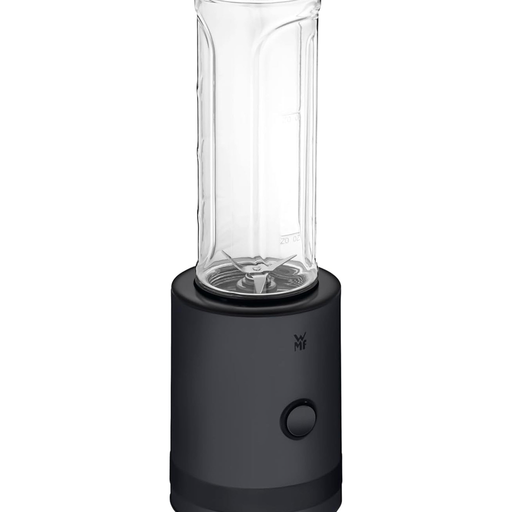 No image available
The two blending and drinking cups could be useful when preparing several portions; the description also lists an ice-crushing function.
The stated maximum fill line is 600 ml per cup. The product description says the cups and lids are dishwasher-safe.
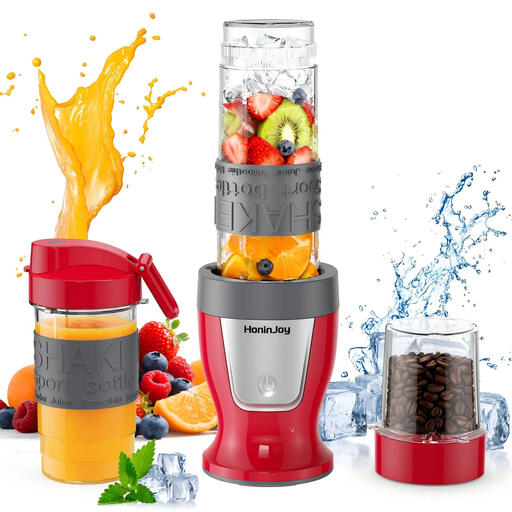 No image available
The product description lists soft fruit and ice crushing among the intended uses for this blender, which comes with two portable cups.
The cup sizes are listed as 20 oz and 14 oz. Check the instructions for the recommended ingredients and fill quantities.
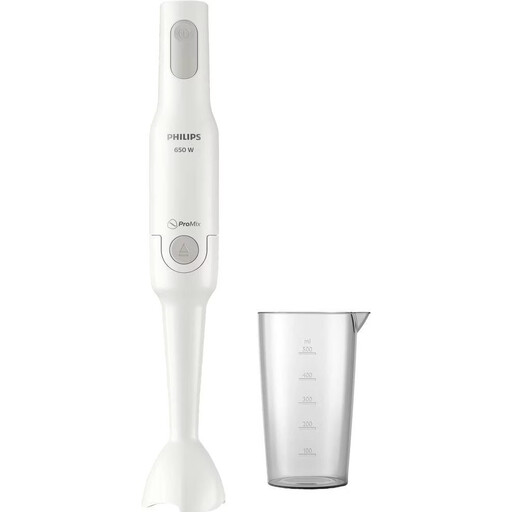 No image available
The included blending beaker could be handy if you want to make the lassi directly in it. This is a hand blender, not a blend-and-drink cup.
The product specifications list ProMix technology and removable, dishwasher-safe parts.
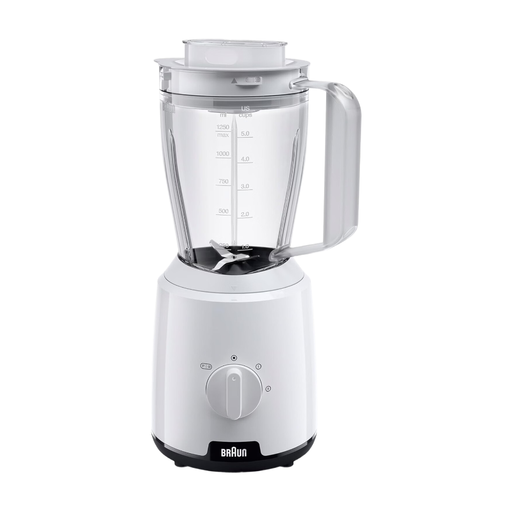 No image available
This jug blender could be a good option for several guests if a larger blending jug matters more than a portable drinking cup. The product specifications list an ice-crush function.
The blending jug is listed as 1.5 l. This is a jug blender, not a personal blender.
Decide how much you want to serve in each glass and how many glasses you need, then compare the total with the cup’s usable fill limit. For the Blend Up BL19H4F0, Tefal explicitly distinguishes between a total capacity of 0.85 l and a usable capacity of 0.7 l for the larger jug.
Only if the specific model is intended for those ingredients. Bosch lists frozen fruit as suitable for the MMB2111S; Philips lists frozen fruit and ice cubes for the HR2767/00. Also follow the instructions for ingredient quantities and preparation.
Unplug the appliance before cleaning and follow the instructions for the specific model when cleaning the cup, lid and blades. Philips says the removable parts of the HR2767/00 are dishwasher-safe; for Tefal, this applies to the parts specified in the instructions.
Statutory consumer rights generally apply against the seller and are separate from any voluntary manufacturer’s guarantee. In its information dated 13 August 2026, the Verbraucherzentrale explains that, if a product is faulty, the first step may be to seek a repair or replacement. The statutory period for new goods is generally two years.
Parts that come into contact with food must meet the relevant requirements for food-contact materials under their intended conditions of use. The German Federal Institute for Risk Assessment explains the requirements under Section 31(1) of the German Food and Feed Code (LFGB). Mains-powered appliances designed for 50 to 1,000 V AC must also meet the requirements of the EU Low Voltage Directive, including the relevant conformity assessment and CE marking. This requirement cannot be applied generally to blenders powered exclusively by a low-voltage battery.