What should you look for when buying?
Jug blender
A good fit if: Your prepared fruit fits within the stated usable capacity and you want to make a larger batch.
Things to consider: The jug and base need worktop space. The stated capacity and wattage alone won’t tell you how many peaches the instructions allow you to add at once.
Hand blender
A good fit if: You want to purée smaller quantities in a suitable, sufficiently tall container, or divide the ingredients between several containers.
Things to consider: You guide the appliance yourself, so take the container size, splashing and suitability of the parts you use into account.
Small personal blender
A good fit if: You mainly make individual portions and prefer a compact blending container.
Things to consider: A larger batch for the freezer may need to be blended and transferred in several rounds. A drinking bottle isn’t automatically suitable for freezing.
The percentages below refer to consumers choosing a blender for batch-making peach purée; each concern represents their main buying priority.
| Concern |
What to check when buying |
Who it matters most to |
| Batch size |
Compare the quantity you plan to make with the fill markings and instructions. |
If I want to minimise the number of rounds needed for a larger quantity of fruit, I look at the actual usable capacity. Around 33% of consumers say processing a large batch in as few rounds as possible is their main concern. |
| Cleaning |
Check which parts can be removed and how each part may be cleaned according to the instructions. |
When making several batches, I want to be able to reach parts where purée sticks and clean them according to the instructions. Around 27% of consumers put ease of cleaning first. |
| Small portions |
With a hand blender, choose a suitable container; with a personal blender, check the container size. |
If I’m only making smaller portions and need an appliance that takes up little space, a compact option matters more to me than a large jug. Around 20% of consumers prioritise small batches and a compact footprint. |
| Purée consistency |
Consider ease of use and meaningful tests using similar ingredients. |
If I’m aiming for a particular consistency, I don’t want to rely on the wattage alone. Around 20% of consumers make their preferred purée consistency their top buying priority. |
Blenders sold on the EU market must meet requirements for food-contact materials used as intended, in particular Regulation (EC) No 1935/2004. Check that the specific parts that come into contact with the purée are suitable; a material or BPA-free claim alone doesn’t demonstrate compliance. The European Commission outlines the relevant requirements for food-contact materials.
Blenders for peach purée at Joybuy
The models below include jug blenders and a hand blender for making larger or smaller quantities. Before buying, check whether the parts on the specific model that are intended to come into contact with the purée meet the applicable requirements for food-contact materials.
 No image available
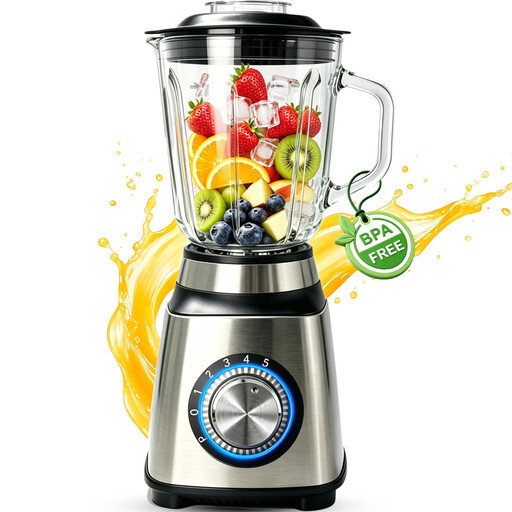
VitaBoost Blender, 1.5 l, glass jug, 6 blades, ice crusher, silver
The jug format may suit a larger preparation, provided the quantity you plan to make is within the usable capacity.
The product title lists a 1.5-litre glass jug, six blades and an ice crusher.
View at Joybuy
 No image available
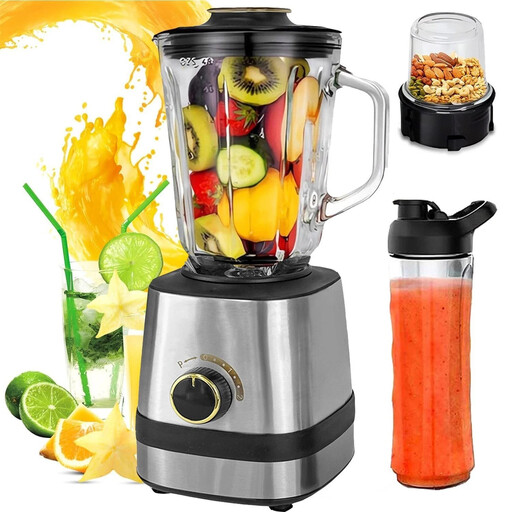
3-in-1 Blender, 800 W, 1.5-litre container, 600 ml bottle, 6 blades
The main container may be suitable for a larger preparation; check the permitted fill level for your batch.
The product title lists 800 W, a 1.5-litre container, a 600 ml bottle and six blades.
View at Joybuy
 No image available
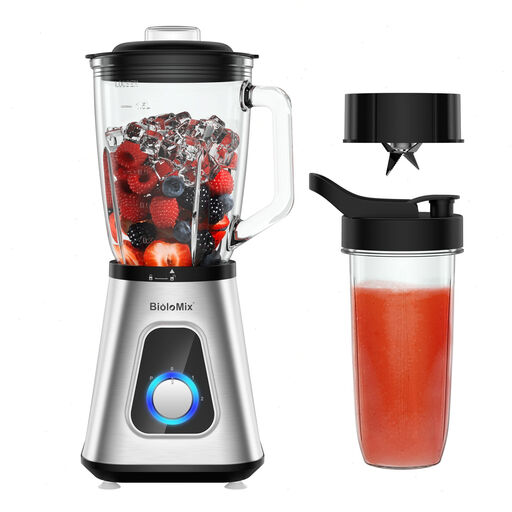
BioloMix SF701, 1,300 W, 1.5-litre glass bowl, 600 ml bottle
The jug may suit a larger preparation if the quantity fits within the usable capacity of the specific appliance.
The product title lists a 1.5-litre glass bowl, a 600 ml bottle, a self-cleaning function and removable blades.
View at Joybuy
 No image available
ochama Multifunction Blender, 600 W, 1.5 l, 3 speed settings
A jug-style blender may be an option for a larger preparation if the quantity you plan to make is within the permitted fill range.
The product title lists 600 W, a 1.5-litre container and three speed settings.
View at Joybuy
 No image available
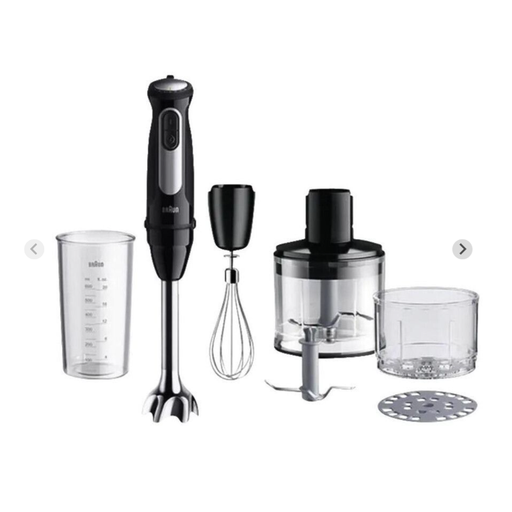
Braun MultiQuick Pro MQ55254M, black
This hand blender may suit smaller batches in a suitable container. A large batch for the freezer may need to be made in several rounds.
View at Joybuy
Frequently asked questions
How should I prepare peaches before freezing the purée?
Wash and prepare the peaches, remove the stones, and peel or chop the fruit as needed. The Federal Centre for Nutrition recommends preparing fruit before freezing and packing it in suitable portions. Transfer the finished purée to labelled containers or bags that are suitable for freezing.
Can I use the blending cup directly as a freezer container?
Only if the specific container is explicitly suitable for freezing. Being designed for drinking or blending doesn’t prove that it is; if it isn’t, transfer the purée to suitable freezer containers or bags.
How should I store and use frozen portions?
Pack the purée in suitable containers or bags with as little air as possible, and label them with the contents, quantity and date. The Federal Centre for Nutrition recommends storing frozen fruit “from one season to the next”; this isn’t a specific shelf-life guarantee for homemade peach purée. According to the Federal Centre for Nutrition, you can thaw it gently in the fridge.
What are the rules in Germany for a blender’s food-contact parts?
Materials and articles that come into contact with food in the EU are subject in particular to Regulation (EC) No 1935/2004. Assess the parts intended for use with the specific product, including the container, blades and any fitted accessories. A BPA-free claim alone doesn’t demonstrate that all food-contact parts comply.
Does a CE marking confirm that a blending container is suitable for food contact?
No. Where applicable, CE marking relates to the relevant harmonised EU product legislation; it isn’t an EU-wide certification for food-contact materials. So assess electrical product safety and food-contact suitability as separate matters.


