Fresh portion makers
You want to blend just a small amount of peach at each mealtime and are looking for a handy option to use in a suitable container. The SWR describes stick blenders as practical for small quantities.


A stick blender used in a suitably deep container is a good place to start for freshly prepared small portions of peach purée. If you want to make several portions at once, a jug blender or smoothie maker may be more suitable. A blending cup can make pouring easier, but it doesn’t replace hygienic, refrigerated storage if you plan to eat the purée later. Wattage and stated capacity alone don’t tell you whether a model can blend a very small amount of peach to a smooth consistency.
You want to blend just a small amount of peach at each mealtime and are looking for a handy option to use in a suitable container. The SWR describes stick blenders as practical for small quantities.
You want to prepare several portions at once, divide them up and keep them refrigerated until each mealtime. The German Federal Institute for Risk Assessment (BfR) recommends storing perishable foods in the fridge.
You want to use the appliance for other blending jobs too, so you’re comparing accessories, containers and how easy each model is to clean. Bosch and nutribullet’s product information lists additional accessories and different cleaning methods.
A good choice if: you want to blend small quantities in a suitable, sufficiently deep container just before eating.
Bear in mind: You’ll need to guide the appliance by hand and use a separate container. For very small quantities, the blending foot needs to be able to reach the fruit.
A good choice if: you want to make several portions together and then transfer them carefully.
Bear in mind: The jug, lid and blades all need cleaning. The stated capacity doesn’t tell you the minimum quantity needed to make peach purée.
A good choice if: your usual portion fits in the blending cup and you want to minimise transferring.
Bear in mind: The stated cup capacity doesn’t tell you whether the appliance is suitable for very small quantities, or how long the purée can be safely stored in the cup.
For perishable foods, the BfR recommends a fridge temperature of 2 °C to no more than 7 °C (as of March 2026). According to the BfR, freshly cut raw fruit products should be kept chilled and eaten promptly (2 October 2026).
| Priority | What to check before buying | Who is it especially important to? |
|---|---|---|
| Blending small quantities | Check the blending foot, container shape and manufacturer’s guidance for small quantities; don’t assume an unverified minimum quantity. | If I’m making just one small portion fresh, the blending foot needs to reach the fruit. Consumers whose main priority is making small individual portions are estimated to account for around 36%. |
| Portioning and chilling | Check the usable container capacity, spout or lid, and separate food-safe storage containers. | When meals are served at different times, I want to divide portions hygienically and keep them chilled until serving. Consumers whose main priority is preparing several meals are estimated to account for around 29%. |
| Cleaning between blending sessions | Check the care instructions for the blade, seals, lid and blending foot individually; don’t assume that dishwasher suitability applies to other parts. | If I’m preparing food more than once, I want to know which parts need cleaning each time. Consumers who value a straightforward cleaning routine most are estimated to account for around 21%. |
| Other blending jobs | Compare the jobs you need the appliance to do with the accessories included with the specific model. | If I want to use the appliance for other ingredients too, I’ll look for the accessories I actually need. Consumers whose main priority is other blending jobs are estimated to account for around 14%. |
A lid makes it easier to set aside a portion, but it doesn’t replace refrigeration or hygienic portioning.
If you’re saving portions for later meals, plan to divide them into clean, separate containers and keep them chilled. You may need extra suitable containers and space in the fridge.
These specifications don’t tell you whether the blades can reach a particular small quantity of peach, or how smooth the purée will be.
Check the shape of the container and the manufacturer’s guidance for the portion size you plan to make.
For the nutribullet NB603DG, the manufacturer specifies that the blade must be washed by hand, while the cups and attachments are dishwasher-safe.
Check the care instructions for the blade, seals, lid and blending foot individually. Washing parts by hand may take extra time.
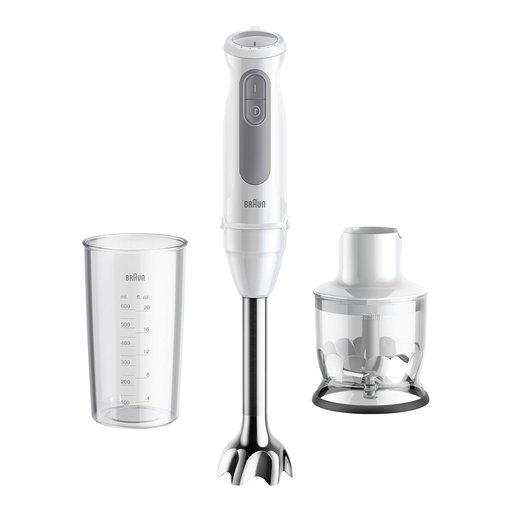
The MultiQuick MQ50001M stick blender is an option for blending in a suitable container; Braun lists a blending and measuring beaker for this model.
The ErgoMixx MSM67170 stick blender comes with a detachable blending foot, plus an additional chopper and whisk.
For preparing separate portions, you could consider different appliance designs: the Kult X Mix & Go with a 0,6-l blending cup, or the KÜCHENminis jug blender with a 0,8-l glass jug.
The Original 600 NB603DG is a smoothie maker supplied with a 700-ml on-the-go cup.
This selection includes stick blenders for freshly prepared portions, as well as jug blenders and smoothie makers for blending several portions together.
 No image available
For households wanting to make several portions in one go; the product description lists purées as one of its uses.
Blending jug: 1,5 l. Power rating: 600 W.
 No image available
For freshly prepared portions in a suitable container; the product description lists blending as one of its functions.
The description lists 21 speed settings, a 600-ml blending beaker and a 350-ml chopper.
 No image available
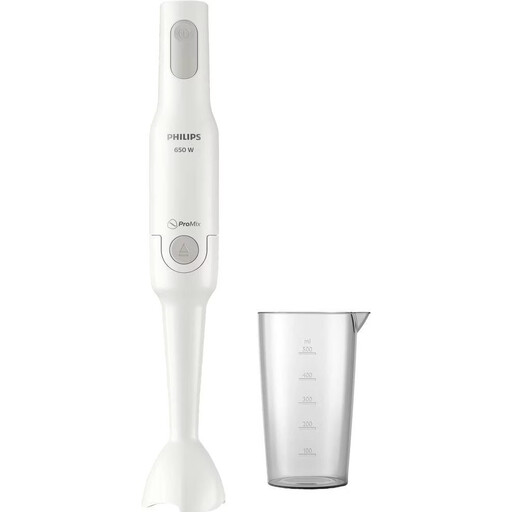
For blending fresh ingredients in a suitable container; the product description lists a blending beaker.
The listed features include 650 W, ProMix technology and one-touch release. Detachable parts are described as dishwasher-safe.
 No image available
For making peach purée in a suitable container; the description lists purées as one of its uses.
Listed accessories include two speed settings, a whisk, a 500-ml chopper and an 800-ml beaker.
 No image available
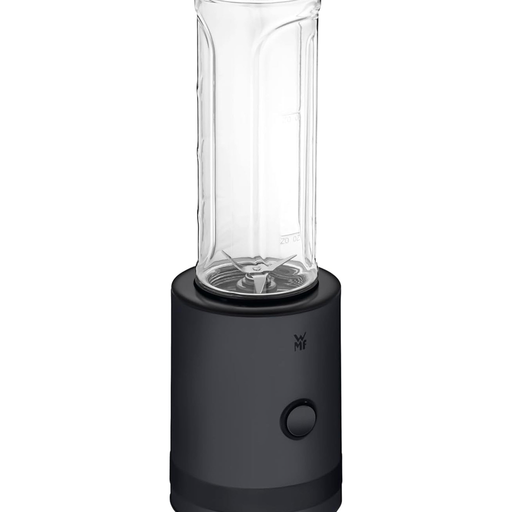
For separate portions prepared together in individual cups; the two blending and drinking containers have screw-top lids.
The listed specifications include two 0,6-l containers and a 300-W motor. Larger quantities require several batches, and the lid doesn’t replace refrigeration if you plan to eat the purée later.
Yes, you can prepare separate portions, but don’t leave them unrefrigerated just because they’re in a sealable blending cup. For perishable foods, the BfR recommends a fridge temperature of 2 °C to no more than 7 °C; freshly cut raw fruit products should be kept chilled and eaten promptly. This doesn’t establish a general storage period for homemade peach purée.
Wash the fruit thoroughly and clean the parts of the appliance that come into contact with food in line with the manufacturer’s instructions. For the nutribullet NB603DG, the manufacturer distinguishes between the blade, which should be cleaned with soap and water, and the dishwasher-safe cups and attachments.
Choosing a blender doesn’t determine which weaning foods are suitable. If you’re preparing food for an infant, follow age-appropriate guidance on when to introduce complementary foods and what to include; age and nutritional needs are key. The Gesund ins Leben network describes fruit purée as part of the gradual introduction of complementary foods.
If you buy from a trader, European Union consumer information states that you have a legal guarantee of at least two years from the date you receive the goods. This is separate from any voluntary manufacturer’s warranty; if there’s a fault, you should generally contact the seller.
Relevant harmonised EU rules may require certain electrical and electronic products to carry a CE mark. The European Commission explains that the manufacturer uses the mark to declare conformity with the applicable product rules; it isn’t an independent quality mark. You can’t tell which rules apply to a particular version just from its product name.