Families who want to share a drink
If you want to pour several glasses from one batch at mealtimes, compare the amount you plan to make with the jug’s usable capacity. For the MMBH6P6BDE, Bosch gives a jug size of 2.5 l and a capacity of 2.0 l.


For several glasses at a family meal, a jug blender is a good choice if its usable capacity matches the amount you plan to make. For example, Bosch lists a capacity of 2.0 l for the MMBH6P6BDE, with a 2.5 l jug size. If you’re using frozen peaches, check that the specific model is approved for them; the Association for Consumer Information says that a high wattage alone doesn’t guarantee good blending results. A compact personal blender may be a better fit if saving worktop space matters more and you don’t mind blending in several batches.
If you want to pour several glasses from one batch at mealtimes, compare the amount you plan to make with the jug’s usable capacity. For the MMBH6P6BDE, Bosch gives a jug size of 2.5 l and a capacity of 2.0 l.
If you want to blend frozen peaches, check the ingredients the specific model is approved for in its manual, and think about the consistency you’re after. The Association for Consumer Information says that wattage alone doesn’t indicate how good the blending results will be.
If you’d rather have a smaller appliance and a single portion to take away than a full jug, a personal blender with a drinking cup could be a good fit. You may need to blend several batches to make enough glasses for a family meal.
| What matters when buying | What to look for | Who is this most important for? |
|---|---|---|
| Enough smoothie in one batch | Compare the total amount you plan to make with the usable capacity. Bosch lists a capacity of 2.0 l for the MMBH6P6BDE, with a 2.5 l jug size. | If I want to pour several glasses at a family meal, I’d like to make the planned amount in one batch if possible. For around 31% of consumers, having the right capacity for the family is the top priority. |
| Texture and frozen peaches | Check the manual to see whether the model is approved for frozen ingredients. The Association for Consumer Information points out that a high wattage alone doesn’t guarantee good blending results. | If I’m using frozen peaches, I check that the ingredients are approved and consider the consistency I want. Around 25% of consumers prioritise texture and frozen ingredients. |
| Cleaning up after a meal | Check which parts are dishwasher-safe for the specific model and whether the blade can be removed. Bosch says that parts of the MMBH6P6BDE are dishwasher-safe, but that its blade assembly cannot be removed. | After blending, I want to clean the jug, lid and blade area without unnecessary hand-washing. Cleaning is the top priority for around 19% of consumers. |
| Only the features you need | Compare the programmes and features with the recipes you actually want to make. According to the Association for Consumer Information, wattage alone is no proof of good blending results. | I want to choose features that suit my recipes rather than be swayed by a long list of specifications. Around 13% of consumers put having the right features first. |
| Worktop space and portion size | Check the appliance dimensions and the space you’ll need around it in your kitchen. Also compare the jug or cup size with the portion you plan to make. WMF lists a 0.6 l cup for the Kult X Mix & Go. | If I’m short on worktop space, I’d consider a smaller appliance, even if that means making several batches. Around 12% of consumers put worktop space and portion size first. |
The jug size may not be the same as the recommended filling capacity when blending. For the MMBH6P6BDE, Bosch lists a jug size of 2.5 l and a capacity of 2.0 l.
Compare the amount of smoothie you plan to make with the capacity listed for the exact model. This will help you work out whether one batch will be enough.
If the usable capacity is smaller than expected, you may need an extra batch to make enough for the family.
The Association for Consumer Information reports that high power ratings alone don’t guarantee good blending results.
Instead, check that the model is approved for your ingredients and look for evidence of how it performs on similar blending tasks. Also check how easy the parts are to clean.
A drinking cup and a jug are designed for different portion sizes. WMF lists a 0.6 l cup for the Kult X Mix & Go.
Decide whether you want to pour drinks from a jug at mealtimes or make individual portions.
If you’re making several glasses, a single-serve cup may mean extra blending and cleaning.
The German consumer advice centre points out that crushing peach stones can release hydrocyanic acid.
Remove the stones before blending and don’t use them as an ingredient.
The VitaBoost MMBH6P6BDE is an example of a jug blender with automatic programmes and specifications for larger batches.
The PowerBlend range includes models with different features; one specific model tested is the PowerBlend 9 JB9040.
The 5000 Series HR3030/00 is an example of a model with a glass jug, which Philips lists for use with frozen fruit.
The Kult X Mix & Go is designed for single portions, while the Kult X Multifunction Blender has a different jug and bottle configuration.
This selection includes jug blenders for smoothies and a compact personal blender for single portions.
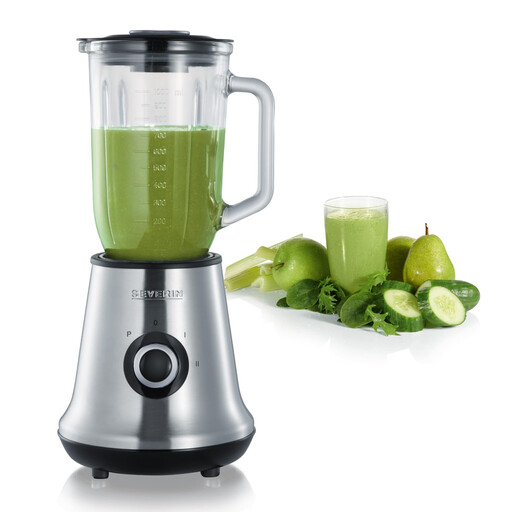 No image available
The 1.0 l glass jug is useful for blending in the jug; compare its capacity with the amount you plan to make for the family.
1.0 l glass jug; 500 W; 2 speed settings; pulse function.
The jug and lid aren’t dishwasher-safe and must be washed by hand. The manual warns against blending hot liquids and running the appliance continuously for too long.
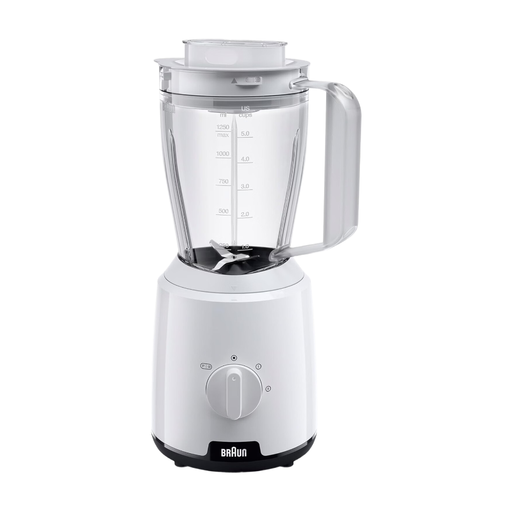 No image available
This jug blender is described as suitable for smoothies in its 1.5 l jug; the product specifications also list an ice-crush function.
1.5 l blending jug; 600 W; 2 speeds; ice-crush function.
According to the manual, run it for no more than two minutes at a time and let the motor cool between cycles.
 No image available
The 1.5 l jug is useful for making smoothies; the description also lists an ice-crushing function.
600 W; 3 speed settings; ice crushing.
According to the instructions, you must add at least 300 ml of liquid before use.
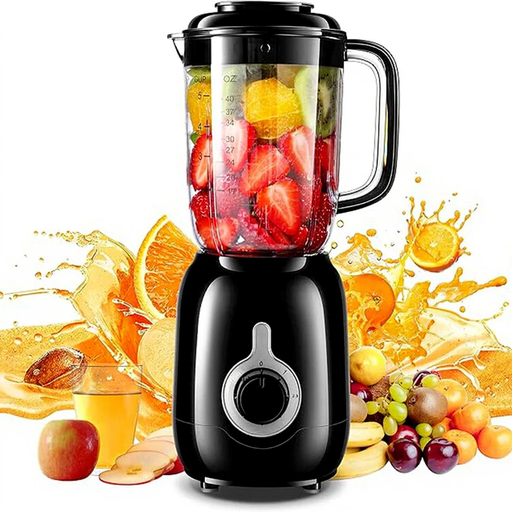 No image available
The 1.2 l blending jug is designed for making drinks in the jug; compare its capacity with the amount you need for your family meal.
1.2 l blending jug; 500 W; 2 speeds; pulse function; 4 stainless steel blades.
According to the instructions, you must add at least 300 ml of liquid.
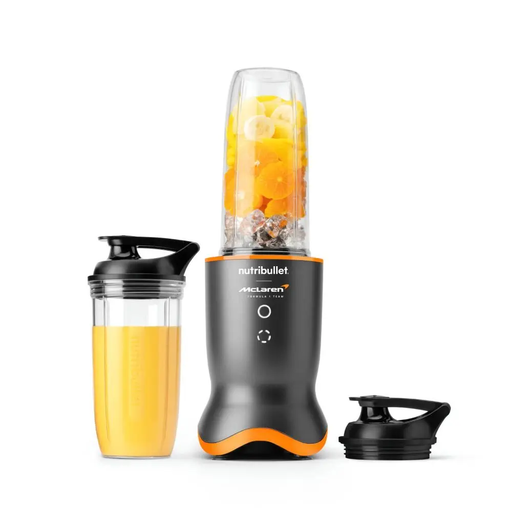 No image available
The cup design is made for individual portions. You may need to blend several batches to make enough glasses for a family meal.
1,200 W; two cups to go, with capacities of 700 ml and 900 ml; ice crushing.
The manual limits continuous operation to 60 seconds and requires a cooling period between cycles.
The usable capacity of the specific blender is what matters. For example, Bosch lists a 2.5 l jug for the MMBH6P6BDE, but a capacity of 2.0 l. Use the capacity figure to plan the total amount you want to make.
Only if the manual for your chosen model allows frozen ingredients. Philips specifically lists frozen fruit as a use for the HR3030/00. The German Federal Centre for Nutrition recommends washing fruit before freezing and, where necessary, removing the stones and cutting it into pieces.
Check the manual to see which parts are dishwasher-safe, and clean all the utensils you’ve used thoroughly. A cleaning programme doesn’t automatically mean that every part is dishwasher-safe or that the blade can be removed.
No, remove the stones before blending. The German consumer advice centre points out that crushing peach stones can release hydrocyanic acid.
According to the European Commission, food-contact materials placed on the EU market must comply with Regulation (EC) No 1935/2004. A general claim such as ‘BPA-free’ doesn’t, on its own, prove that a specific product complies with all applicable regulations.