For a single serving and limited worktop space, a compact blender with a blending and drinking cup is a sensible place to start; for several servings or separate cups, a jug blender may be a better fit. In a shared kitchen, you’ll also need to consider how easy every part is to clean and how much space the blender takes up. Wattage alone tells you neither exactly how well a blender will perform nor how noisy it is; if you’re using ice or frozen peaches, check that the specific model is suitable.
Who uses a blender in a shared kitchen?
If you usually blend one serving
If you usually make a peach smoothie just for yourself and want to put the blender away afterwards, cup size and countertop footprint are important things to consider. WMF’s model specifications and the product test by CHIP in partnership with F.A.Z. Kaufkompass offer some relevant product examples.
If you share the worktop and sink
When several people use the same kitchen, cups, lids and blades that are easy to clean and identify can make everyday life easier. nutribullet’s care instructions and Braun’s product information show why it’s worth checking the cleaning guidance and what’s included for each specific model.
If you want to be considerate when blending
If other people are using the kitchen or nearby rooms, comparable noise figures for the specific model and suitable blending times matter more than wattage alone. F.A.Z. Kaufkompass covers blenders for different uses, but doesn’t provide a basis for describing any model as particularly quiet.
What should you look for when buying?
First, compare the serving size you need with the space the appliance and its accessories will take up. Then check how easy it is to clean and how noisy it is for your kitchen routine; ice or frozen ingredients are a separate use case.
| What matters |
What to check before buying |
Who will find this especially important? |
| Serving size and footprint |
Usable capacity, dimensions and number of cups included. |
If I usually blend just one serving and need to put the blender away in a shared kitchen, cup size and countertop space matter to me. Around 29% of consumers are likely to have this as their main consideration. |
| Cleaning between uses |
Check the care instructions for the cup, lid, seals and blade assembly individually. |
If I share the sink and worktop with others, I want to know how each part needs to be cleaned after blending. Around 29% of consumers are likely to prioritise easy cleaning above all else. |
| Noise and when you use it |
Look for comparable noise measurements or tests of the exact model. |
If other people are using the kitchen or nearby rooms, I want to take noise into account when choosing a blender. Around 21% of consumers are likely to put being considerate of housemates while blending first. |
| Frozen ingredients |
Check whether it’s approved for ice or frozen fruit, along with the quantity and preparation instructions. |
If I want to use frozen peach pieces or ice, I need information on whether the specific appliance is suitable and how much it can handle. Around 21% of consumers are likely to have this as their main consideration. |
Common misconceptions
-
More watts automatically means less noise or smoother smoothies
Motor power alone doesn’t tell you how noisy a blender is or how well it will handle peaches or other ingredients. Product tests apply to specific appliances and conditions.
Choose according to the ingredients you’ll use and how you plan to blend. For noise levels, you’ll need comparable figures or tests for the exact model.
-
Dishwasher-safe means you can put the whole blender in the dishwasher
According to nutribullet, the cups and lids are suitable for the top rack of the dishwasher, but the blades and motor base are not. You can’t assume the same applies to other blenders.
Check the instructions for every part, especially the seals and blade assembly.
-
Cup size, jug capacity and usable capacity are all the same thing
A drinking cup and a larger jug are designed for different serving sizes. Braun’s 1.5-litre figure refers to the usable liquid capacity of the specific model.
Compare the fill markings and what’s included with the number of people you regularly blend for.
Brands to consider
WMF
According to WMF, the Kult X Mix & Go is a compact blender with a blending and drinking cup.
- WMF lists a 0.6-litre cup, 300 W and a drinking lid for this model.
- These details alone don’t tell you how noisy it is or how well it handles frozen ingredients.
Philips
According to Philips, the Daily Collection Mini Blender HR2602/01 is designed for smoothies and shakes.
- Philips lists 350 W and a four-blade attachment for this model.
- The advertised preparation time of 30 seconds is a manufacturer’s claim; the ingredient conditions aren’t specified in more detail.
Braun
According to Braun, the PowerBlend 3 JB 3272 SI comes with a jug and two Smoothie2Go bottles.
- Braun lists a usable liquid capacity of 1.5 l and two 600 ml bottles.
- According to Braun, the model weighs 3.9 kg. Check that its weight and footprint will suit your kitchen.
nutribullet
According to nutribullet, the Pro 900 NB904CP is a personal blender with a 700 ml to-go cup.
- The brand lists a 900 W motor and a drinking ring among the items included.
- According to nutribullet’s care instructions, the cup and lid are suitable for the top rack of the dishwasher, but the blades and motor base are not.
Ninja
The product range includes mains-powered personal blenders and a cordless option among the models considered here.
- F.A.Z. Kaufkompass reports on a test of the BlendBoss for use with ice and frozen fruit, and names the Blast BC151EUBK as a cordless alternative.
- The information about the BlendBoss doesn’t establish the features of the Blast or show that it’s particularly quiet.
Blenders for different serving sizes
This selection of Joybuy products includes compact blenders for single smoothies to take away, as well as jug models for larger quantities.
 No image available
Ninja BlendBoss with removable travel cup
An option if you want to make your smoothie in a travel cup and take it with you.
The product title lists three automatic modes, 710 ml capacity, an ice-crushing function and dishwasher-safe parts.
View at Joybuy
 No image available
3-in-1 blender, 800 W
The combination of a travel bottle and blending jug could be a good fit if you make different quantities for different occasions.
The product title lists a 600 ml travel bottle, a 1,500 ml blending jug and a 300 ml chopper cup. It also specifies 800 W and six stainless steel blades.
View at Joybuy
 No image available
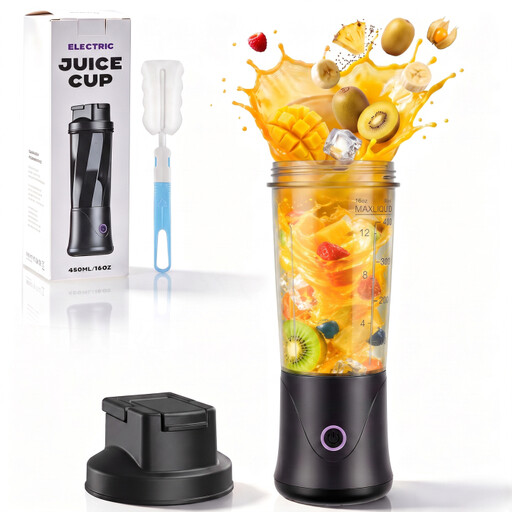
Portable smoothie blender, 400 ml
The compact design is made for single servings if you’re looking for a portable blender.
The product title lists a 400 ml capacity and six blades.
View at Joybuy
 No image available
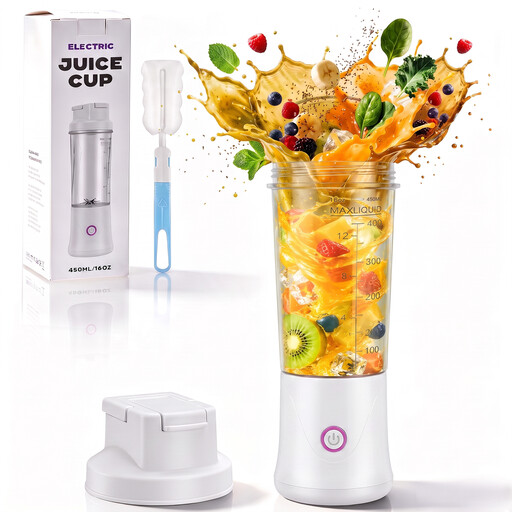
Portable blender for smoothies and shakes
An option if you want to make a smoothie directly in the drinking cup and enjoy it without transferring it to another container.
View at Joybuy
 No image available
ochama multifunction blender, 600 W, 1.5 l
A jug model may be worth considering if you want to make a larger quantity rather than a single drink in a personal cup.
The product title lists a 1.5 l capacity, three speed settings and an ice-crushing function.
View at Joybuy
Frequently asked questions
Do I need an ice-crushing function for fresh peaches?
No, not for fresh peaches alone. If you also want to blend ice or frozen peaches, check that the specific model is approved for this and follow its quantity guidance; test results for the BlendBoss can’t be applied to other blenders.
Which blender parts can I put in the dishwasher?
It depends on the model and the individual part. nutribullet says its cups and lids can go on the top rack of the dishwasher, but the motor base and blades can’t. For other models, follow the relevant care instructions.
What should I consider if several people will use the blender?
Check how many cups and lids are included, as well as the cleaning instructions for each part. Braun lists two 600 ml bottles for the JB 3272 SI; nutribullet lists a to-go cup as included with the Pro 900 NB904CP.
What statutory rights apply when buying online in Germany?
Distance contracts generally come with a right of withdrawal. The statutory period is usually 14 days, although when it starts and any exceptions depend on the circumstances. The German Federal Ministry of Justice and the Federal Office of Justice explain the statutory rules in Sections 312g and 355 of the German Civil Code (BGB). If goods are faulty, the seller’s statutory liability for defects is separate from any voluntary guarantee, as explained by the consumer advice centre.


