Several glasses at once
If you’re blending peaches from your weekly shop for several people or portions, compare the recipe quantity with the usable capacity, and consider how much space the jug takes up and how easy it is to clean.


For making several peach smoothies at once, a jug blender with a suitable usable capacity is an obvious choice. If you want a single portion to take with you, a blender with a drinking cup is more practical. Check your recipe against the maximum fill level, and if you use the blender regularly, find out which parts are dishwasher-safe. If you want to use frozen fruit, check that your particular model is approved for it: CHIP points out that a high wattage alone doesn’t guarantee good blending results.
If you’re blending peaches from your weekly shop for several people or portions, compare the recipe quantity with the usable capacity, and consider how much space the jug takes up and how easy it is to clean.
If you usually blend a single portion and want to take it with you, a blending cup with a drinking lid can save you the extra step of pouring it into another container. Check the size and features of the specific model.
If you also want to use frozen fruit, check that the blender you’re considering is approved for those ingredients. The Federal Centre for Nutrition gives July to September as the main season for peaches.
| What matters to you | What to check before buying | Who it matters most to |
|---|---|---|
| Several portions | Compare your recipe quantity with the usable capacity or maximum fill mark. | If I’m making several glasses after my shop, I want to avoid having to blend in multiple batches. Around 40% of consumers put batch size first. |
| Cleaning | Check the instructions for the jug, lid and blades separately. | If I blend regularly, I want to remove fruit residue easily without cleaning parts in a way the instructions don’t allow. Around 30% of consumers prioritise ease of cleaning. |
| A single portion to take with you | Check the size of the drinking cup and whether the specific model includes a lid. | If I’m blending just one glass to drink on the go, a cup designed for drinking from is handy. Around 20% of consumers put a single portion to take away first. |
| Frozen ingredients | Check that the exact model is approved for frozen fruit, and look for relevant practical tests. | If I want to blend frozen peaches, I need explicit confirmation that the blender is suitable for those ingredients, rather than making assumptions based on its wattage. Around 10% of consumers prioritise frozen ingredients. |
Manufacturers may describe capacity and usable volume differently. If you base your recipe on the wrong figure, you may have to blend it in several batches.
Compare your recipe with the usable capacity or maximum fill mark on the specific container.
Several batches mean extra time spent filling and blending.
For the Tefal BL91HD, Tefal explicitly excludes the blades from the parts listed as dishwasher-safe.
Check the instructions for your exact model, looking at the jug, lid and blade unit separately.
Parts that aren’t dishwasher-safe may need to be washed by hand.
CHIP points out that high power alone doesn’t guarantee good blending results. Frozen ingredients are a separate consideration.
If you want to blend frozen fruit, check the manufacturer’s approval for the specific model and look for tests using suitable ingredients.
The Federal Centre for Nutrition gives July to September as the main season for peaches. This doesn’t tell you what will be available in November.
Choose a blender for the ingredients you usually use, and check what fresh produce is available when you shop.
The Kult X Mix & Go is a compact option for making a single portion in a blending cup you can drink from.
According to Bosch, the VitaPower Serie 4 MMB6177S comes with a jug and a To-Go cup, making it an interesting option for different portion sizes.
The InfinyMix BL91HD comes with a jug and a To-Go cup.
The HR3041/00 blender is an option if you also want to blend frozen fruit.
This selection includes jug blenders for several portions and a portable smoothie blender for single servings.
 No image available
The jug is designed for making several smoothie portions, while the extra bottle is an option for smaller servings to drink on the go.
The product name also lists six stainless steel blades and a 300-ml chopper cup.
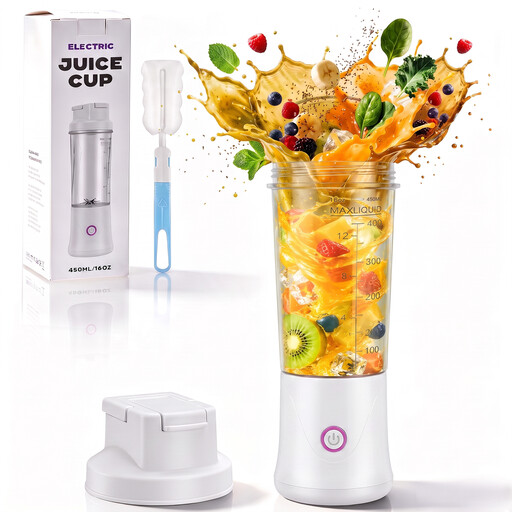 No image available
This portable blender could be a good choice if you mainly want to make a single smoothie portion.
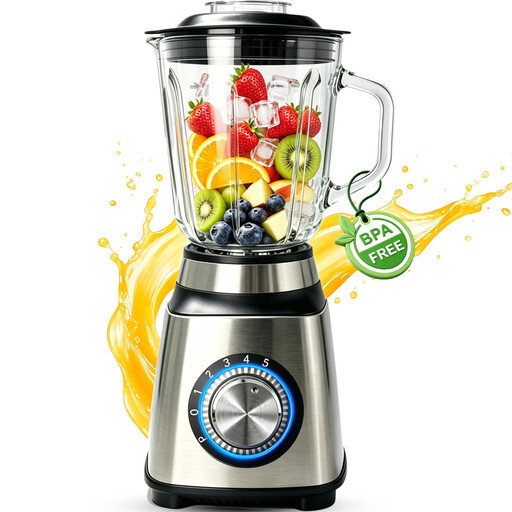 No image available
The jug is an option if you want to make smoothies for more than one person.
The product name lists a glass jug and six blades.
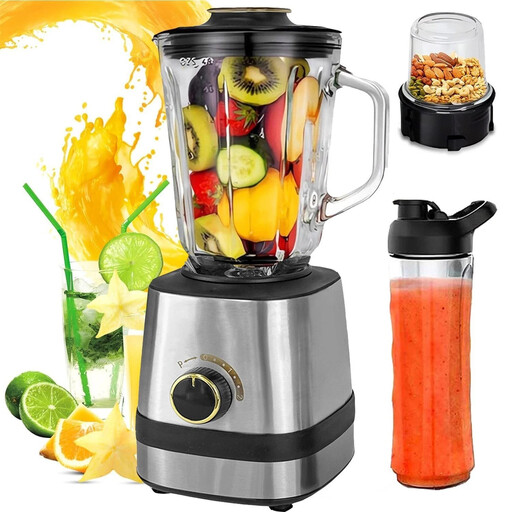 No image available
The container is suitable for blending in the jug, while the additional bottle listed is handy for a smaller portion to take with you.
The product name lists six blades.
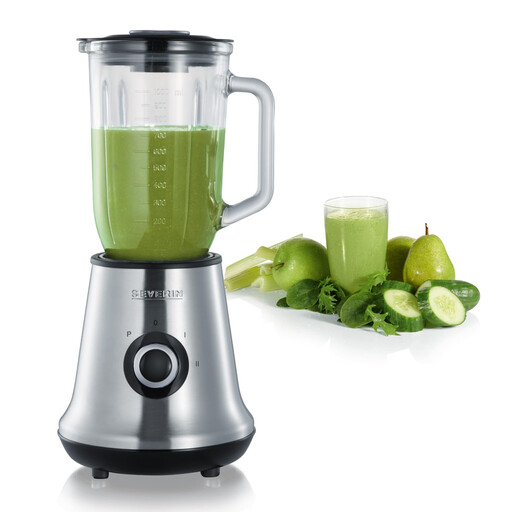 No image available
The jug is suited to smoothies you want to make directly in the container.
The product name lists 500 W, two speed settings and a pulse function.
No. A high wattage alone doesn’t prove you’ll get better results. If you’re only blending fresh, soft fruit, start by choosing based on portion size and ease of cleaning. For frozen ingredients, check that your specific model is approved for them. CHIP points out that high power alone doesn’t guarantee good blending results.
Wash the fruit, keep your hands and kitchen utensils clean, and remove the hard stone before blending. The German consumer advice centre generally warns against grinding fruit stones and adding them to smoothies as a supposedly healthy ingredient.
No. The claim that some parts are dishwasher-safe doesn’t automatically apply to the motor unit or blades. For the BL91HD, Tefal explicitly lists the jug without the blades, as well as certain lid parts. Check the instructions for your exact model.
Your statutory rights against the seller are separate from a voluntary manufacturer’s guarantee. According to the German consumer advice centre, online purchases generally come with a 14-day right to cancel, starting when you receive the goods. Exceptions and the circumstances of each case should be taken into account.
Blenders sold in the EU are subject to the product safety rules that apply to them. Electrical appliances covered by the relevant rules must carry a CE marking. Parts that come into contact with food are also subject to the relevant food-contact materials regulations. Your Europe and the European Commission explain these requirements; a marking alone doesn’t confirm that a specific product listing complies.