
Lieferung heute & morgen

Qualitätsgarantie

Willkommens-Angebote freischalten: KOSTENLOSE Lieferung | Bis zu 80 % RABATT | Kostenlose 30-Tage-JoyPlus-Testphase
App herunterladen
A peanut caramel protein bar should be sweet, convenient and high in protein. However, packaging often features prominent claims such as “High Protein”, “Low Sugar” or “no added sugar”, which are only of limited use when comparing products directly. What really matters is how much protein each bar contains, which sweeteners are used and whether the bar meets your personal dietary requirements.
This guide from the Joybuy Product Recommendation Officers explains the most important criteria and introduces suitable products for different everyday situations.
“30% protein” sounds clear at first. In everyday use, however, the actual amount per bar is what counts. A 45-g bar containing 13.5 g of protein may be more practical than a smaller bar with a higher percentage but less protein overall. Always compare:
A protein bar is not automatically a low-calorie snack either. Nuts, chocolate coatings and caramel layers often increase the energy and fat content.
A low-sugar protein bar may still contain significant amounts of carbohydrates, polyols or fibre despite its low sugar content. Many products use sweeteners such as maltitol, sorbitol, xylitol or sucralose. According to product labelling, consuming larger amounts of polyols may have a laxative effect.
If you are looking for a low-carb protein bar, you should therefore check the total carbohydrate content rather than just the “of which sugars” figure. “No added sugar” also does not mean that a product is free from naturally occurring carbohydrates or carbohydrates derived from its ingredients.
“Vegan” and “gluten-free” are specific selection criteria that should be verified using the product information. For example, a bar may contain plant-based protein but still use wheat protein. Other products contain milk protein, collagen hydrolysate, soya or peanuts.
If you have allergies or intolerances, the following are decisive: the ingredients list and allergen information on the current packaging. May-contain statements may also refer to shared production facilities.
For a post-workout snack or a protein snack on the go, the figures per item are particularly relevant. The selection includes, for example:
The protein source affects suitability for different diets. Milk protein, whey protein, soya protein, pea protein and collagen are not interchangeable. If you follow a vegan diet, look for an explicitly vegan label.
The descriptions low-sugar protein bars and low-sugar protein bars should be checked against the nutritional tables. According to the product data, the Corny Protein Peanut & Caramel Bar contains 0.4 g of sugar per 45-g bar, but 14.4 g of polyols. The Ahead bar lists 0.7 g of sugar and 11 g of polyols per 35 g.
A low sugar value is therefore only one part of the comparison. You should also check:
Peanuts require particular attention in all products with a peanut flavour. They may also contain milk, soya, almonds, other nuts or cereals containing gluten. According to the product data provided, the Warrior Crunch bar contains, among other ingredients, milk, soya, peanuts and barley, and is therefore not suitable for a gluten-free diet.
A multipack of protein bars is particularly worthwhile if you already know that you like the flavour and that the ingredients suit you. Common formats in this selection are packs of 12 bars, while the Ahead bar is also available in a pack of 16 and Eat Natural in a pack of 12. Individually portioned bars make it easy to take them to the office, pack in a lunchbox or sports bag, or take on trips.
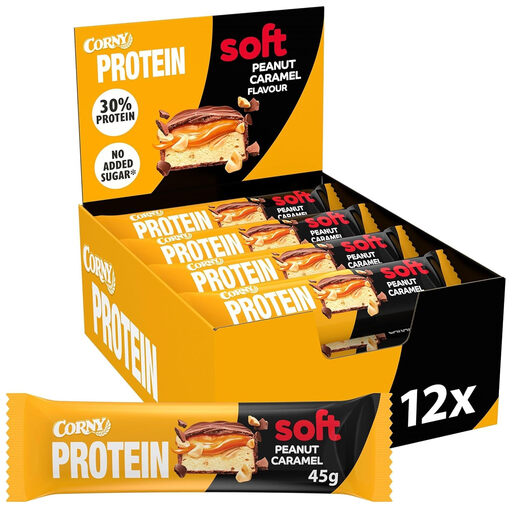
Why this product suits this profile: The pack of 12 provides convenient portions for the office, lunchboxes or occasional snacking. Each 45-g bar contains 13.5 g of protein and 1.8 g of sugar.
The figures per bar make comparisons more meaningful than percentage-based advertising alone. At the same time, the ingredients list highlights maltitol and other polyols.
Soft texture, peanut caramel flavour, 176 kcal per bar and 12 individually wrapped portions.
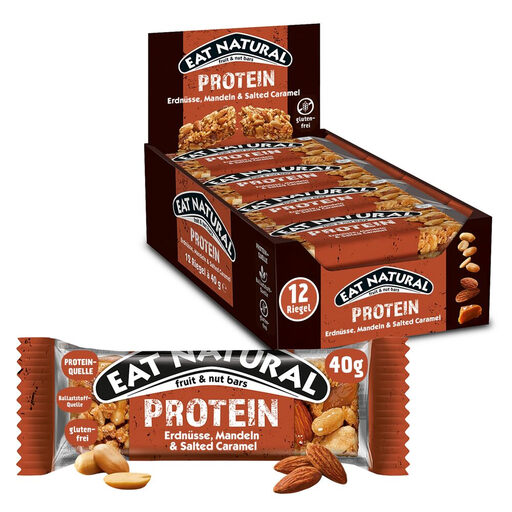
Why this product suits this profile: According to the ingredients information, the bar combines 55% peanuts, 2.5% almonds and 21.6 g of protein per 100 g. It is labelled as gluten-free.
The ingredient proportions and nutritional values are more specific than a general description of the flavour. According to the data, the sugar content is 16.8 g per 100 g.
Gluten-free labelling, a nut-based recipe and 12 individually portioned 40-g bars.

Why this product suits this profile: According to the product information, the bar is vegan, contains 14.3 g of protein per 55-g serving and is available as a multipack of 12.
Its plant-based positioning is clearly stated. Nevertheless, check the wheat and soya proteins, as well as any may-contain statements, before buying.
Vegan, no added sugar according to the product information, 12 individual bars and 1.5 g of sugar per serving.
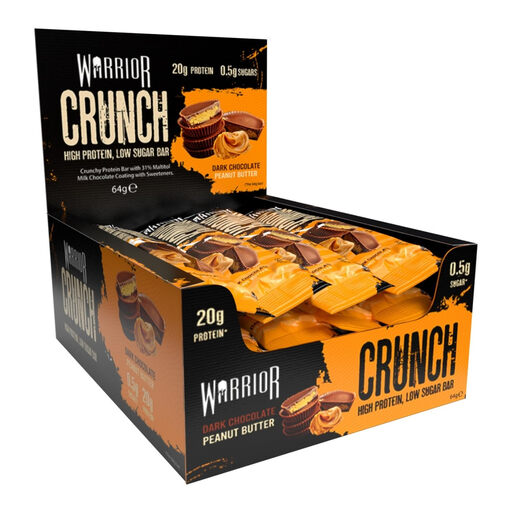
Why this product suits this profile: According to the product data, the 64-g bar provides 20 g of protein, less than 3 g of sugar and less than 3 g of net carbohydrates per serving.
The figures refer to a clearly defined 64-g serving. However, the allergen list includes barley and milk, among other ingredients, so the bar is not suitable for a gluten-free or vegan diet.
20 g of protein per bar, a pack of 12 and stated low-carb values.
We have put together a complete, regularly updated list of products that fully meet these strict selection criteria and the safety regulations applicable in the EU.
That depends on the nutritional profile and how you intend to use the bar. For a post-workout snack, the protein content, calories and digestibility may all be relevant. A bar is not a substitute for a balanced meal. You should also check whether you personally tolerate particular sweeteners or protein sources well.
The best-before date is shown on the relevant packaging. Until then, follow the manufacturer’s storage instructions, which usually recommend a cool, dry place away from direct sunlight. Opened bars should be eaten promptly. Do not eat a bar if the packaging is damaged or if there is any noticeable change in its smell or consistency.
A multipack can make it easier to manage the cost per bar and keep a supply at home if you eat the bars regularly. Before buying, however, check the ingredients, allergens, sugar, polyols and actual protein content. For occasional use, a single bar may be more suitable, allowing you to try the flavour and assess how well you tolerate it first.