For larger batches
If you’re making peanut sauce for several meals, consider how much of the recipe will fit in the jug at once and how you’ll store the sauce afterwards.


A countertop blender is a good choice for making several portions of sauce from ready-made peanut butter, provided the recipe fits within its stated working capacity. With a hand blender, you can blend the ingredients directly in a suitable container. If you want to turn whole peanuts into peanut butter, check that the specific model is explicitly designed for this task – the wattage alone doesn’t guarantee a particular result. For either type, check the cleaning instructions and store prepared sauce hygienically in the fridge.
If you’re making peanut sauce for several meals, consider how much of the recipe will fit in the jug at once and how you’ll store the sauce afterwards.
If you want to make peanut butter from whole peanuts, look for an explicit statement that the blender is suitable for this task rather than relying on the wattage alone.
If you blend sauce regularly, check the cleaning instructions for the jug, blades and other parts that come into contact with food on the model you’re considering.
A good fit if: your recipe fits within the stated working capacity and you want to minimise the number of batches.
Consider: jug size, worktop space and cleaning. Capacity and working capacity aren’t necessarily the same thing.
A good fit if: you want to blend ready-made peanut butter and liquid directly in a suitable, sufficiently tall container.
Consider: the container, splash guard and how well the ingredients are reached all affect how it works; this doesn’t confirm that it’s suitable for whole peanuts.
| Buying priority | What to check | Who it matters most to |
|---|---|---|
| Amount per batch | Compare the recipe quantity with the working capacity and fill markings of the specific model; don’t assume the total capacity is the usable fill volume. | If I’m making sauce for several meals, I want as much of the recipe as possible to fit in one batch. Around 33% of consumers put the right amount per batch first. |
| Whole peanuts or ready-made peanut butter | Check the manual and product description for suitability for nut butter or solid ingredients; don’t infer a particular consistency from the wattage. | If I want to make peanut butter from whole peanuts, I need clear information confirming that it’s suitable for this use. Around 27% of consumers prioritise processing peanuts or making nut butter. |
| Cleaning after blending | Check the cleaning instructions for the blades, seal, lid and jug individually. | If I blend regularly, I want to know which parts are easy to clean after use. Around 20% of consumers put cleaning first. |
| Space and effort | Check the appliance dimensions against the space available and consider whether you’ll need an additional blending jug. | If worktop space is limited, I want to choose a design and container that suit my kitchen. Around 20% of consumers prioritise space and the effort involved in buying and using the appliance. |
CHIP reports from a practical test of jug blenders that high power alone doesn’t guarantee good blending results. However, the test didn’t specifically assess peanut sauce.
Remember that blending a sauce from ready-made peanut butter is different from processing whole peanuts. Check what the specific model is documented as suitable for.
Manufacturers may give different figures for working capacity and total capacity. So a larger total capacity doesn’t prove that the entire recipe can be blended in one batch.
Compare the recipe quantity with the stated working capacity, fill markings and manual for the specific model.
Cleaning instructions vary by model and individual part. For the Braun JB 9040, the manufacturer explicitly excludes the jug from its statement about dishwasher-safe parts that come into contact with food.
Check the cleaning instructions for every part that comes into contact with food before buying the appliance.
The information relates to the product ranges mentioned and isn’t a general assessment of each brand.
The InfinyMix BL91HD is an example of a jug blender with a stated working capacity. Tefal also offers hand blenders as an alternative design for making sauces.
The VitaPower Serie 6 MMB6762M is a jug blender range with a stated capacity of 2,0 l.
The PowerBlend 9 JB 9040 is a jug blender, while the MultiQuick 7 MQ 7000 X is a hand blender alternative for blending in a container.
For the 7000 Series HR3760/10, Philips lists both sauces and nut butter as possible uses.
This selection includes blenders with containers for making sauce and smaller batches.
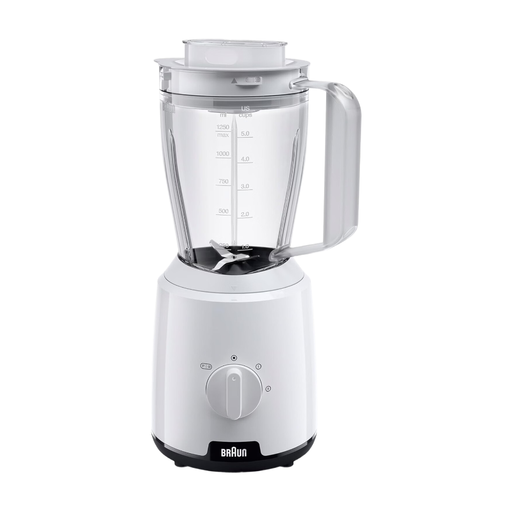 No image available
This blender with a blending attachment is worth considering for making sauce from ready-made peanut butter.
The product details list 1,5 l, 600 W, two speeds and an ice-crush function. The removable parts are described as dishwasher-safe.
 No image available
This blender with a container is an option if you want to make sauce in the blending jug.
It’s listed as having 600 W, a 1,5-l container and three speed settings. The container is described as easy to dismantle.
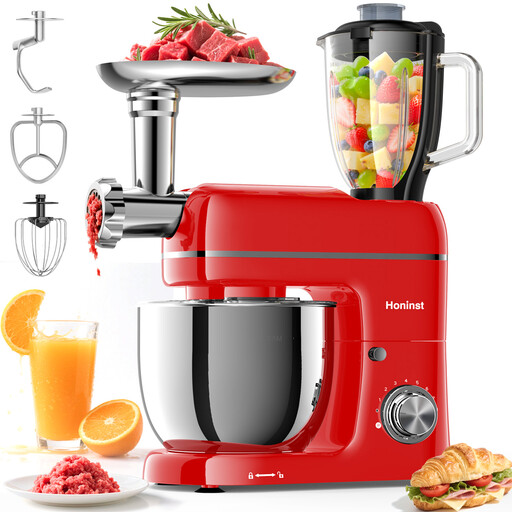 No image available
The product description lists the blender attachment as suitable for making sauces.
The product title lists 6.5 QT and eight speed settings. A pulse function and blender attachment are also specified.
No. For sauce made with ready-made peanut butter, the important things are the quantity you plan to make and how you’ll use the specific container. If you want to make peanut butter from whole peanuts, check the manual explicitly for this capability; a general wattage figure isn’t enough to confirm it.
It depends on the model and the individual parts. For the BL91HD, Tefal marks the jug without the blades and certain other parts as dishwasher-safe. For the JB 9040, Braun explicitly excludes the jug from its statement about dishwasher-safe parts that come into contact with food. Check the manual for the model you’re considering.
Cool the sauce appropriately after making it and store it separately from the other meals. The Federal Institute for Risk Assessment recommends keeping leftovers in the fridge and eating them within two to three days. The exact shelf life also depends on the ingredients and hygienic preparation.
Food-contact materials are covered by the harmonised EU legal framework set out in Regulation (EC) No 1935/2004, as described by the European Commission. This general framework doesn’t confirm that an individual blender product complies with the rules.
Peanut sauce isn’t suitable for people with a peanut allergy, and shared utensils can lead to accidental transfer. The Federal Institute for Risk Assessment identifies peanuts as an allergen and recommends using separate utensils for certain foods as part of its kitchen hygiene guidance.