Preparing individual portions
If you usually make small amounts of sauce from peanut butter, the container’s shape and fill level should suit the blender foot or blade.


For a small sauce made with already-creamy peanut butter, a hand blender used in a suitable container is an obvious choice. If you also make drinks or dips directly in a blending cup, a mini countertop blender may fit your routine better. Grinding whole peanuts or making several portions is a different task: check which accessories are specifically intended for it and the usable capacity of the particular model, rather than focusing on wattage alone. A blending cup does not automatically replace a suitable lunch box container or refrigeration for perishable food.
If you usually make small amounts of sauce from peanut butter, the container’s shape and fill level should suit the blender foot or blade.
If you often prepare sauce or dips on weekdays, it’s worth checking which parts can be removed and how they should be cleaned.
If you want to use the same blender for drinks or dips, compare the cup size and lid, as well as the intended uses of the specific model.
Best if: You want to mix peanut butter with other ingredients in a suitable container to make a small portion.
Keep in mind: You guide the blender foot yourself, so you’ll need a container with a suitable shape and fill level.
Best if: You regularly make dips or drinks as well as sauce, and want to use the blender’s own cup.
Keep in mind: The container needs to suit the amount of sauce you’re making; a travel cup is not automatically a suitable sauce container.
Best if: You want to make several portions at once or process whole peanuts instead of peanut butter.
Keep in mind: A larger container or nut-processing accessory doesn’t mean it will also blend a very small, thick portion effectively.
For lunch box sauce, the most important things are the amount you’re making, ease of cleaning and whether you want your blender to handle other tasks too.
| What you need | What to check before buying | Who it matters most to |
|---|---|---|
| Small amounts of sauce | Usable capacity and container shape; position of the blender foot or blade. | If you’re making a single portion for your lunch box, the ingredients should be easy to reach in the container. Around 40 % of consumers focus primarily on small quantities. |
| Everyday cleaning | Check separately for each part whether it should be washed by hand or in the dishwasher. | If you make sauce on several weekdays, it matters which parts are easy to remove and clean. Around 30 % of consumers put cleaning first. |
| One appliance for sauce and drinks | Intended uses, cup size and lid; plan for refrigeration separately. | If you also want to blend dips or drinks, a cup that suits several routines can be useful. Around 20 % of consumers prioritise this versatility. |
| Whole nuts or larger batches | Check for accessories intended for whole nuts and the usable capacity of the container. | If you want to grind whole peanuts or prepare several portions, you’ll need suitable equipment and enough capacity. Around 10 % of consumers focus mainly on this additional task. |
Power ratings and container size alone don’t tell you whether a blender can handle a particular minimum quantity or achieve a specific consistency for peanut sauce.
Start by checking the amount you plan to make, the shape of the container and the ingredients the blender is designed to handle. Treat wattage figures as model-specific information only.
An unnecessarily large appliance or unsuitable container can make it harder to prepare small portions.
Information about drinking or blending cups doesn’t automatically tell you whether the container is suitable for thick sauce or can keep it chilled. The Federal Institute for Risk Assessment recommends keeping perishable food cool when you’re out and about.
Check that the lid and container suit what you plan to put in them, and arrange refrigeration separately from the blender.
For transport and refrigeration, you may need a suitable sauce container and a way to keep it cool, as well as the blending cup.
For the nutribullet NB606DG, the manufacturer distinguishes between the blade, which should be cleaned with soap and water, and other accessories described as dishwasher-safe.
Read the cleaning instructions for every part of the specific model, especially the blade, seals and motor unit.
The MultiQuick hand blender is an option for making sauce in a separate container.
The HR2602/01 mini countertop blender may suit households that want to make dips as well as drinks.
The Original 600 NB606DG combines a compact blender with two cup sizes specified by the manufacturer.
The VitaPower models mentioned here differ in their containers and nut-processing accessories.
The Kult X Mix & Go is a compact cup blender option if drinks to take away are important too.
The appliances below include hand blenders, portable blending cups and larger countertop blenders. The European Commission explains that food contact materials placed on the EU market must comply with Regulation (EC) No 1935/2004; this does not prove that any individual model complies.
 No image available
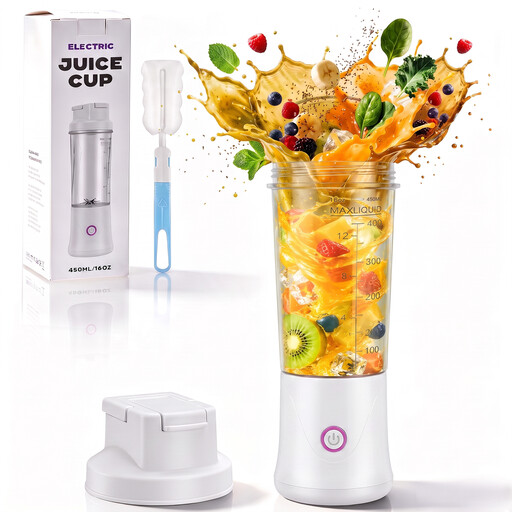
According to the product information, the removable cup is also designed for blending drinks and taking them with you.
710-ml cup; removable parts described as dishwasher-safe.
 No image available
The personal cup is designed for blending and drinking from the same container, according to the product description.
The description lists the kitchen, office and on-the-go use as suitable for drinks.
 No image available
The larger container may be useful for several portions or additional tasks. Check the instructions to see whether it’s suitable for making a small amount of sauce.
Three speed settings; the product name lists ice crushing, a meat chopper and a spice grinder.
 No image available
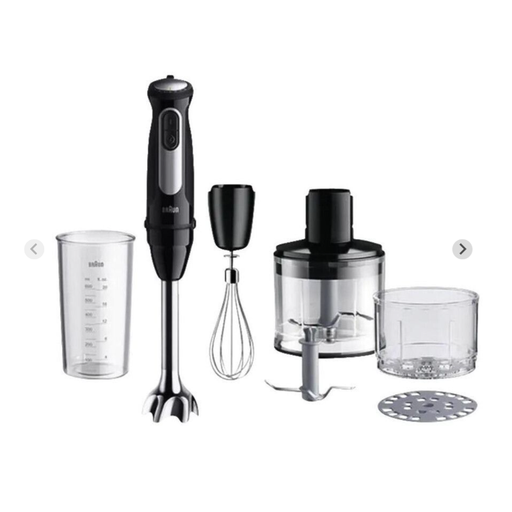
The product description lists sauces and dips as suitable uses for this hand blender. For a small portion, you’ll also need a suitable container.
25 speed settings plus Turbo, according to the product description.
 No image available
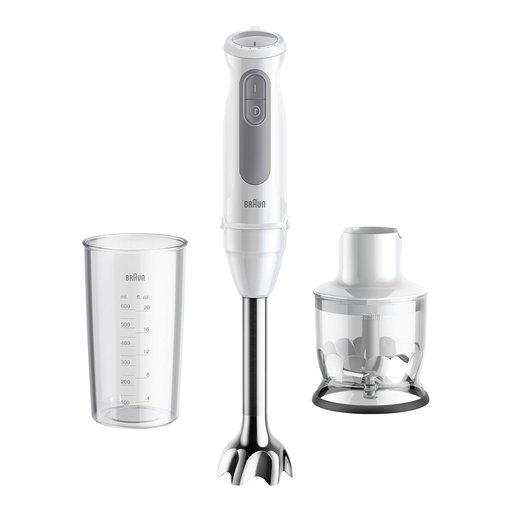
The product description lists sauce and dips among its uses in a suitable container, and includes a blending beaker.
21 speed settings plus Turbo; 600-ml beaker, according to the product description.
No. Mixing peanut butter with other ingredients and grinding whole peanuts are different tasks. If you want to process whole nuts, check the accessories intended for this purpose and the model’s instructions. Bosch lists a universal chopper for grinding nuts with the MMB6177S.
Not necessarily. For the nutribullet NB606DG, the manufacturer says to clean the unscrewed blade with soap and water, while other accessories are described as dishwasher-safe. Follow the cleaning instructions for the specific model and each individual part.
The Federal Institute for Risk Assessment recommends keeping perishable food in the fridge at 2 °C to no more than 7 °C, and keeping it cool when you’re out and about too. A sealed blending cup alone won’t keep food chilled.
The European Commission explains that food contact materials placed on the EU market must comply with Regulation (EC) No 1935/2004; this doesn’t confirm that an individual blender complies. When you buy consumer goods from a trader in the EU, you have a legal minimum guarantee of two years from the date you receive the goods. A voluntary guarantee does not replace these rights.
Check first whether peanuts are suitable for that person. The Federal Institute for Risk Assessment notes that even traces can cause symptoms in people with a peanut allergy; choosing a particular blender won’t remove this risk.