You don’t necessarily need a food processor to make peanut sauce with ready-made peanut butter. If you want to turn whole peanuts into a smooth, creamy butter, however, a general ‘blending’ function doesn’t prove that a machine is suitable for the job. A recipe for homemade peanut butter calls for a powerful blender; extra chopping functions are mainly useful if you also want to prepare other ingredients. If any guests have a peanut allergy, avoiding the allergen is more important than choosing an appliance, as Food Allergy Research & Education highlights the risk of cross-contact.
Who is an appliance suitable for?
Cooks using whole peanuts
If you want to turn peanuts into butter yourself, you’ll need to distinguish between chopping the nuts and creating a smooth, creamy consistency. Check whether the instructions for the specific model say it is suitable for this use.
Hosts preparing several portions
For a meal shared with others, check the permitted batch size for your recipe and make sure you have the right attachments. Also consider whether you’ll want to use the same appliance to prepare other ingredients.
Occasional cooks with limited space
If you use ready-made peanut butter and only make sauce from time to time, weigh up the extra functions against the space needed for storage and the effort involved in cleaning.
What should you look for when buying?
First, decide whether you’ll be mixing ready-made peanut butter or processing whole peanuts. Then compare the recipe quantity, cleaning requirements and storage space with the appliance you’re considering.
| Consideration |
What to check when buying |
Who is it especially relevant for? |
| Starting ingredient and consistency |
If you’re using whole peanuts, check the instructions and operating limits for the specific model. If you’re using ready-made peanut butter, consider whether you need an appliance at all. |
If I want to use whole peanuts, I need to find out whether the instructions say the appliance can also make peanut butter. Around 36% of consumers put their desired consistency first. |
| Amount of sauce |
Compare the recipe quantity with the permitted working capacity for liquids and the tool you’ll be using. |
For a meal shared with others, I want to be able to make the full amount I’ve planned without assuming that the bowl’s capacity is the same as its permitted liquid capacity. Around 29% of consumers prioritise portion size. |
| Cleaning and shared use |
Check which parts are removable, how the instructions say to clean them, and what’s actually included. |
In a shared kitchen, I want to know how to clean the bowl and accessories thoroughly. If someone has a peanut allergy, simply changing appliances shouldn’t be considered adequate protection. Around 21% of consumers prioritise ease of cleaning. |
| Storage space and other tasks |
Compare the footprint, how the accessories are stored, and whether you’ll actually need chopping or grating functions. |
If I want to use the appliance for other food prep as well as sauce, and store it without taking up too much space, I’ll consider its functions and storage options together. Around 14% of consumers prioritise this combination. |
Common misconceptions
-
‘Blending’ guarantees smooth butter from whole peanuts
A general blending function doesn’t prove that an appliance can turn whole peanuts into a smooth, creamy butter.
Before buying, check the instructions for the specific model to see which ingredients it can handle and what its operating limits are. If you use ready-made peanut butter, reconsider whether you need an appliance at all.
-
The bowl capacity is the same as the permitted liquid capacity
The Kenwood MultiPro Compact FDM301SS is listed with a 2.1 l working bowl and a separate liquid capacity of 1.2 l. These figures aren’t interchangeable.
Compare your recipe quantity with the permitted capacity for liquids and the relevant tool on the specific model.
If you can’t process the recipe quantity in one go, you may need to work in batches and clean the appliance in between.
-
A manufacturer’s guarantee is not a substitute for checking your statutory rights
A voluntary manufacturer’s guarantee and your statutory rights are two different things. Don’t confuse an additional guarantee offer with your rights if an appliance is faulty.
Before buying, check what’s included and the terms and conditions of any optional manufacturer’s guarantee.
A guide to relevant brands
Kenwood
The MultiPro Go FDP23.130GY and MultiPro Compact FDM301SS cater for different storage and accessory needs.
- Kenwood describes the MultiPro Go as stackable for storage and suitable for tasks such as chopping and blending. For the FDM301SS, the manufacturer lists a 2.1 l working bowl and a separate liquid capacity of 1.2 l.
- These function and capacity details alone don’t prove that the appliance can turn whole peanuts into smooth butter.
Bosch
The MultiTalent 3 MCM3200W is worth considering if you want to chop, grate or blend other ingredients as well as make sauce.
- Bosch lists a 2.3 l bowl and accessories for a range of tasks.
- The stated bowl capacity isn’t automatically the permitted quantity of liquid sauce.
KitchenAid
The 5KFP0719EBM food processor is a compact option if you also want to tackle other food-preparation tasks.
- KitchenAid lists a 1.7 l bowl, a multipurpose blade, discs and a pulse function for this model.
- The stated capacity and accessories don’t guarantee a particular quantity of sauce or a specific peanut butter consistency.
Philips
The Viva Collection HR7530/10 is a compact food processor range for preparing a variety of ingredients.
- Philips describes the appliance as suitable for a range of ingredients and preparations.
- For the peanut sauce you have in mind, check the instructions for the specific model to confirm the ingredients and batch size it can handle.
Joybuy products at a glance
The following Joybuy products can chop and blend ingredients for sauce, as well as blend liquid preparations. They don’t prove that whole peanuts can be turned into smooth butter. To check this, consult the instructions and permitted working capacity for the specific model.
 No image available
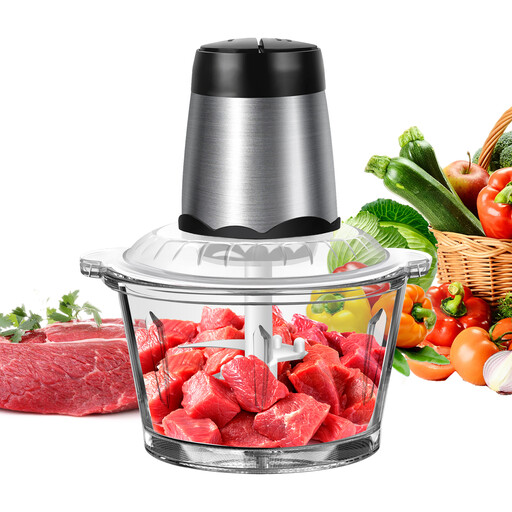
Electric food chopper with 2 l glass bowl
Could be suitable for chopping and blending ingredients for sauce; the product details mention a glass bowl and stainless steel blades.
View at Joybuy
 No image available
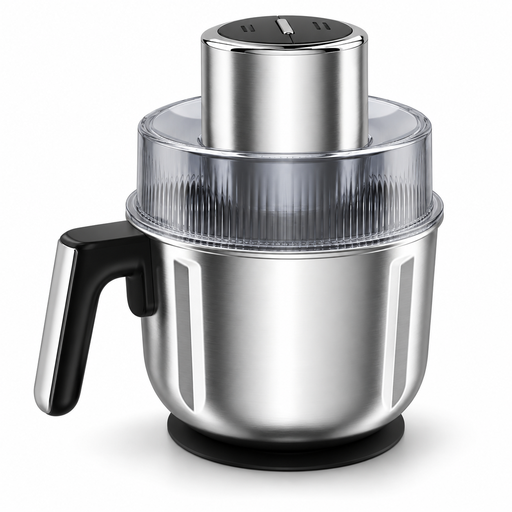
YASHE 25JM08-Q electric food chopper with 3 bowls
The product details list sauces as one possible use and include three stackable bowls for preparing ingredients separately.
View at Joybuy
 No image available
Bear QSJ-D03Q1 electric food chopper, 2 l and 0.6 l
The two glass bowls and separate blade sets are useful for processing ingredients individually; the product title also lists 300 W.
According to the product description, the bowl and lid aren’t heat-resistant. Avoid temperature changes of more than 50 °C.
View at Joybuy
 No image available
Bear QSJ-D03W5 electric food chopper, 2 l, 300 W
The product title lists two speeds and Quad stainless steel 304 blades for preparing ingredients.
According to the product description, run the appliance for no more than 40 seconds at a time, then leave it to rest for at least 2 minutes. After three cycles, allow it to cool down.
View at Joybuy
 No image available
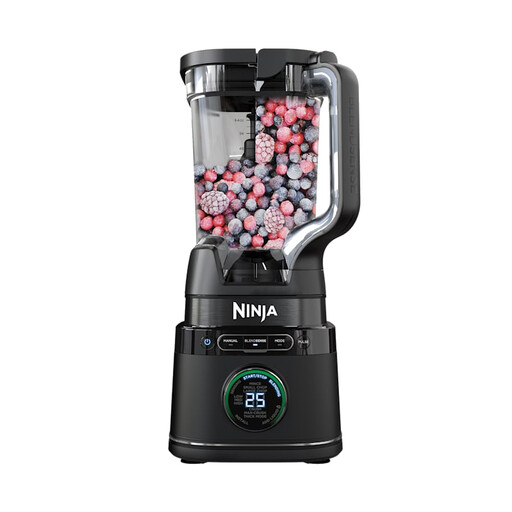
Ninja Professional Blender, 2.1 l jug, 1000 W
This blender is designed for liquid preparations such as sauces and purées; the product title lists three speeds and a pulse function.
According to the product description, don’t blend hot liquids or run the appliance continuously for more than 1 minute.
View at Joybuy
Frequently asked questions
Is an appliance described as having a ‘chopping’ function suitable for making peanut butter from whole nuts?
No. The function description alone doesn’t prove that it’s suitable. A recipe for homemade peanut butter calls for a powerful blender. If you’re considering a food processor, check the instructions and operating limits for the specific model.
How should I clean the appliance after using it in a shared kitchen?
Clean the relevant parts according to the instructions for your model. If you need to avoid peanut contact because of an allergy, include your hands, appliances and work surfaces in your cleaning routine. Food Allergy Research & Education recommends thorough cleaning with washing-up liquid and water, or in a dishwasher. Peanut sauce isn’t suitable for guests with a peanut allergy.
Are a manufacturer’s guarantee and statutory rights the same thing?
No. A manufacturer’s guarantee is separate from your statutory rights. Check the terms of any voluntary guarantee, and contact the retailer if you have questions about a fault.
What does the CE mark mean on a kitchen appliance?
For an appliance that must carry a CE mark, the manufacturer uses it to declare that the product meets the relevant requirements. The European Commission clarifies that the mark isn’t an independent quality test. Its food hygiene rules for food businesses also don’t cover private food preparation for personal consumption.


