If a large tray matters
If you want to bake a galette to share on a large tray, check the usable space and shelf position first. Madame Cuisine’s recipe uses a baking tray and baking paper.


If you don’t have a suitable space for a built-in oven, a countertop oven could work for baking together – as long as your galette tray actually fits inside. For a large tray or several trays at once, a built-in oven with a suitable housing space and the heating functions you need is an obvious option. Above all, check the usable interior dimensions. A pear galette recipe from Madame Cuisine calls for a baking tray and baking paper, but doesn’t specify a minimum size for every galette.
If you want to bake a galette to share on a large tray, check the usable space and shelf position first. Madame Cuisine’s recipe uses a baking tray and baking paper.
A countertop oven could be right for you if you have a suitable spot on your worktop and the tray size and safety clearances are right for the setup. Rommelsbacher and Severin make countertop ovens with different stated cavity capacities.
If you want to bake several small galettes at the same time, check the heating functions and shelf positions specified for the model you’re considering. Bosch describes the HBG278BB3 as having hot air for several levels; this specification applies to this model only.
Madame Cuisine’s galette recipe calls for a baking tray lined with baking paper. That’s why the actual tray and interior dimensions matter more than the oven’s capacity alone.
A good fit if: you don’t have a suitable space for a built-in oven and you’ve confirmed that your tray will fit.
Keep in mind: the oven needs space on your worktop, as well as the safety clearances specified in the instruction manual.
A good fit if: you have a suitable housing space and connection, or regularly take on larger baking projects.
Keep in mind: the housing dimensions and connection must be suitable for the model; specifications for using several levels vary by manufacturer.
| What matters | What to check when buying | Who it matters to |
|---|---|---|
| Usable tray space | Compare the tray, including its rim, with the interior dimensions, shelf space and door clearance of the specific oven. | If I’m baking a large galette to share on one tray, it needs to fit safely inside. Around 36% of consumers put having the right tray space first. |
| Space for installation or positioning | Check the positioning or housing dimensions, connection type and safety information for the specific model. | If there’s no space for a built-in oven, I need a suitable clear area on my worktop for a countertop model. Around 29% of consumers prioritise having the right place to position their oven. |
| Several trays at once | Check the heating function and the number of usable levels specified for the specific model. | If I want to bake several small galettes in one go, being able to use several levels at once is essential. Around 21% of consumers prioritise this. |
| Energy use and cleaning | For ovens with recorded figures, compare energy use per standard cycle for the same heating function and cavity size; assess the cleaning method separately. | If I use the oven regularly, I pay attention to energy use and cleaning effort. Around 14% of consumers put these ongoing considerations first. |
A capacity in litres or a specification for round cake tins doesn’t confirm that a particular rectangular tray will fit in the oven.
Measure your tray and compare it with the shelf space and door opening of the specific model before you order.
If the tray doesn’t fit, you may need to use a different one or make a smaller galette.
The number of usable levels depends on the model. NEFF specifies up to four levels only for certain ovens.
Check the heating function, number of levels and any required accessories against the full model number.
NDR points out that pyrolytic cleaning uses energy. So if you only make a galette occasionally, this feature shouldn’t automatically be your top buying priority.
Weigh up the cleaning effort against how often you expect to use the oven, and check which cleaning method the specific model offers.
Countertop ovens such as the BG 1805/E are worth considering if you don’t want a built-in model.
The TO 2068 is a compact countertop oven for smaller baking projects.
The HBG278BB3 built-in oven is an option if you have a suitable housing space and want to bake on several levels.
The BBIM17300BMPEF is a built-in option for a kitchen with a suitable housing space.
CircoTherm is a product range for anyone who wants to use several levels with the specific model they choose.
The models below include built-in and countertop ovens for baking projects such as a galette. If you’re using a large tray, be sure to check the actual interior dimensions and shelf space of the model.
 No image available
As a built-in appliance, this model is only suitable if you have a compatible housing space; check separately whether your galette tray will fit.
The product name also lists 3 kW, hot air, grill and pizza functions, AquaClean steam cleaning, an LED display with timer, ECO mode and energy class A.
 No image available
This built-in oven requires a suitable housing space. If you want to bake with several trays, check the heating function and use of multiple levels in the model documentation.
The product name lists 3D hot air, AirFry and pyrolytic cleaning.
 No image available
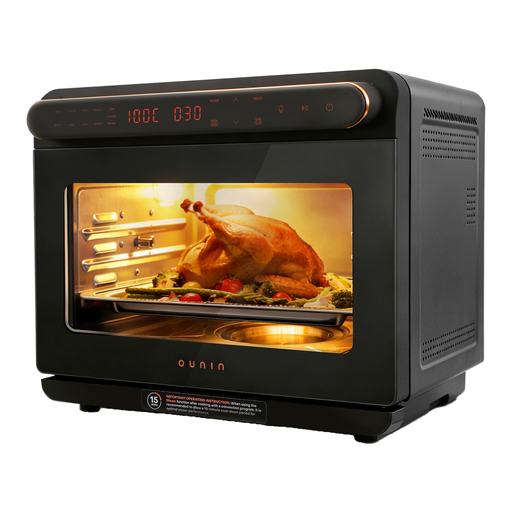
This countertop model is an option if you don’t want a built-in oven; check whether your galette tray will fit in the cavity.
The product name lists Steam Bake, Steam Roast, a rotisserie, a 1 l water tank and a 304 stainless steel interior.
 No image available
This countertop model could work for a baking session if you don’t have a built-in oven; compare your tray’s dimensions with the usable interior space.
The product name lists 1,600 W, a timer, a crumb tray and a temperature range of 100 to 250 °C; baking and grilling are listed as functions.
 No image available
This built-in model requires a suitable housing space; whether it will fit a particular galette tray depends on the actual interior dimensions.
The product name lists nine cooking functions and energy class A+.
Start by following the recipe you’re using. One published pear galette recipe uses a baking tray and baking paper; EDEKA recommends conventional top and bottom heat at 180 °C for a different fruity mini galette, but this isn’t a general recommendation for every recipe. NDR separately explains that being able to switch on bottom heat on its own can help if the base of a fruit cake is still soft.
You can’t tell from the oven’s external dimensions alone. Check the safety clearances and ventilation requirements in the instruction manual for the specific model; Rommelsbacher advises leaving the generous clearances specified in the manual for the BG 1805/E.
No. The oven label applies to the oven, not the hob. According to the German Environment Agency, for models covered by the label it shows details including cavity capacity and energy use per standard cycle for different heating functions. The European Commission lists small ovens as an exception to the stated scope of its ecodesign rules.
No. The Verbraucherzentrale distinguishes between your statutory rights against the seller and an additional voluntary guarantee, whose terms depend on the provider. If a product is faulty, a repair or replacement may be considered first as part of the remedy.
The Bundesnetzagentur lists checks including correct CE marking, identifiable manufacturer details, German-language instructions with safety warnings and a declaration of conformity. These general checks don’t automatically confirm that a particular product listing is compliant.