Pear juice fans
You mainly want to juice pears and are looking for specific information about the ingredients a particular model can handle. If the fruit is very soft, you’ll also want to consider the consistency of the juice.


When choosing a juicer for making pear juice at a holiday cottage, don’t base your decision on the type of juicer alone. First check the ingredients listed for the specific model and how ripe the pears are. Kuvings explicitly lists pears for the AUTO10S, but this does not prove that it produces more juice than another model. A centrifugal juicer could be a good choice if you value quick preparation and parts that are easy to clean; according to ETM TESTMAGAZIN, centrifugal juicers work faster than slow juicers. If space is limited, check the appliance dimensions and storage space too, not just the feed chute.
You mainly want to juice pears and are looking for specific information about the ingredients a particular model can handle. If the fruit is very soft, you’ll also want to consider the consistency of the juice.
You want to make juice now and then, spending as little time as possible on preparation and cleaning up afterwards.
You need an appliance that fits on limited worktop space and can be put away after your stay. That’s why it’s worth comparing the appliance’s size and capacity per serving.
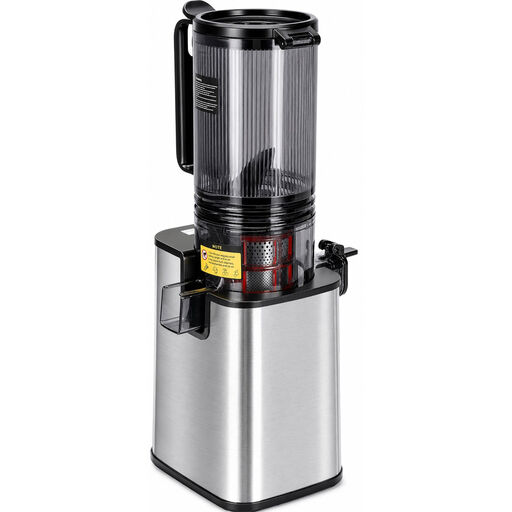
A good fit if: you want to juice pears regularly and can find suitable ingredient information for the specific model. Kuvings lists pears for the AUTO10S.
Consider: According to ETM TESTMAGAZIN, this type of juicer works more slowly than a centrifugal juicer. Information about one model doesn’t prove that it produces more pear juice.
A good fit if: you value quick preparation and the model has features that make it easy to clean.
Consider: The feed chute, dimensions and container vary by model, so these details alone don’t tell you how well it will juice pears.
| Priority | What to check when buying | Who should pay particular attention? |
|---|---|---|
| Suitability for pears and ripeness | Check the ingredients listed and the instructions for the exact model; very soft pears may produce a different consistency. | If I mainly want to juice pears, I want to check the suitability of the specific model and take the fruit’s ripeness into account; around 36% of consumers say suitability for pears is their top priority. |
| Preparation and cleaning | Check the feed chute, removable parts and whether they are dishwasher-safe separately. | If I just want to make a few glasses of juice quickly at a holiday cottage, I care about the effort involved, from chopping the fruit to washing up; around 29% of consumers put a quick process first. |
| Worktop space and storage | Check the external dimensions and allow space for the collection container and any parts that have been removed. | If the kitchen is small, I need an appliance that fits on the worktop and can be put away afterwards; around 21% of consumers say space requirements are their top priority. |
| Serving guests | Consider the juice container’s capacity and how often you’ll need to stop separately; the stated capacity is not a measured juice yield. | If several guests want juice, I want to plan around the container size and the juicing process; around 14% of consumers say making enough for several servings is their top priority. |
Kuvings specifically lists pears for the AUTO10S. Its guidance on other very soft fruits shows that consistency can be affected by ripeness.
Check the ingredients listed and the instructions for the specific model. Don’t assume you’ll get a particular juice yield from very soft pears.
A larger chute may mean less chopping, but it doesn’t tell you how easy the sieve and pulp container are to clean.
For the exact model, compare the feed chute, removable parts and cleaning instructions.
For the Bosch MES3500, the stated capacity of 1.250 ml refers to the size of the juice container, not the measured yield from a particular quantity of pears.
Use the stated capacity to plan servings, but don’t treat it as an indication of juice yield. Bosch Home Appliances lists 1.250 ml as the container capacity of the MES3500.
A slow juicer option if you’re looking for specific information about juicing pears.
You can assess the VitaJuice 3 MES3500 by checking its feed chute, container capacity and cleaning instructions.
The Viva Collection HR1832/00 is an option if compact dimensions and juicing straight into a glass matter to you.
According to the manufacturer, the MJ-L900 slow juicer has a specified feed chute, ingredient container and filter.
Another brand whose models and instructions you can check against the type of pears you have.
The options below include slow juicers and centrifugal juicers. If pears are your main fruit, pay particular attention to the ingredient information for each model. Cleaning requirements and available worktop space also matter in a holiday cottage kitchen.
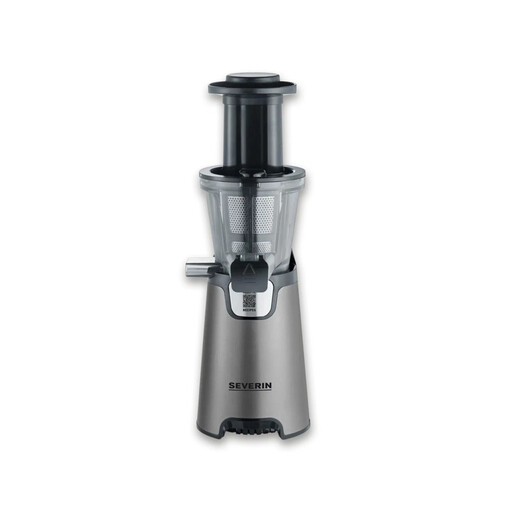 No image available
The product description lists soft and hard fruit, as well as vegetables, as suitable ingredients.
1-litre juice container; 150 W; stainless steel. The description mentions an Easy-Clean design and dishwasher-safe parts.
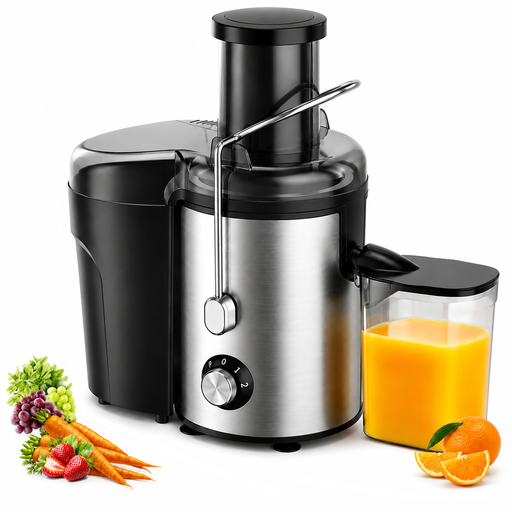 No image available
An option to consider if you want to compare a wide feed chute and multiple speed settings.
600 W; 75-mm feed chute; two speed settings for soft and harder ingredients, according to the product description. A brush is included for cleaning the filter and corners.
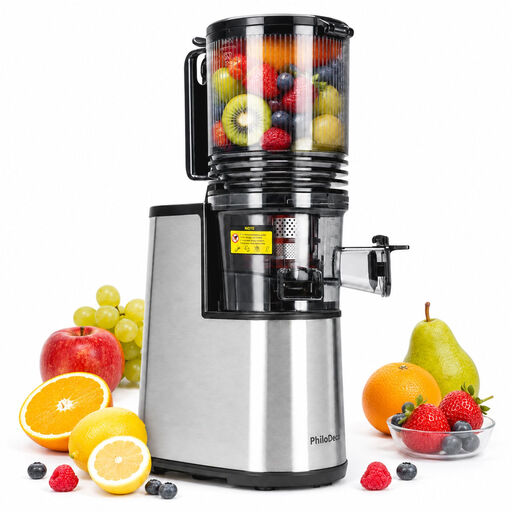 No image available
The product name indicates that it’s designed for whole fruit and vegetables.
110-mm feed chute; 40 Nm; reverse function to help prevent blockages. The description mentions tool-free dismantling and hand-washing the parts.
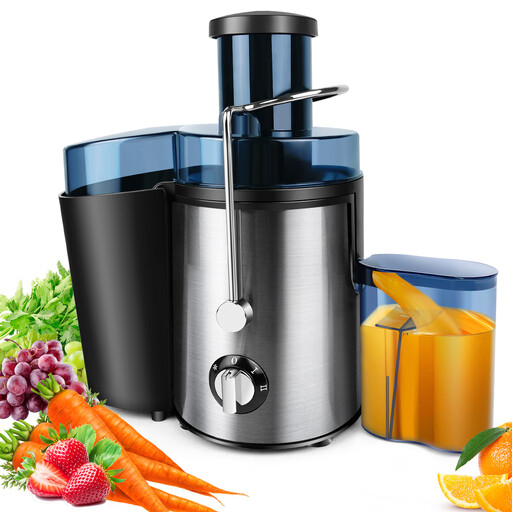 No image available
An option to consider if you want to compare two speed settings and a smaller stated capacity.
1,000 W; 65-mm feed chute; two speed settings; 500 ml capacity. The product description mentions removable parts and a cleaning brush.
 No image available
The product description explicitly lists pears as a whole fruit that can be juiced.
250 W; 110-mm feed chute; dual filter and anti-drip feature. The description lists removable, dishwasher-safe parts and approximate dimensions of 14 × 17 × 42 cm.
Not necessarily. Kuvings lists pears for the AUTO10S, but notes that other very soft fruits may produce a pulpy consistency. Check the instructions for your model and take the fruit’s ripeness into account rather than assuming you’ll get a particular juice yield.
Read the instructions for the specific appliance and assemble the parts as directed. Wash the fruit; Philips also recommends removing inedible peel and cutting ingredients if needed. The Kuvings AUTO10S instructions warn against putting fingers or objects into the feed chute.
The German Federal Institute for Risk Assessment recommends handling raw fruit and kitchen utensils hygienically to prevent contamination and the spread of germs. Clean the parts that come into contact with food according to the appliance instructions, and only make as much juice as you can handle hygienically.
For purchases from a trader in the EU, a statutory guarantee of at least two years generally applies against the seller. Your Europe, the EU’s consumer portal, also points out that an additional commercial guarantee cannot replace or restrict these rights.
According to Your Europe, the EU’s consumer portal, CE marking rules apply to electrical and electronic equipment. The mark is the manufacturer’s declaration that the product meets the relevant EU requirements; it is not an independent EU quality check. This alone does not establish whether the rules apply to a purely mechanical press.