Quick soup cooks
You want to cook chicken and pearl barley with as little hands-on cooking time as possible, and can follow the appliance’s pressure-cooking instructions.


If a short cooking time is important to you, a pressure multicooker could be a good fit – provided its usable capacity and instructions are suitable for pearl barley, and you allow for the time it takes to build and release pressure. If you’d like to check or season the soup as it cooks, consider a model that simmers or slow cooks without pressure. Measure the space available in your holiday cottage kitchen and check in advance that you’re allowed to use the appliance there.
You want to cook chicken and pearl barley with as little hands-on cooking time as possible, and can follow the appliance’s pressure-cooking instructions.
You’re cooking for a group on a trip or want to have leftovers. Compare usable capacity and the maximum fill level rather than looking only at the stated pot size.
You need to allow for space to use and wash the appliance, and decide whether you’d prefer pressure cooking or a model that simmers.
When choosing an appliance for chicken and pearl barley soup in a holiday cottage, your decision will mainly depend on what matters most to you.
A good fit if: You want to pressure-cook soup and grains in one appliance and are happy to follow the instructions on fill limits.
What to consider: Building and releasing pressure add to the overall cooking time; the pressure must be fully released before you can open the lid.
A good fit if: You want to check and season the soup as it cooks, and pressure cooking isn’t a priority.
What to consider: This type of model isn’t a pressure cooker; the stated pot size doesn’t automatically tell you how much soup it can hold.
| Priority | What to look for when buying | Who it matters most to |
|---|---|---|
| Cooking method and time | Check the cooking programmes on the specific model, and allow for pressure build-up and release if pressure cooking. | If I want to cook chicken and pearl barley with as little hands-on cooking time as possible, I compare pressure cooking with simmering. Around 29% of consumers say cooking method and time are their main priorities. |
| Usable capacity and fill level | Rommelsbacher lists 4 l of usable capacity for the MD 1000, while Tefal lists 3.2 l for the CY7548. Also check the fill marks and guidance for ingredients that expand. | When making several portions, I want to know how much soup the pot can actually hold, rather than relying on the largest capacity figure. Around 24% of consumers prioritise portion size. |
| Space in the holiday cottage | Check the appliance’s dimensions and allow space for the lid when open; check the house rules and suitable power connection at the property. | When worktop space is limited, I want to know in advance whether the appliance will fit with its lid open and with room to release steam. Around 18% of consumers say available space is their main priority. |
| Cleaning after cooking | Check the cleaning instructions for the pot, lid, seal and controls separately. | After eating, I want to be able to clean the pot and removable parts without an unnecessarily fiddly process. Around 17% of consumers say cleaning is their main priority. |
| Spare parts and future use | Check the full model number against the compatibility list for the spare parts you need. | If I want to use the appliance for a long time, I make sure that spare parts such as sealing rings are compatible with the exact model variant. Around 12% of consumers say spare parts are their main priority. |
Figures vary by model: Rommelsbacher lists a 6 l pot capacity and 4 l usable capacity for the MD 1000; Tefal lists a 5.0 l capacity and 3.2 l usable capacity for the CY7548. If you’re using ingredients that expand, the fill instructions may also be important.
Plan your portions using the stated usable capacity and the instructions, not the largest capacity figure.
According to the manufacturer, the Russell Hobbs Good to Go 28270-56 offers functions including cooking or boiling and slow cooking; the manufacturer doesn’t list a pressure-cooking function.
First decide whether you actually want to pressure-cook, then compare appliances with the right cooking method.
F.A.Z. Buying Guide describes cleaning the Rommelsbacher MD 1000 as fiddly. Instant Pot replacement seals are listed for specific model numbers, so you can’t identify the right one by brand name alone.
Read the cleaning instructions and, when buying spare parts, check the full model number against the compatibility list.
The MeinHans MD 1000 combines pressure cooking with searing and slow cooking. Rommelsbacher lists 4 l of usable capacity for its 6 l pot.
According to Tefal, the Turbo Cuisine CY7548 combines pressure cooking with searing and slow cooking. Its stated usable capacity is 3.2 l, from a total capacity of 5.0 l.
The Good to Go 28270-56 is worth considering if simmering or slow cooking matters more to you than pressure cooking.
The Duo range is aimed at buyers looking for an electric pressure multicooker who are prepared to follow the instructions for their specific model.
The OL650EU is a multicooker option for buyers considering cooking programmes beyond soup.
The selection ranges from a small, non-pressure slow cooker to pressure multicookers. Compare usable capacity, fill instructions and the amount of space each appliance will take up in your holiday cottage kitchen.
 No image available
An option if you want to slow-cook soup without pressure.
Listed as 2.6 l; the product details specify a non-stick inner pot and two manual heat settings. Not a pressure cooker.
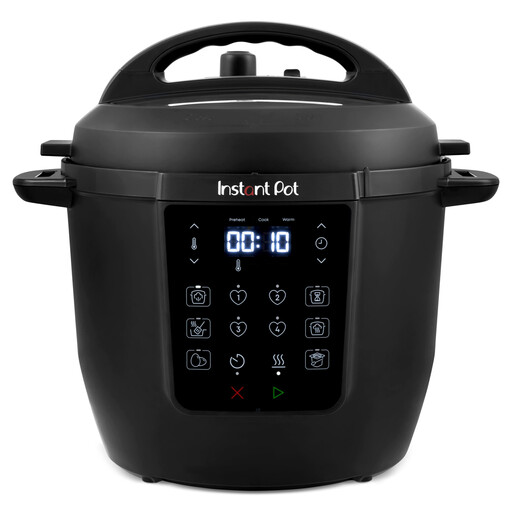 No image available
Worth considering if you want to use pressure cooking and other cooking methods in one appliance.
The product details list a 5.7 l capacity, along with pressure cooking, slow cooking, searing and steaming; the lid and stainless-steel pot are described as dishwasher-safe. Only open the lid once the pressure has been fully released, as explained in the instructions.
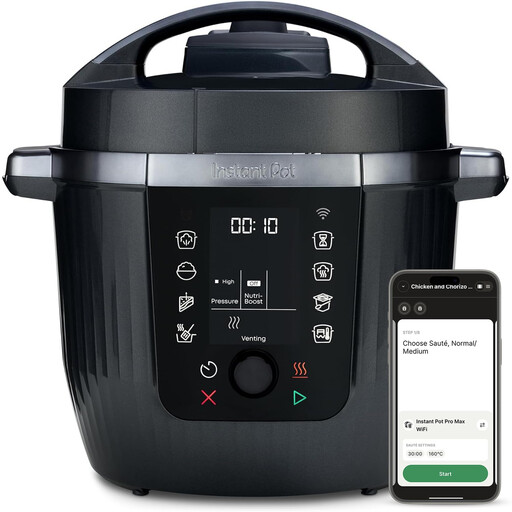 No image available
A pressure-cooking option if you want to use several cooking methods and can plan ahead for the space it will need.
Listed with a 5.7 l capacity; the product details state that it serves up to six portions and measures 35.5 × 35.5 × 32.5 cm. The pressure must be fully released before you open the lid; also follow the fill marks.
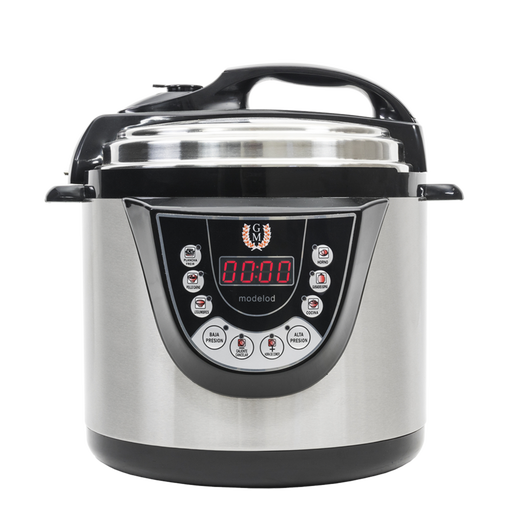 No image available
Could suit you if you want to combine pressure cooking and searing in one appliance.
The product details distinguish between a 6 l pot capacity and 5 l of usable capacity, and list nine cooking menus and two pressure settings. The instructions may not be available in English, so check before buying that you can access a version you understand.
 No image available
An option if you want to cook soup and grains in a pressure multicooker.
The product details list an 8 l capacity and programmes for soup or broth, poultry and multigrain. The safety information states that the fill level for grains must not exceed the halfway mark; follow the instructions and never force the lid open while the cooker is pressurised.
No. Follow the fill marks and instructions for your exact model, especially when using ingredients that expand. The Instant Pot Duo instructions specify a stricter fill limit for certain expanding foods than for other dishes; this isn’t a general rule for pearl barley across all brands.
Only open it once the pressure has been fully released, following the instructions for your specific appliance. The Instant Pot Duo instructions explicitly warn against forcing the lid open while the cooker is pressurised.
The German Federal Institute for Risk Assessment recommends cooking poultry to a core temperature of at least 70 °C for two minutes. A programme time alone doesn’t confirm that the pieces of chicken have reached this temperature.
No – make sure you chill any leftovers properly. The German Federal Institute for Risk Assessment points out that inadequate temperatures during transport and storage can allow harmful bacteria to multiply; keeping food warm isn’t a substitute for storing it properly overnight.
Check the model identification, instructions and suitable power connection. The German Federal Institute for Occupational Safety and Health describes the scope of low-voltage regulations for new, ready-to-use electrical products rated at 50 to 1,000 V AC or 75 to 1,500 V DC. The EU explains that CE marking is required only for products covered by relevant harmonised legislation that specifically requires it; it isn’t an independent quality mark.
In Germany, statutory consumer rights generally apply against the retailer; a manufacturer’s guarantee is separate. The German consumer advice centre explains the difference. If you need a replacement seal, also check that it’s compatible with your exact model.