
Lieferung heute & morgen

Qualitätsgarantie

Willkommens-Angebote freischalten: KOSTENLOSE Lieferung | Bis zu 80 % RABATT | Kostenlose 30-Tage-JoyPlus-Testphase
App herunterladen
A cluttered desk and scattered documents can seriously disrupt concentration in the office or at home. A mobile pedestal cabinet promises a simple solution for greater order and efficiency. However, the selection process is fraught with pitfalls that can quickly turn a practical aid into a costly mistake. Many models look good at first glance but reveal their weaknesses only through daily use.
This guide will show you what to look for to avoid the most common flaws. We focus on the critical features that distinguish a functional pedestal cabinet from a frustrating one.
Before you make a decision, you should be aware of the typical flaws that often only become apparent after purchase:
To avoid these problems, you should base your purchasing decision on objective criteria. The following three parameters are crucial for the longevity and functionality of your office cabinet.
The choice of material affects stability, durability, and security.
The quality of the casters determines how truly flexible the desk cabinet is.
A pedestal cabinet with drawers is only as good as its interior.
Instead of making a blanket recommendation, we have selected models tailored to specific user profiles and their requirements.
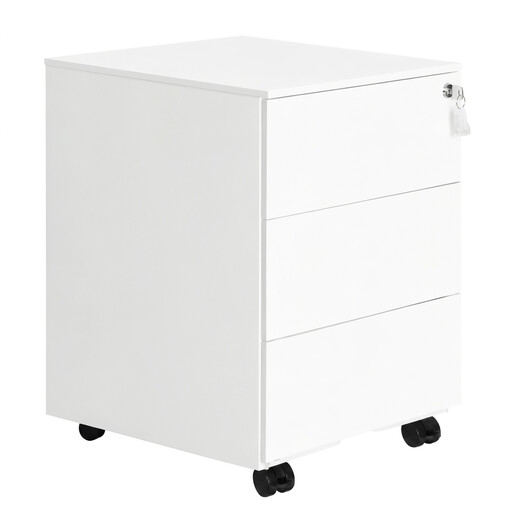
Why This Fits Their Persona: Ideal for home office users who want a secure, durable, and ready-to-use solution with no assembly required. Its compact steel construction fits discreetly under a desk.
The robust steel construction and high load capacity of 15 kg per drawer prevent sagging bottoms. As it arrives pre-assembled, it eliminates problems from incorrect assembly. The additional support caster under the bottom drawer effectively prevents tipping.
Completely pre-assembled (only casters need to be attached). All three drawers can be centrally locked with a single key. Full-extension slides for easy access.
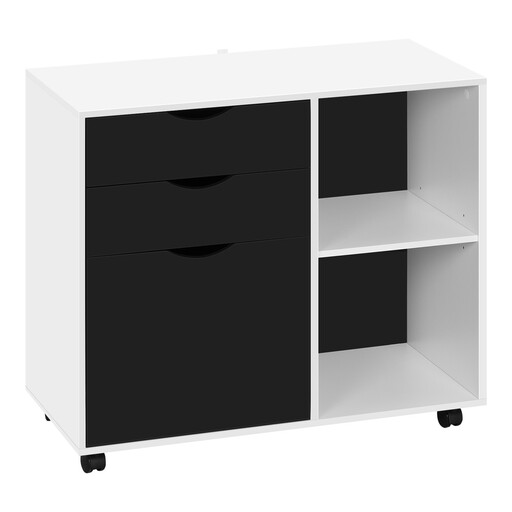
Why This Fits Their Persona: Perfect for users who need more than just drawers. This model doubles as a printer stand and offers a mix of open and closed storage for quick access and organised filing.
The wide top surface (80 cm) is explicitly designed for devices like printers, providing the necessary stability. The 5-caster system, including a central anti-tip caster, ensures a secure footing even when the drawers are loaded.
Multifunctional hybrid design with drawers and open shelves. The bottom drawer is equipped with a rail for A4 hanging files.
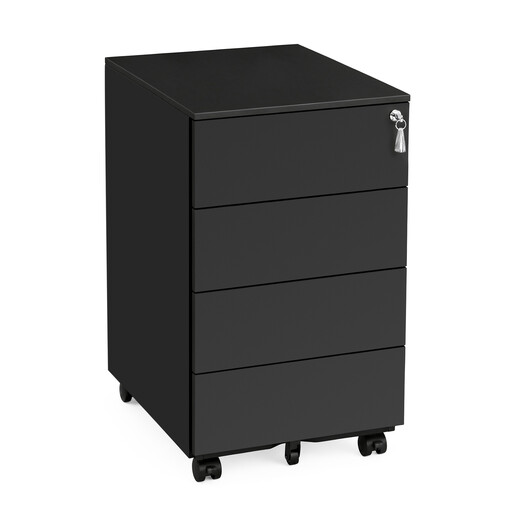
Why This Fits Their Persona: For those who seek a clean, modern design without compromising on functionality. The monolithic steel construction, available in black or white, blends seamlessly into minimalist workspaces.
The solid steel construction and high load capacity of 15 kg per drawer defy the assumption that design comes at the expense of stability. Delivery in a pre-assembled state guarantees a sturdy structure right from the start.
Clean, seamless design for a modern aesthetic. Four spacious, full-extension drawers and a practical utensil tray for small items. Central locking system for all drawers.
We have compiled a complete, up-to-date list of products that fully meet these strict selection criteria and safety requirements.
1. How much weight can an office pedestal cabinet support? The load capacity varies greatly depending on the material and construction. Steel cabinets often support 15 kg or more per drawer. For engineered wood models, the total load capacity is the key figure, typically ranging from 35 kg to 70 kg. Always check the manufacturer's specifications for the maximum load of the drawers and the entire unit.
2. Is a steel or wood pedestal cabinet better for a home office? It depends on your priorities. A steel home office cabinet is often more durable, more secure (lockable), and comes pre-assembled, making it ideal for storing heavy documents. Engineered wood cabinets offer more design options to match home furniture but usually require self-assembly.
3. Do I need a pedestal cabinet with a fifth caster? A fifth caster under the front edge of the bottom drawer is highly recommended. It is a crucial safety feature that prevents the cabinet from tipping forward when the heaviest drawer (often the one with hanging files) is fully extended. This significantly increases stability and safety in daily use.