Who would benefit from a pedestal fan at a hobby table?

A focused breeze at your hobby table

If you usually work in one place, it’s important to adjust the airflow to suit your seat by changing the fan’s height, tilt and speed. IMTEST explains that fans with different speed settings can provide anything from a gentle breeze to a stronger airflow.

For hobbyists who need a quieter workspace

When you need to concentrate, it matters whether the airflow you want is available at a comfortable noise level. IMTEST’s individual review of the Dreo 502S notes that noise levels vary between settings.

For hobby rooms with limited floor space

If the fan needs to fit alongside your table and other furniture, its base and oscillation range must suit the available space. IMTEST notes that a traditional fan head can take up more room than a slimline design.

What should you look for when buying?

Traditional pedestal fan with a rotating head

A good choice if: you want to direct airflow from floor level towards your table and have room for the fan head.

Consider: the fan head needs more floor space, and a high maximum setting doesn’t tell you how comfortable the airflow will feel when you’re seated.

Pedestal air circulator with multi-directional movement

A good choice if: you want to circulate air not just around you, but also around your desk or into other parts of the room.

Consider: a wider oscillation range is no substitute for suitable positioning or comparing noise levels at the setting you’ll use.

Slim tower design

A good choice if: there isn’t enough floor space or room to move around a traditional fan head.

Consider: the design alone doesn’t tell you how the airflow will feel where you’re actually sitting.

Buying priority What to look for Who is it important to?
Airflow where you’re sitting Check that there’s a gentle setting you can use, and that you can adjust the height and tilt to suit your position. If I’m sitting at the table for a long time, I want to control the breeze and point the fan head towards me. Around 36% of consumers put adjustable airflow first.
Noise while you work Compare noise levels at the setting you’ll actually need, not just the lowest one. When I’m concentrating on a hobby, I want some airflow without the fan becoming too noisy. Around 29% of consumers prioritise quiet operation.
Floor space and room to oscillate Allow for the base, the fan head’s diameter and the space needed for oscillation. If there’s little room next to my table, the fan needs to fit and move without getting in the way of my workspace. Around 21% of consumers prioritise footprint and reach.
Running and maintenance Consider the rated power in relation to how long you plan to run the fan; check the instructions for the specific model before cleaning it. If I use the fan frequently, I want to be able to fit running and cleaning into my routine. Around 14% of consumers put ongoing effort first.

Common misconceptions when buying

  • Assuming maximum airflow will feel best at your table

    A high setting can feel too strong or too noisy when you’re sitting in one place. In its individual review of the Dreo 502S, IMTEST describes how air speeds vary depending on the setting and distance.

    Compare the lowest setting that works for you, and check whether the fan’s height and direction suit the distance from your seat.

  • Assuming the minimum noise rating applies to every setting

    A noise rating for the quietest setting doesn’t automatically tell you how loud the fan will be at a higher airflow. IMTEST reports that the Dreo 502S is noticeably louder on its high setting.

    Check which setting the noise rating applies to, and compare it with the airflow you need while you work.

  • Confusing air circulation with ventilation or room cooling

    A fan moves the air around the room, but it doesn’t lower the room temperature. Germany’s consumer advice centre also points out that how often you need to ventilate depends on moisture and sources of pollutants in the room.

    Use the fan to move the air, and plan ventilation separately according to conditions indoors and outside.

Notable brands to consider

Dreo

The Dreo 502S (DR-HPF002) pedestal air circulator is worth considering if you want to compare fans with widely adjustable airflow and flexible controls.

  • IMTEST describes a wide range of airflow between the settings on the model it tested.
  • The same individual review criticises its stability and notes that the high setting is louder. These observations apply to the Dreo 502S, not every fan from the brand.

Philips

The CX2550/00 is a traditional pedestal fan. Its height, tilt, oscillation and timer are all worth comparing.

  • Philips lists three speed settings, 90° oscillation and 30° vertical tilt for this model.
  • The noise levels are provided by the manufacturer and apply under the stated operating conditions; they are not the result of an independent test at a hobby table.

Rowenta

The VU5677F0 is a pedestal fan with multiple settings and an adjustable-height stand.

  • Rowenta lists ten settings and 120° automatic oscillation for this model.
  • The manufacturer’s claims about reach and quiet operation apply under different conditions, so they don’t tell you on their own how loud the setting you need for work will be.

Xiaomi

The Mi Smart Standing Fan 2 is worth considering if you want to compare tabletop and floor-standing options, as well as app control.

  • Xiaomi lists a DC motor and up to 100 settings that can be selected in the app.
  • App features require the right set-up. The manufacturer’s consumption figures don’t apply across all settings and running times.

Levoit

The LPF-R432-WEU is another pedestal fan worth considering when comparing airflow and controls.

  • IMTEST includes this model as another fan option and describes it as an alternative without an app.
  • This description applies to the model named and doesn’t confirm the features of other Levoit fans.

Joybuy products for your hobby table

This selection includes pedestal fans and air circulators for directing airflow at your table, as well as more flexible positioning and air distribution around the room.
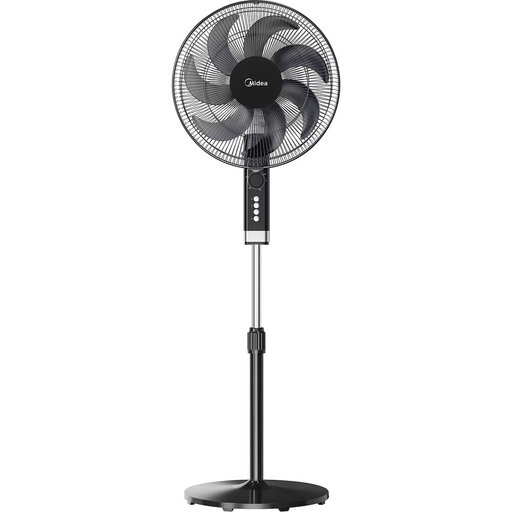
Midea FS40-23MT pedestal fan

Midea FS40-23MT pedestal fan

This traditional pedestal fan is worth considering if you want airflow directed from floor level towards your hobby table.

50 W; three speed settings.

View at Joybuy
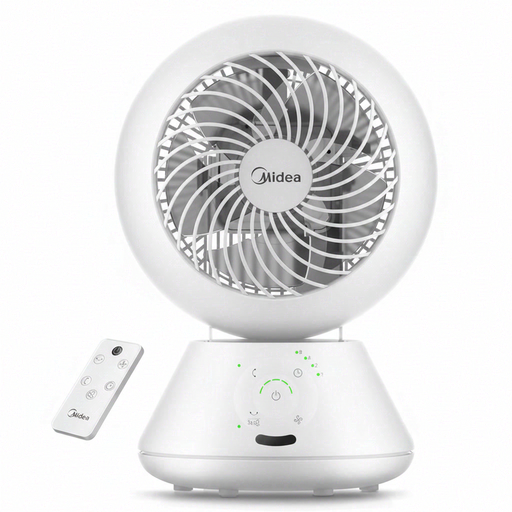
Midea MDF24JRW fan for floor or tabletop use

Midea MDF24JRW fan for floor or tabletop use

Its floor-standing and tabletop options give you different ways to direct airflow around your workspace.

30 W; five speed settings; oscillation; remote control.

View at Joybuy
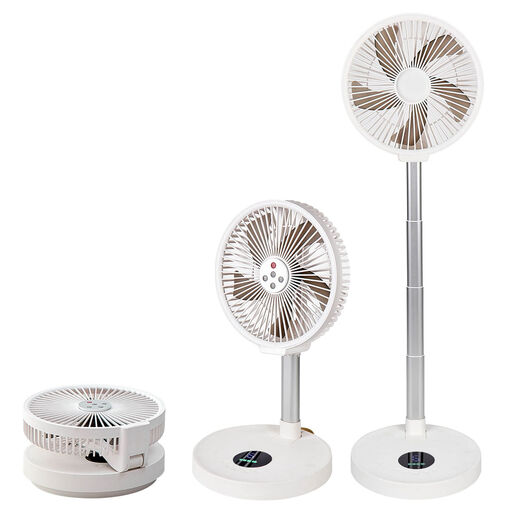
Height-adjustable floor fan with 7200 mAh battery

Height-adjustable floor fan, 7200 mAh

Its described conversion to a tabletop fan could be handy if you want to change how it’s positioned at your hobby table.

Six speed settings; remote control; timer; height-adjustable; white.

View at Joybuy
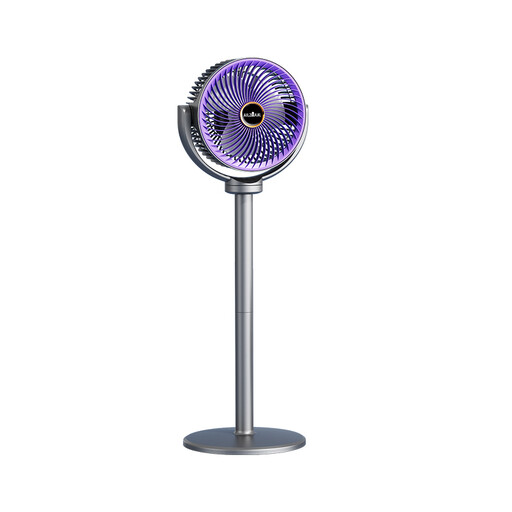
3-in-1 fan with 2400 mAh battery

3-in-1 fan, 2400 mAh

The height-adjustable design is worth considering if you want to switch between tabletop and pedestal use.

Five speed settings; Type-C port; fan head tilts up to 90°.

View at Joybuy
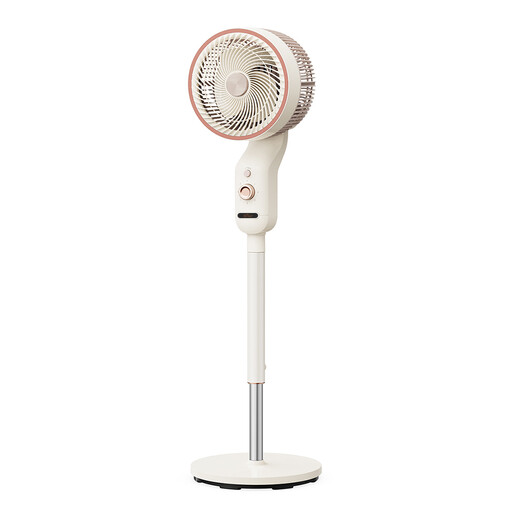
Bear Electric air circulation fan

Bear Electric air circulation fan

The height-adjustable design is an option if you want to position the airflow to suit your workspace.

Three speed settings; height adjustable from 34 to 41 inches; 360° air circulation.

View at Joybuy

Frequently asked questions

Does a pedestal fan cool the air in a hobby room?

No. A pedestal fan moves the air around the room. The airflow may feel cooler on your skin, but it doesn’t lower the room temperature. If the air outside is cooler than the air indoors, opening the windows can help release heat.

How should I position a fan at my hobby table?

Start by adjusting the height and tilt so the fan points towards your seat, then begin on a low setting. If you don’t want the airflow to stay focused on the same spot, check whether the fan oscillates; adjustment options vary by model.

What should I know about maintenance and running costs?

To work out electricity costs, you need to consider the fan’s power, how long you use it for and your electricity tariff; a wattage figure alone doesn’t tell you the cost. Follow the instructions for your specific model when taking it apart and cleaning it. Dreo recommends regular cleaning for the TurboPoly Fan 513S; this interval isn’t a recommendation for other models.

What should I check when buying an electrical appliance in Germany?

Germany’s Federal Network Agency lists factors such as CE marking, manufacturer details and German-language instructions with the necessary warnings as part of market surveillance. CE marking is a declaration for which the manufacturer is responsible, not an independent quality mark. The European Commission describes the Low Voltage Directive as applying to mains-powered appliances with 50 to 1,000 V AC; check the requirements for the specific model.

What are my rights if the fan is faulty, and how should I dispose of it?

If the fan is faulty, you have statutory consumer rights against the seller; these are separate from any voluntary guarantee. According to Germany’s consumer advice centre, online purchases generally come with a 14-day right to cancel. According to the Federal Environment Agency, a fan that has reached the end of its life should be taken to a separate collection point for electrical waste, not put in household rubbish.