For quiet, focused work
If you sit close to the fan, a low setting that’s easy to adjust is important, so it causes as little disruption as possible while you work.


For a single desk, a pedestal fan with well-adjustable low settings is a sensible choice; for several workstations, suitable oscillation is important too. Check the noise and airflow at the setting you’ll actually use, as well as the base footprint, height and direction at the intended spot. A maximum setting or a single low dB reading alone won’t determine how comfortable it is to work with. IMTEST highlights audible differences between operating settings; according to the German Environment Agency, a fan moves air and cools the skin, but does not lower the room temperature.
If you sit close to the fan, a low setting that’s easy to adjust is important, so it causes as little disruption as possible while you work.
If you want the airflow to reach more than one fixed spot, look for direction and oscillation settings that suit the different workstations.
If space is tight, measure the available floor area and check whether the height and direction let you aim the airflow at your seated position.
| What matters when buying | What to check | Who is it important to? |
|---|---|---|
| Noise during focused work | Check independent information about low settings and whether they still move enough air. | If I work right at my desk, I want to be able to use a low setting without the noise affecting my concentration; around 25% of consumers put quiet operation first. |
| Airflow at your desk or around the room | Check the adjustable settings, horizontal oscillation and, if needed, vertical adjustment. | If several workstations need airflow, I want to distribute it appropriately rather than have it blow constantly at the same spot; around 25% of consumers prioritise wide airflow coverage. |
| Footprint and direction | Measure the available floor space and check the height, tilt and swivel options against your seated position. | When space beside or behind my desk is limited, the fan needs to stand securely and direct the airflow at seated height; around 20% of consumers put a suitable fit first. |
| Power consumption during extended use | Compare the power consumption and work out usage based on how long you actually run the fan. | If the fan runs on many working days, I want to estimate its consumption based on how long I use it; around 15% of consumers prioritise low running costs. |
| Purchase price and value | Check which features you really need and compare them with meaningful tests of the fan’s operating settings. | If my budget is limited, I only want to pay for features that are genuinely useful for my workspace; around 15% of consumers focus on the purchase price. |
A reading for an especially quiet mode doesn’t automatically tell you how loud the fan will be when moving the amount of air you need. IMTEST points out that fans can become more audible at higher settings.
Compare noise figures for the specific operating setting and look for tests that assess noise and airflow together.
A fan moves air and can cool your skin, but it doesn’t lower the room temperature. For overheated rooms, the German Environment Agency recommends measures including suitable sun protection.
Choose based on the airflow at your workstation, and consider sun protection and airing the room when it’s cooler outside.
A pedestal fan with a rotor head may need more floor space than a slimmer design. IMTEST therefore highlights the space required as a factor to consider.
First measure the available floor area, then check whether the height and tilt angle suit your seated position.
The German consumer advice centre distinguishes between your statutory claims against the seller and a voluntary guarantee, which is subject to separate terms.
Keep your proof of purchase and guarantee terms, and contact the seller first if there’s a fault.
The DREO 502S is an example of a pedestal air circulator with swivel and adjustment options.
The LPF-R432-WEU can be a useful reference if you’re looking for a pedestal fan with an adjustable rotor head.
The 3000 Series CX3550/01 pedestal fan combines a classic pedestal design with app control.
The Turbo Silence Extreme VU5677 is an option if multiple settings, adjustable height and a remote control are important to you.
The bladeless MF10 offers a different pedestal design for shoppers considering wide airflow coverage.
The Joybuy products below are selected for moving air around a home office desk. They include classic pedestal fans as well as other pedestal and air circulation designs.
 No image available
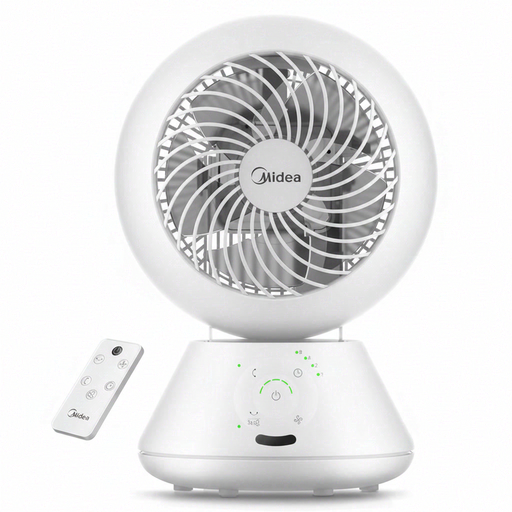
A good fit if you’re looking for a fan with multiple settings and an oscillation function for your workspace.
30 W; five speed settings; oscillation function; remote control; white.
 No image available
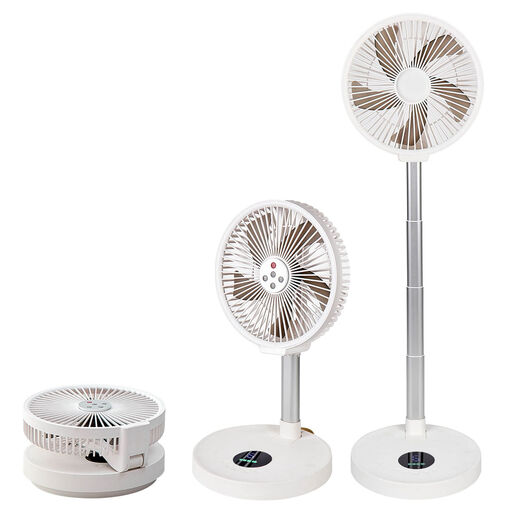
A good fit if you’re looking for a height-adjustable fan that you can move around the office.
Six speed settings; 90° oscillation; manually tilting head; remote control; timer function.
 No image available
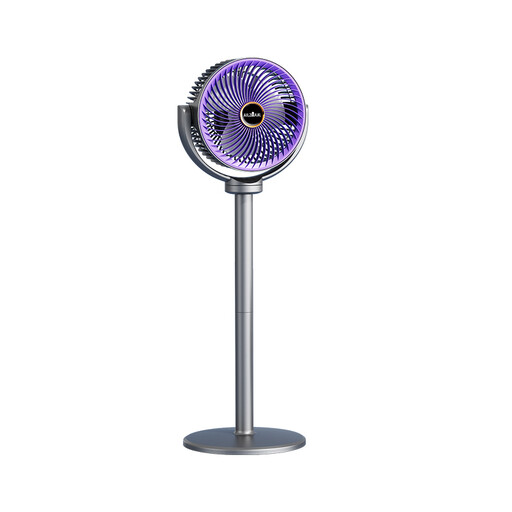
A good fit if you’re looking for a height-adjustable pedestal fan with a tilting head.
Five speed settings; head tilts by 90°; 2400 mAh; Type-C.
 No image available
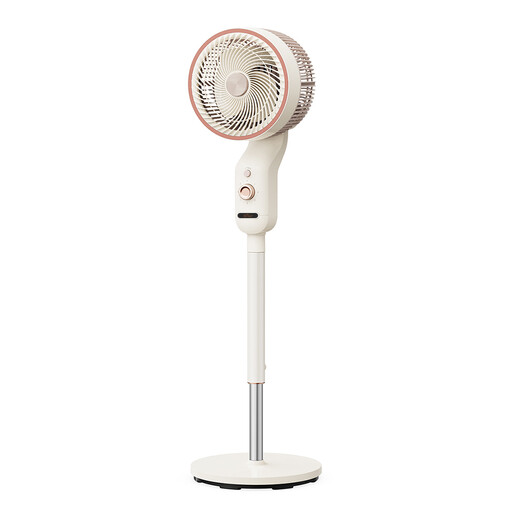
A good fit if you’re looking for a height-adjustable air circulator for your workspace.
Height: 34–41 inches; three speed settings; 360° airflow.
 No image available
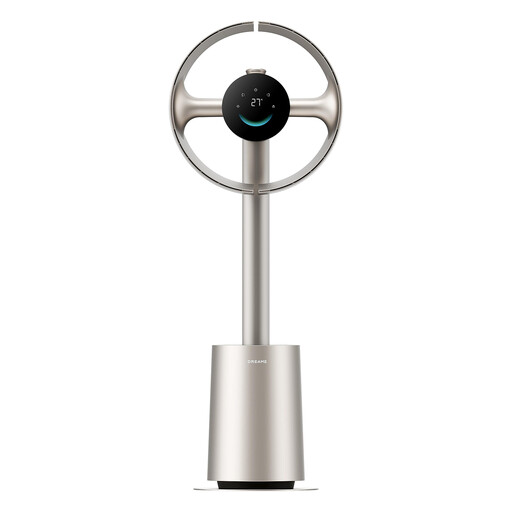
A good fit if you’re considering a bladeless pedestal design instead of a traditional rotor head.
55 W; 180° horizontal and 90° vertical oscillation; Wi-Fi app control; touch display; Titanium Gold.
No. According to the German Environment Agency, moving air can cool your skin, but it doesn’t lower the room temperature. For overheated rooms, the agency recommends measures including suitable sun protection and airing the room when it’s cooler outside.
Multiply the power consumption in kilowatts by the number of hours the fan is running to calculate consumption in kilowatt hours. To work out the cost, multiply this figure by your price per kilowatt hour. You’ll need the power rating of the specific appliance and your actual usage time.
Follow the instructions for your model. For its TurboPoly Fan 513S, DREO recommends monthly cleaning with frequent use, about every two months with occasional use, and a thorough clean before summer. This recommendation applies to that specific model.
For market surveillance, the German Federal Network Agency lists checks including CE marking, identifiable manufacturer details and German-language instructions with the required warnings. According to the European Commission, the EU Low Voltage Directive covers electrical equipment with input or output voltages of 50 to 1,000 V AC; whether it applies depends on the specific product design.
Consumers generally have a 14-day right to cancel an online purchase; the German consumer advice centre states that the period normally starts when the contract is made or the goods are received. If a product is faulty, you have statutory rights against the seller. A voluntary guarantee is separate and is subject to its own terms and conditions.