Students with a regular study spot
If you want a focused stream of air while sitting in your chair, adjustable height and tilt are useful features to look for. A wide oscillation range isn’t necessarily needed.


Choose a pedestal fan with adjustable height and tilt so you can direct the airflow towards your seat. If you study or sleep in the same room, a usable low setting is important too. Check the footprint, power supply and controls of the specific model as well. The German Environment Agency points out that a fan moves the air rather than lowering the room temperature. Manufacturer figures for noise and airflow may also refer to different settings.
If you want a focused stream of air while sitting in your chair, adjustable height and tilt are useful features to look for. A wide oscillation range isn’t necessarily needed.
If you study or sleep in the same room, look for a usable low setting. Sleep mode and a timer can make the fan easier to use, but they’re no substitute for judging the noise from your own seat.
Measure the space for the fan’s base beside your chair and walkway. Also check whether there’s a socket within reach or whether you’ll need to move the fan between different spots.
For a fan by your study area, the key things are airflow you can direct where you need it and a low setting that works for your room. According to the German Environment Agency, moving air can make you feel cooler, but it doesn’t lower the room temperature.
| Priority | What to check before buying | Who is this important for? |
|---|---|---|
| Directed airflow | Height and tilt adjustment; whether oscillation can be switched off. | If I want to direct the airflow straight at my chair, height and tilt matter more than a wide sweep. Around 36% of consumers put easily directed airflow first. |
| Noise while studying and sleeping | The conditions and measurement used for the noise figure; low settings and controls. | If I study or sleep in the same room, a usable low setting matters more to me than maximum airflow. Around 29% of consumers prioritise operation that’s as unobtrusive as possible. |
| Floor space and cable routing | Clear floor space for the base; distance to the socket and cable length. | When space is limited, I need to fit in the base, chair and walkway, and route the cable safely to the socket. Around 21% of consumers prioritise the space beside their chair. |
| Flexible use and power consumption | Power supply, battery and power rating; calculate electricity costs based on your own usage. | If I move the fan between places or run it for long periods, I check the battery, power supply and power rating. Around 14% of consumers prioritise flexible use or ongoing electricity costs. |
A pedestal fan moves the air, but unlike an air conditioner, it doesn’t remove heat from the room. The German Environment Agency explains that moving air may feel cooler, but it doesn’t lower the room temperature.
Choose a fan based on the airflow you want by your chair. If you want to replace the air in the room, open the windows at cooler times of day.
Manufacturers may quote the minimum noise level and maximum airflow under different operating conditions. The Clatronic VL 3603 S datasheet gives a sound power level, which isn’t directly comparable with a noise level measured at your seat.
Compare noise figures only alongside the relevant fan setting and measurement type.
Power supplies and dimensions vary by model. Duux describes the battery pack for the Whisper Flex² Smart as optional, while Xiaomi lists a built-in battery for the Smart Standing Fan 2 Pro.
Check the model code, what’s included, the footprint and the route to the socket before you decide.
If you want to use the Duux Whisper Flex² Smart without a cable, bear in mind that the optional battery pack isn’t automatically included as standard.
The VL 3603 S is a straightforward option if you want to direct the airflow by hand while seated in one spot.
According to the manufacturer, the 2000 Series CX2550/00 pedestal fan has a sleep mode and timer for when you’re working or settling down to sleep.
The Smart Standing Fan 2 Pro is worth considering if you want to move a battery-powered fan between different spots.
According to Rowenta, the Turbo Silence Extreme+ VU5870 has several settings, a remote control and adjustable height.
The Whisper Flex² Smart could be a good fit if you want to switch between using it on a table and as a pedestal fan.
This selection includes pedestal fans and air circulators for use by your seat, with different speed settings, heights and power supplies.
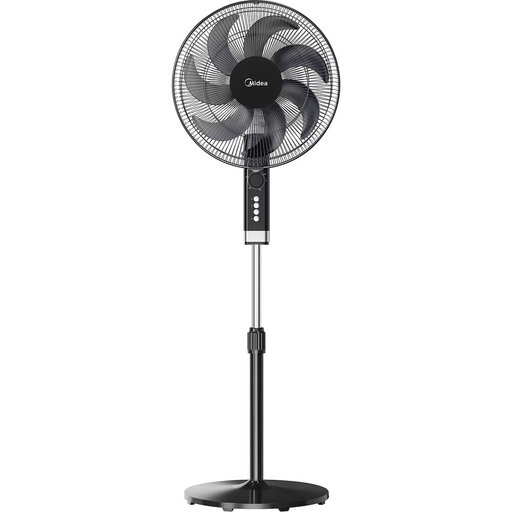 No image available
An option for a regular seating spot if a mains-powered pedestal fan with three speed settings suits your needs.
50 W; three speed settings; mains-powered; black.
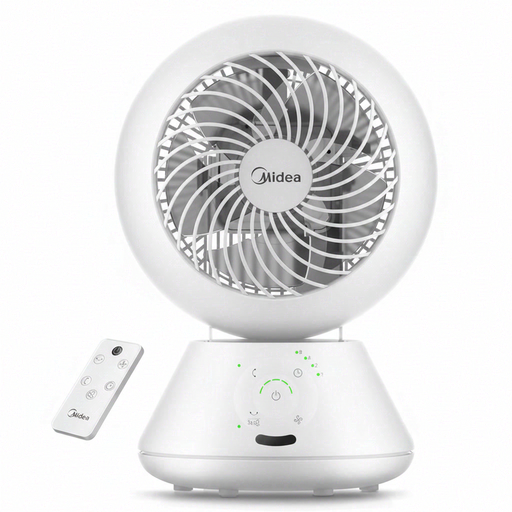 No image available
An option if you want to switch between using a fan on a table and as a pedestal fan.
30 W; five speed settings; oscillation; remote control; white.
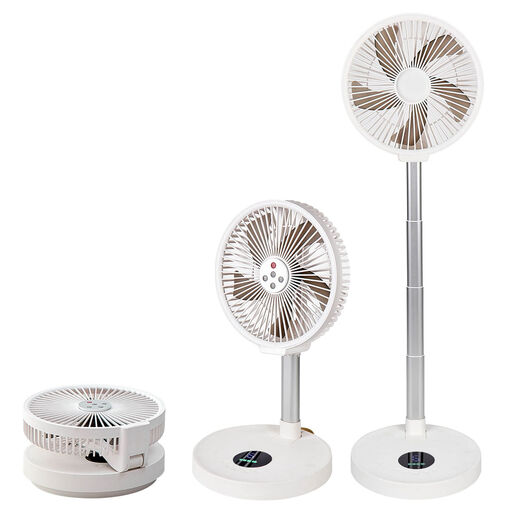 No image available
An option if you want to move a height-adjustable, battery-powered fan between different spots.
7,200 mAh; six speed settings; height-adjustable; timer; remote control; foldable.
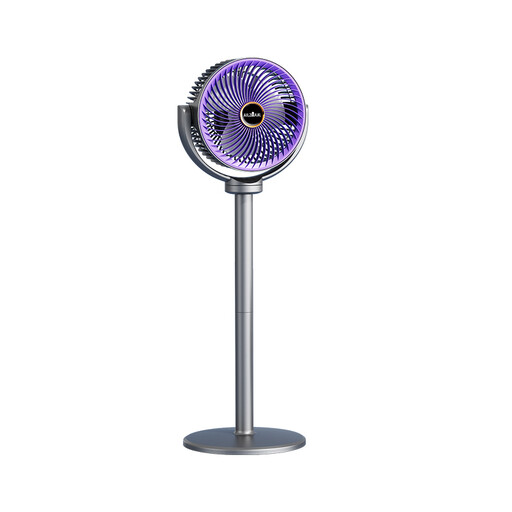 No image available
An option if you’re looking for a height-adjustable fan with a battery and several speed settings.
3-in-1 design; five speed settings; 2,400 mAh; Type-C; tilts through 90°.
 No image available
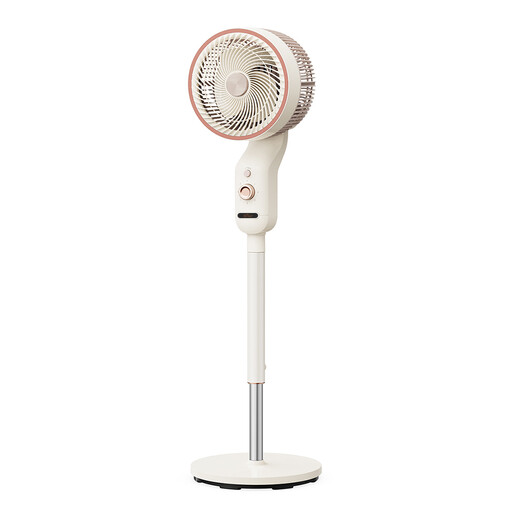
An option if you want to adjust the height of an air circulator to suit your seating position.
Height-adjustable from 34 to 41 inches; three speed settings.
No. The German Environment Agency explains that a fan moves the air but doesn’t lower the room temperature, although the moving air may feel cooler. To replace the air in the room, the agency recommends opening the windows early in the morning, late in the evening or at night.
Check whether the figures refer to the same fan setting and measurement type. For example, Rowenta lists maximum airflow and minimum noise for the VU5870 as separate figures; they don’t describe the same operating conditions.
Multiply the power consumption of the setting you use, in watts, by the number of hours it runs, then divide by 1,000 to get the energy use in kilowatt-hours. Then multiply this figure by your electricity price per kilowatt-hour. A maximum or rated power figure in a datasheet doesn’t necessarily reflect the consumption at every setting.
Start by adjusting the height and tilt to direct the airflow towards your seat. Use oscillation only if you want the airflow to reach several areas. Switch off the fan and unplug it before cleaning, and follow the instructions for your specific model.
For online purchases in Germany, consumers generally have a statutory 14-day cancellation period from the day they receive the goods, as explained by the consumer advice centre. This statutory right to cancel is separate from any additional voluntary returns offered by a retailer.