When choosing a fan for the sofa in a student room, the key question is whether you can direct the airflow towards your seat at a speed you’ll actually use. Height, tilt and oscillation are more useful to check than a single maximum figure. If you study or sleep in the same room, also consider how noisy the fan is at that setting; when space is limited, check the base footprint and cable reach too. A fan moves air, but it doesn’t actively lower the room temperature.
Who is a pedestal fan by the sofa right for?
Sofa dwellers who want targeted airflow
If you want to direct the breeze towards your seat, check the height, tilt and oscillation. Philips Deutschland, Rowenta Deutschland and DREO Deutschland list these positioning options for the models they describe.
Students in living and sleeping areas
If you study, watch TV or sleep in the same room, the noise level at the setting that moves enough air for you matters. Philips Deutschland and Rowenta Deutschland specify different noise levels for their models, or explain which operating setting those figures apply to.
Students short on space or working to a tight budget
Before choosing a model, check its footprint, how far it needs to be from a socket and which features you need. Philips Deutschland lists a 1.8 m cable for the CX2550/00; Rowenta Deutschland lists 1.5 m for the VU5670.
What should you look for when choosing one?
First, choose a fan that suits your seating position, then consider noise, cost and the space you have available.
| Buying criterion |
What to look for |
Who is it especially important to? |
| Airflow where you sit |
Check the height, tilt, oscillation and usable speed settings. |
If I want a focused breeze on the sofa rather than air moving somewhere in the room, the direction of the airflow matters. Around 31% of consumers put airflow at their seat first. |
| Noise while running |
Consider noise figures alongside the stated setting and measurement conditions. |
If I study or watch TV in the same room, the setting I need for enough airflow should be as unobtrusive as possible. Around 25% of consumers prioritise a quiet room. |
| Purchase and running costs |
Check the features and power consumption; electricity costs also depend on how long you use the fan and your personal tariff. |
If I’m on a limited budget, I only want to pay for features I’ll actually use. Around 25% of consumers make a limited budget their priority. |
| Floor space and cable reach |
Measure the base, the space available and the distance to the socket before buying. |
If space beside the sofa is limited, the fan needs to fit without obstructing the walkway or leaving the cable awkwardly placed. Around 19% of consumers first consider limited floor space. |
Common buying misconceptions
-
Assuming the lowest dB figure applies at every setting
Manufacturers may quote figures for different settings. Rowenta specifies 35 dB(A) for the VU5670 on its lowest setting; Philips gives a minimum and maximum figure for the CX2550/00.
Only compare noise figures when the operating setting and measurement conditions are clear. What matters is how noisy the fan is where you sit and at an airflow level that works for you.
-
Confusing a fan with an air conditioner
A fan moves air, which can feel cool on your skin, but it doesn’t actively remove heat from the room. The Umweltbundesamt recommends airing the room when the air outside is cooler than the air indoors.
Choose a fan to keep air moving by the sofa. Shading from the sun and airing the room at the right times can also help limit heat gain.
-
Leaving the base and socket until after you buy
A poorly chosen spot can make it harder to direct airflow towards your seat or leave the cable across a walkway.
Measure the space available and the distance to the socket in advance. Philips Deutschland lists a 1.8 m cable for the CX2550/00, while Rowenta Deutschland lists 1.5 m for the VU5670; check the specifications for the exact model.
Brands and models to consider
Philips
According to Philips Deutschland, the 2000 Series CX2550/00 has three settings, a timer, 90° oscillation and 30° vertical tilt.
- Philips lists a minimum of 19 dB(A) and a maximum of 46 dB(A) for this model; the minimum doesn’t apply at every setting.
- According to its product specifications, the CX2550/00 doesn’t have app functionality. Features of the CX3550/01 shouldn’t be assumed to apply to this model.
Rowenta
According to Rowenta Deutschland, the Turbo Silence Extreme VU5670 has adjustable height, 120° automatic oscillation, five settings, a timer and a remote control.
- These specifications describe options for adjusting the airflow and operating the fan.
- The advertised 35 dB(A) applies specifically to the lowest setting. Specifications for the VU5677 don’t automatically apply to the VU5670.
DREO
DREO lists eight settings, adjustable height and horizontal and vertical oscillation for the 502S.
- The extra adjustment options may be useful if you want to switch between directing airflow towards the sofa and spreading it more widely around the room.
- The manufacturer’s website describes the appliance as a floor fan and also lists a pedestal fan stand as included. Check the design and dimensions of the specific offer.
Honeywell
Honeywell provides general support advice on assembling and cleaning pedestal fans.
- This advice can help with maintenance, as long as it matches the instructions for your specific model.
- The HSF600WE4 listed by ntv isn’t described by a full set of specifications or a reliable individual assessment. Follow the model-specific instructions for assembly and cleaning.
Joybuy products for airflow by the sofa
This selection includes pedestal fans and height-adjustable air circulators for moving air by the sofa. Check that each model’s design, positioning options and footprint suit your room.
 No image available
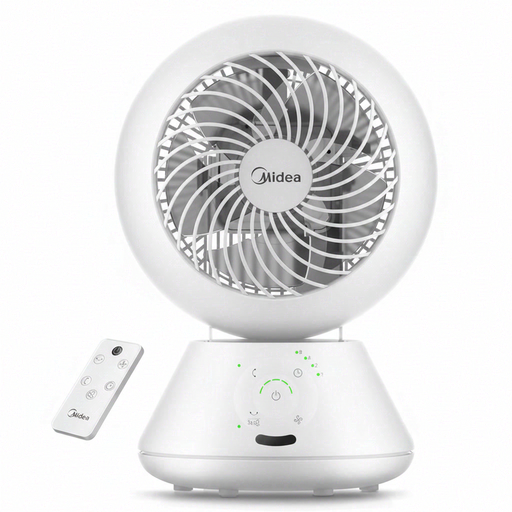
Midea MDF24JRW pedestal and desk fan, 30 W, white
If you want to direct airflow around the sofa in several directions, the product description lists horizontal and vertical oscillation.
Described as a pedestal and desk fan; 30 W; five speed settings; remote control and timer.
View at Joybuy
 No image available
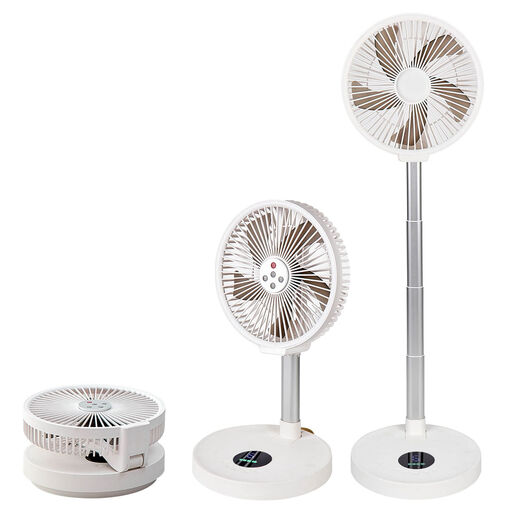
Foldable pedestal fan, 7200 mAh, 6 settings
If you want to direct airflow at seat height, the product description lists an extendable height of up to 88 cm and a tilting fan head.
Six speed settings; oscillation; remote control and timer; foldable design.
View at Joybuy
 No image available
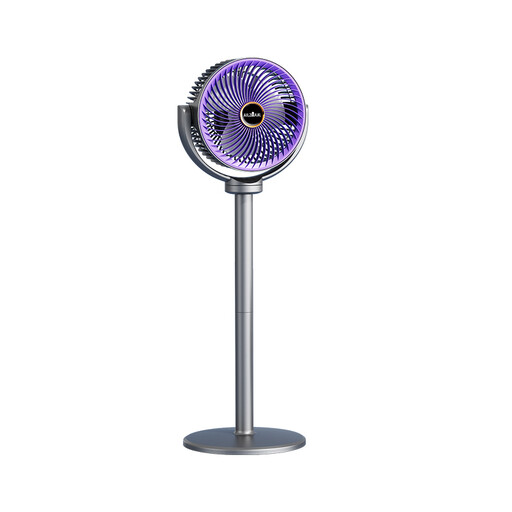
3-in-1 height-adjustable pedestal fan, 5 settings, 2400 mAh
If you want to set the airflow at seat height, the product description lists three height settings and a tilting fan head.
Five speed settings; 90° tilting head; 2400 mAh; Type-C.
View at Joybuy
 No image available
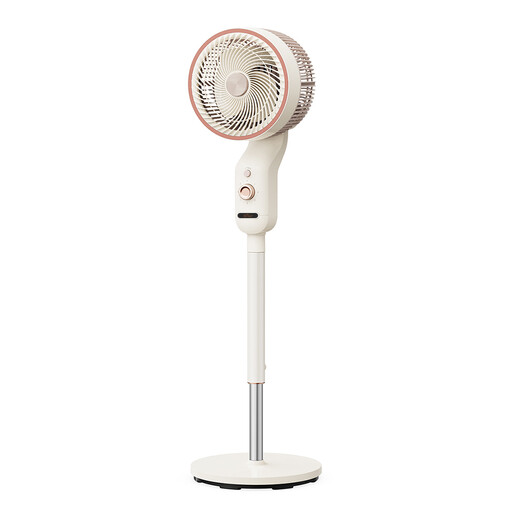
Bear Electric air circulation fan, 34–41 inches
If you want air to circulate at different heights, the product description lists an adjustable height of 34 to 41 inches.
360° air circulation according to the product name; three speed settings.
View at Joybuy
Frequently asked questions
Does a pedestal fan actually cool down a student room?
No, it doesn’t actively lower the room temperature, although moving air can feel cooler on your skin. The Umweltbundesamt recommends airing the room when the air outside is cooler than the air indoors. Shading from the sun can help limit heat gain.
How can I tell if a fan is quiet enough for studying?
Check the noise level for the setting you actually plan to use. Rowenta lists 35 dB(A) for the VU5670 on its lowest setting; Philips gives a minimum of 19 dB(A) and a maximum of 46 dB(A) for the CX2550/00. These figures don’t refer to the same operating setting.
What should I bear in mind when setting up and cleaning a fan?
Measure the space for the base and the distance to the socket, then assemble the fan according to the instructions for your specific model. Switch it off and unplug it before cleaning. Whether the guard can be removed depends on the instructions for that model.
How do I calculate a fan’s electricity costs?
Assuming a constant power consumption, calculate: watts ÷ 1,000 × operating hours × your personal price per kWh. Philips lists a maximum power rating of 48 W for the CX2550/00; this isn’t a measured figure for every setting.
Does a mains-powered pedestal fan need a CE marking?
New electrical products covered by German low-voltage regulations and the 1. ProdSV must carry a CE marking before being made available. The Bundesanstalt für Arbeitsschutz und Arbeitsmedizin describes this requirement for the products concerned. The CE marking is the manufacturer’s declaration of conformity, not an independent quality mark; the conformity of a specific offer needs to be assessed separately.


