What should you look for when buying?
For a pedestal fan beside your bedroom desk, the key things to consider are how well you can direct the airflow, how quietly it runs on a low setting and whether you have enough space.
| What to consider |
What to look for |
Who it matters most to |
| Quiet, gentle operation |
Check the noise figures for the setting you’ll actually use, and listen out for noise during oscillation too, if relevant. A minimum noise figure alone doesn’t tell you how every setting sounds. |
If you work and sleep in the same spot, you’ll want a quiet low setting for night-time use. Around 36 % of consumers give quiet operation top priority. |
| Directing airflow at your desk |
Check the height adjustment, tilt angle and horizontal or vertical oscillation on the specific model. The range of movement should suit your room layout. |
If you want to direct airflow around your workspace rather than keep it pointed at one spot, having the right adjustment options is important. Around 29 % of consumers prioritise airflow direction. |
| Floor space and positioning |
Measure the available floor space and consider the base dimensions, overall height and oscillation range. Check the distance from nearby furniture too. |
If your bed, desk and walkways leave little room, you’ll need a spot where the base and oscillating head can move freely. Around 21 % of consumers put available space first. |
| Power use and controls |
Compare power ratings on a like-for-like basis, taking usage time and your electricity tariff into account. Also consider whether a timer or remote control would be useful where you plan to place it. |
If you use your fan often, you’ll want to weigh up its controls and power use in light of how you’ll use it. Around 14 % of consumers prioritise running costs and controls. |
Joybuy products for adjustable airflow
The products below include pedestal and floor fans with adjustable airflow, as well as models that can also be set up on a desk. The Rosnek model is a tower fan with a heating function, not a conventional pedestal fan.
 No image available
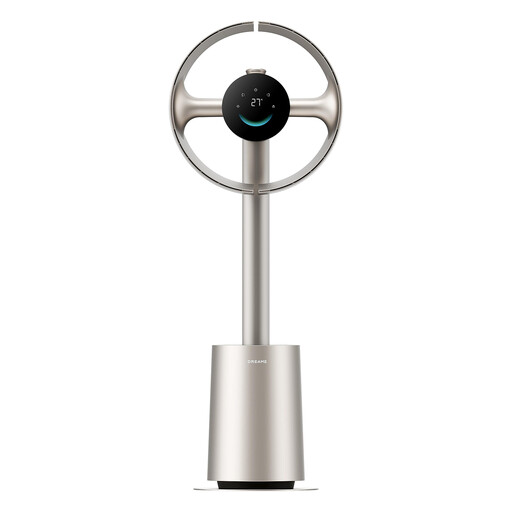
Dreame MF10 Air, Titan Gold, 55 W
Adjustable airflow and several settings could suit you if you want to direct the air differently at your desk during the day and in your bedroom at night.
Features listed include 10 speed settings, 180° horizontal and 90° vertical oscillation, a timer, app control, a remote control and a night mode.
Joybuy
 No image available
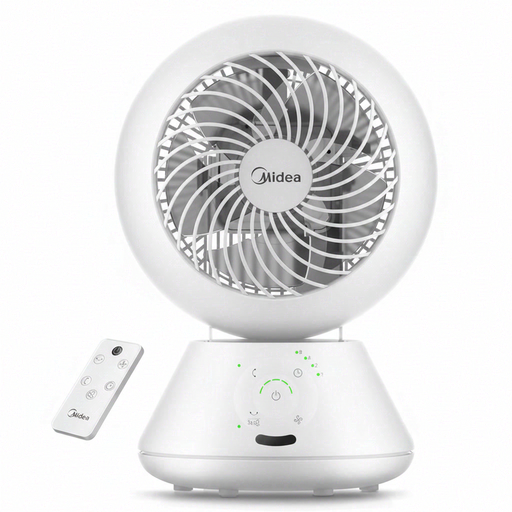
Midea MDF24JRW, 30 W
The option to set it up as a pedestal or desk fan could be useful if you want to position the airflow differently depending on the space available.
Features listed include five speed settings, horizontal and vertical oscillation of 120° and 105°, a 15-hour timer and a remote control.
Joybuy
 No image available
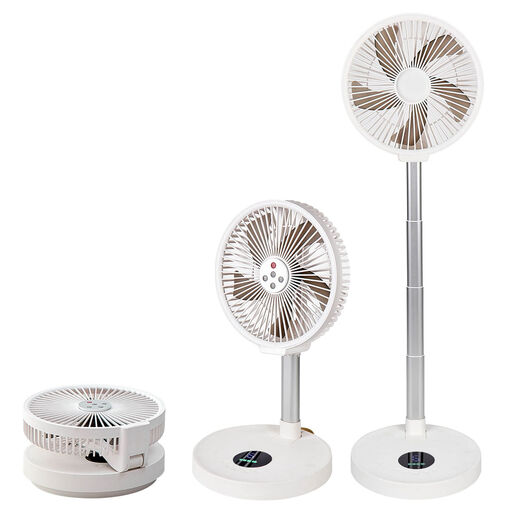
Foldable floor fan, 7200 mAh
The adjustable height and tilt could suit you if you want to direct the airflow towards your seat and use the fan as a desk fan when needed.
Features listed include six speed settings, 180° tilt, 90° oscillation, a remote control and a timer.
Joybuy
 No image available
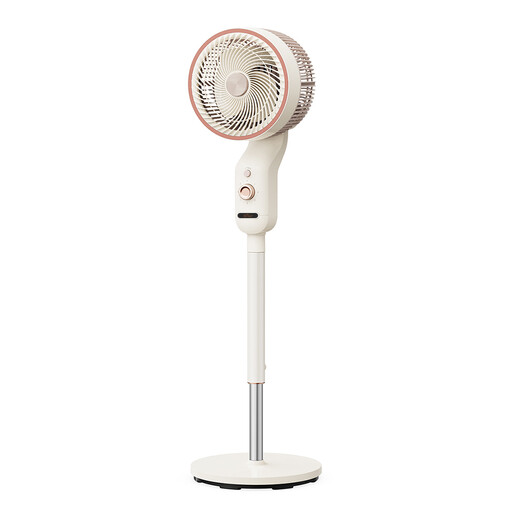
Bear Electric air circulator, 3 speed settings
The adjustable height can help you direct the airflow towards different seating positions; check whether the limited choice of speed settings suits the airflow you want.
Features listed include 360° air circulation and an adjustable height of 34–41 inches.
Joybuy
 No image available
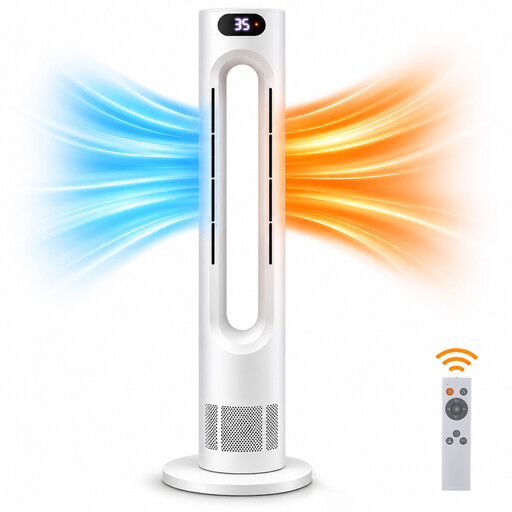
Rosnek tower fan with heating function, 103 cm
This model is only worth considering if you’re looking for a tower fan with an additional heating function rather than a conventional pedestal fan.
Features listed include 10 cooling settings, three heating settings, 75° oscillation and a 9-hour timer. The description gives the fan power as 25 W and the heating power as 1700 W.
Joybuy
Frequently asked questions
Does a pedestal fan actually cool down a bedroom?
No. A fan doesn’t lower the room temperature; it moves the air, which can make people feel cooler. When advising on how to deal with heat at home, the Verbraucherzentrale recommends, among other things, opening windows when the air outside is cooler than indoors.
Where should I position a pedestal fan by my desk?
Place it where the base and oscillation range are unobstructed, and adjust the height and tilt towards your seat. Whether a fixed or oscillating airflow feels more comfortable depends on where you’re sitting and the specific fan.
How often should I clean a fan?
First, follow the instructions for your particular model and unplug it before cleaning. For the TurboPoly Fan 513S, Dreo recommends cleaning about once a month with frequent use and every two months if used less often; this recommendation applies to the model mentioned.
How can I estimate power use, and what are my rights when shopping online?
To estimate power use, you’ll need the power consumption for the setting you use, how long you run the fan and your electricity tariff; the rated power alone won’t tell you how much it costs to run. When you buy new goods from a retailer in the EU, you’re entitled to a legal guarantee of at least two years. Online purchases of this kind generally come with a 14-day right to cancel, subject to the applicable terms and exceptions, as explained by Your Europe.
How should I dispose of an old fan?
In Germany, electrical waste must not go in household rubbish. The Umweltbundesamt lists local recycling centres and suitable retailer take-back points as options; removable batteries should be taken out and disposed of separately.


