
Lieferung heute & morgen

Qualitätsgarantie

Willkommens-Angebote freischalten: KOSTENLOSE Lieferung | Bis zu 80 % RABATT | Kostenlose 30-Tage-JoyPlus-Testphase
App herunterladen
As a Joybuy Product Recommendation Officer, I see the growing desire for personalised and modern living spaces every day. Many renters and homeowners are looking for solutions that are both cost-effective and straightforward to implement. An outdated kitchen cabinet, a bare living room wall, or a worn-out desk don't have to be permanent problems.
This article serves as a practical guide for anyone seeking a quick and effective transformation. We will highlight the functional aspects of peel and stick wallpaper and present a selection of products suitable for various applications. The goal is to provide you with objective information so you can make an informed decision for your next DIY wall decor project.
Before you decide on a design, there are a few technical aspects to consider. These will help you find the right product for your project and ensure a long-lasting result.
Most self-adhesive wallpapers are made of PVC (Polyvinyl Chloride), which makes them a durable vinyl wallpaper. This material is resilient and easy to maintain. An important feature is that it is a washable wallpaper that can be cleaned with a damp cloth. This is particularly advantageous in kitchens or hallways. Pay attention to the thickness and surface texture of the material. Embossing can create a more authentic feel, for example, with a wood-effect wallpaper or a film with a leather texture.
Think carefully about where the film will be used. Will it serve as an adhesive film for furniture to breathe new life into an old cabinet, or is it intended to create a full accent wall? Designs like a marble-effect wallpaper are excellent for creating elegant and bright surfaces in living areas or bathrooms (outside of direct wet zones). A wood-effect wallpaper, on the other hand, can bring warmth and cosiness to bedrooms or home offices. The choice of pattern and colour should harmonise with the existing interior to create a cohesive overall look.
The success of a project with paste-free wallpaper depends entirely on surface preparation. The substrate must be completely smooth, clean, dry, and free of dust. Rough or textured walls, such as woodchip wallpaper, are unsuitable as a base because the film cannot adhere evenly. The surface should be thoroughly cleaned and degreased before application.
Here you will find a curated selection of self-adhesive wallpapers that stand out for their specific properties for different projects.
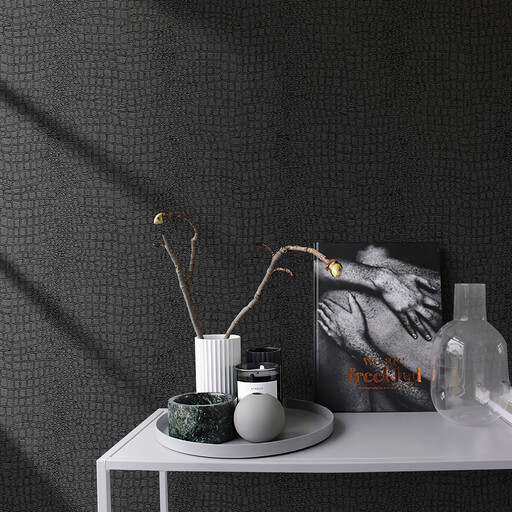
Why it stands out: This film is distinguished by its subtle yet luxurious crocodile texture. From a distance, it appears as a solid, matte surface, but upon closer inspection, the fine, leather-like embossing is revealed. It gives furniture or small wall sections a modern and high-end feel without being overpowering.
Benefits:
Who is it for? This product is designed for users who want to create targeted accents. It is perfect for adding a special touch to furniture or small areas in hallways, home offices, or living rooms.

Why it stands out: This wood-effect wallpaper imitates the look of a modern slatted wood wall. The warm, reddish wood tone and the vertical rhythm of the slats create a textured yet inviting atmosphere. The generous roll length helps to reduce the number of seams when designing an entire accent wall.
Benefits:
Who is it for? Ideal for anyone looking to create a full accent wall, for example, behind the sofa or bed. It offers a cost-effective alternative to real wood panelling and is suitable for living rooms, bedrooms, or dining rooms that need a warm and modern upgrade.
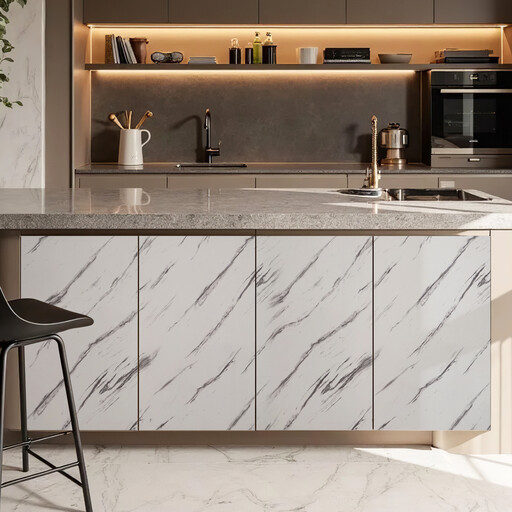
Why it stands out: This marble-effect wallpaper captivates with its bright, clean design and fine veining. The smooth surface reflects light, making rooms appear brighter and larger. It is a versatile furniture film that blends seamlessly into modern and minimalist interior styles.
Benefits:
Who is it for? Perfect for users who want a quick and clean modernisation of surfaces. It is a great choice for giving old furniture a fresh look or for creating a bright, elegant atmosphere in rooms without a major effort.
Haven't found the right design for your project yet? The field of DIY wall decor is vast and offers numerous patterns, colours, and textures.
Looking for other styles or colours? Explore our entire collection of modern vinyl wall art for more inspiration.
1. Does peel and stick wallpaper adhere to all surfaces? No, adhesion is best on smooth, clean, and dry surfaces. This includes painted walls (after fully cured), sealed wood panels, laminate, or metal. On rough, porous, or dusty substrates like woodchip, unplastered concrete, or textured wallpaper, adhesion will be insufficient.
2. Can you remove peel and stick wallpaper without leaving residue? Most products are designed to be removable, which makes them particularly attractive for rental properties. To make the process easier and to avoid potential damage to the underlying surface, the film can be gently heated with a hairdryer. This softens the adhesive and makes the wallpaper easier to peel off.
3. How do I avoid bubbles during application? Patience and the right technique are key. Only peel back a small section of the backing paper at a time. Start at one edge and smooth the film from the centre outwards using a squeegee or a soft card. This systematically pushes out the air and prevents bubbles from forming.