
Lieferung heute & morgen

Qualitätsgarantie

Willkommens-Angebote freischalten: KOSTENLOSE Lieferung | Bis zu 80 % RABATT | Kostenlose 30-Tage-JoyPlus-Testphase
App herunterladen
A change in your home can significantly improve your quality of life. However, a full-scale renovation is often associated with high costs, a lot of effort, and, especially in rental apartments, certain restrictions. If you're looking for a practical and budget-friendly way to give your walls, furniture, or kitchen cabinets a fresh new look, peel and stick wallpaper could be the perfect solution.
This article introduces various types of self-adhesive films and provides objective criteria to help you choose the right one for your next DIY project.
Before you decide on a design, there are a few functional aspects to consider to ensure a satisfying and long-lasting result.
Most high-quality adhesive films are made of PVC (Polyvinyl Chloride). This material is typically water-resistant and easy to clean, making it suitable for use in kitchens and bathrooms. For areas exposed to splashing water, such as a self-adhesive kitchen backsplash, you should specifically look for films whose product descriptions indicate high water and heat resistance. For purely decorative purposes on living room walls, these requirements are less critical.
The design has a significant impact on the room's atmosphere.
The most important prerequisite for a successful DIY wall design project with adhesive film is a suitable surface. The surface must be smooth, clean, dry, and dust-free. Rough surfaces like woodchip wallpaper or unplastered walls are generally not suitable, as the film cannot adhere completely, which can lead to bubbles or peeling edges. Careful preparation is crucial for the durability of the result.
Here is a selection of products that stand out for their specific designs and applications.
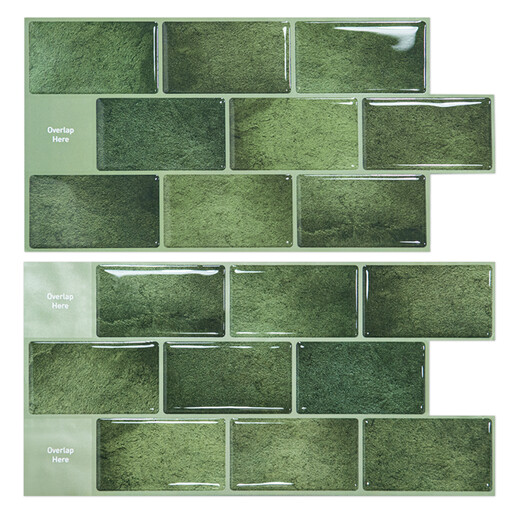
Why it stands out These stickers mimic the classic design of subway tiles and offer an easy way to add a modern accent. The green colour provides a fresh look. Supplied in a 10-pack with a size of 30x30 cm per piece, they are well-suited for covering kitchen backsplashes or wall sections in the bathroom.
Advantages
Who is it for? For those looking for a quick and straightforward solution to update tile backsplashes in the kitchen, bathroom, or laundry room without extensive construction work.

Why it stands out This film creates the look of a modern slatted wood wall panel. The warm, reddish wood tone and vertical structure create a cosy yet structured ambience. With a roll size of 60 cm x 508 cm, even larger wall surfaces can be designed with fewer seams, resulting in a more uniform appearance.
Advantages
Who is it for? For users who want to transform a blank or plain wall into a visual focal point and prefer the look of wood panels but want a simple and flexible DIY solution.
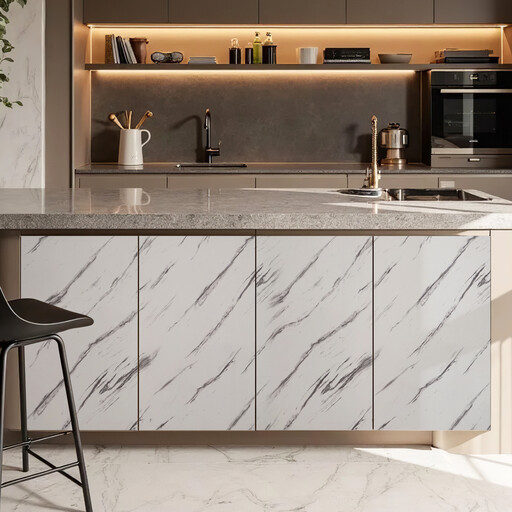
Why it stands out This marble furniture film is distinguished by its bright, white design with subtle veining. The surface reflects light and can help make rooms appear brighter and more open. The generous roll dimension of 60 cm x 508 cm is ideal for seamlessly covering furniture pieces or smaller wall areas.
Advantages
Who is it for? For anyone who wants to give older furniture like cabinets, dressers, or shelves a modern and clean look, or who wants to create a bright accent wall in an entryway or bathroom (in dry areas).
If our featured selection doesn't exactly match what you're looking for, or if you're searching for other patterns and materials, numerous other options are available. From graphic prints to metallic finishes, the possibilities for custom DIY wall decor are endless.
Browse our beautiful wall art category to find more designs and solutions for your home.
Generally, it is not recommended. The uneven texture of woodchip wallpaper prevents the film from adhering fully and without bubbles. This often causes the edges to peel over time. For an optimal result, a smooth, clean, and dry surface is required.
Most modern adhesive films are designed to be removed without leaving any sticky residue. A helpful tip is to gently heat the film with a hairdryer on a low setting before peeling it off. The heat softens the adhesive, making it easier to slowly and carefully peel the film away from the surface.
Many films, especially those marketed as a self-adhesive kitchen backsplash, have some degree of heat resistance. They can typically withstand the temperatures generated near a ceramic or induction cooktop. However, direct contact with open flames (e.g., from a gas stove) or very hot pots should be avoided. It is important to check the manufacturer's specific information regarding heat resistance.