
Lieferung heute & morgen

Qualitätsgarantie

Willkommens-Angebote freischalten: KOSTENLOSE Lieferung | Bis zu 80 % RABATT | Kostenlose 30-Tage-JoyPlus-Testphase
App herunterladen
By Joybuy Product Recommendation Officer Published August 28, 2026
A radiant, smooth complexion is a common skincare goal. The path to achieving it often involves exfoliation, which removes dead skin cells and refines skin texture. However, the market for facial exfoliants is overwhelming, and the wrong choice can quickly lead to irritation, redness, or dehydrated skin. When it comes to peeling gels in particular, several common misconceptions can lead to poor purchasing decisions.
This guide will help you navigate the typical pitfalls and find a product that truly suits your skin's needs.
Before we dive into the selection criteria, it's important to recognise common marketing promises and myths that often do more harm than good.
To make an informed decision, you should focus on objective criteria. The following three points are crucial for selecting a suitable peeling gel.
Exfoliants can be broadly divided into three categories. Many modern peeling gels combine several approaches.
A good peeling gel often combines a gentle mechanical gommage effect with mild acids or enzymes for a thorough yet controlled action.
An exfoliant shouldn't just take something away from the skin (dead cells); it should also give something back. Look for ingredients that soothe and hydrate during and after application.
The gel texture is an advantage in a gentle facial exfoliant. Unlike liquid acid toners, a gel can be applied precisely and massaged in a controlled manner without running. The application time is short, which minimises the risk of irritation. Applying it to dry skin, as recommended for many gommage peels, maximises the effect of the cellulose particles.
Based on the criteria above, we have identified several products that represent a considered choice for specific user profiles.
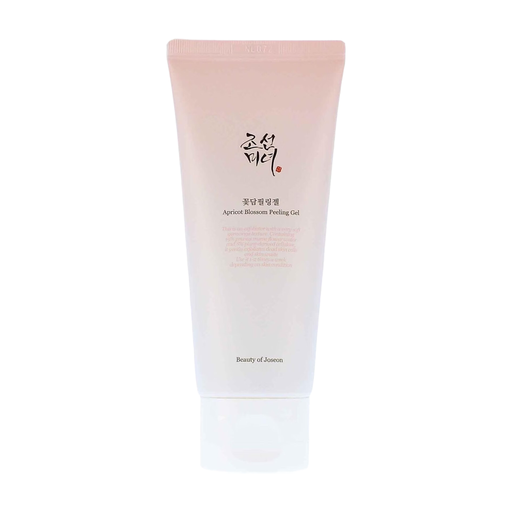
Why This Fits Their Persona: Ideal for anyone new to the world of exfoliants or those with very sensitive skin. This Korean peel uses a straightforward and mild approach to free the skin from flakes without causing stress.
It avoids the "stronger is better" approach by using 8% plant-based cellulose for a gentle gommage effect instead of aggressive particles. The formula is intentionally designed to be low-irritant.
Contains 19% Prunus Mume (Apricot Blossom) Water, which moisturises and soothes the skin during exfoliation. The application is simple, and the skin feels soft and not tight afterwards.
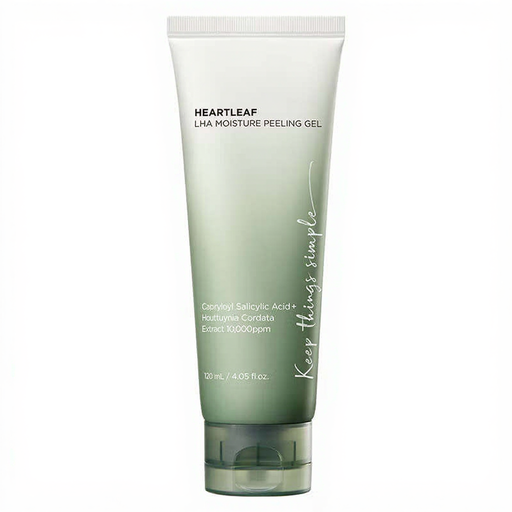
Why This Fits Their Persona: Perfect for users whose skin reacts to peels with dryness or redness. The focus here is clearly on combining effective exfoliation with intensive soothing.
This gel debunks the myth that chemical peels must be aggressive. It uses LHA (Capryloyl Salicylic Acid), a gentle derivative of salicylic acid that works at a skin-friendly pH and is less irritating.
The formula contains a high concentration of Houttuynia Cordata (Heartleaf) Extract, known for its powerful soothing properties. The "Moisture" in its name is backed up by hydrating ingredients.
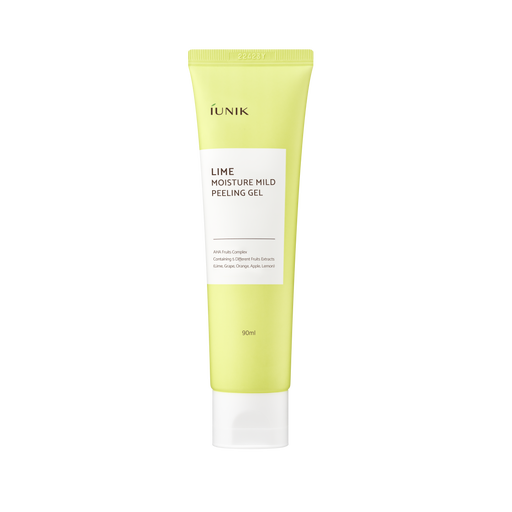
Why This Fits Their Persona: Suitable for individuals looking to revitalise a dull, tired-looking complexion. This gel aims not only to smooth the skin but also to help it achieve a fresher and more even-toned appearance.
It refutes the assumption that "natural" can't be effective. Instead of aggressive acids, it relies on a complex of natural fruit extracts (AHA) formulated in a mild gel base to brighten the complexion without overwhelming the skin.
The formula combines a brightening effect from fruit extracts (Lime, Apple, Grape) with soothing ingredients like Centella Asiatica and Licorice Root. This ensures a balanced action of exfoliation and care.
We've compiled a complete, up-to-date list of products that fully meet these strict selection criteria and German safety regulations.
1. How often should you use a peeling gel? The recommended frequency for most gentle peeling gels is 1-2 times per week. Listen to your skin: if you notice tightness or dryness, reduce the frequency. For very resilient, oily skin, up to 3 applications per week may be possible, but this should be monitored on an individual basis.
2. Is a peeling gel suitable for dry skin? Yes, a peeling gel can be suitable for dry skin, provided it has the right formulation. Look for products explicitly labelled as moisturising and containing ingredients like hyaluronic acid, glycerin, or soothing plant extracts. A gommage peel is often gentler than a mechanical scrub with coarse particles.
3. What is the difference between a peeling gel and a pure chemical peel (e.g., AHA/BHA toner)? The main difference lies in the application method and mechanism. A peeling gel (often gommage-style) works primarily through the gentle mechanical friction of cellulose particles, often supported by mild enzymes or acids. It is applied, massaged in briefly, and washed off immediately. A pure chemical peel toner is applied to the skin and left on (a leave-on product), allowing the acids to work over a longer period. Gels often offer better control for beginners and sensitive skin types.