
Lieferung heute & morgen

Qualitätsgarantie

Willkommens-Angebote freischalten: KOSTENLOSE Lieferung | Bis zu 80 % RABATT | Kostenlose 30-Tage-JoyPlus-Testphase
App herunterladen
Anyone looking for Pelliot trail running shoes for road runs, woodland paths or longer hikes will often come across similar promises: lightweight, breathable, stable and suitable for every type of terrain. What really matters, however, is whether the technical features match the way you intend to use them. A shoe that feels comfortable on dry tarmac will not necessarily offer the same level of grip on wet leaves, gravel or muddy sections.
This buying guide from the Joybuy Product Recommendation Officer explains which details are important before you buy, which common pitfalls to watch out for and which Pelliot options may suit different usage profiles.
Light running shoes can feel comfortable during city runs and over longer distances. However, low weight alone says little about stability, sole construction or suitability for rocky paths. When running across changing surfaces, you should therefore consider not only the weight but also the design of the outsole and the shape of the midsole.
A mesh upper allows heat and moisture to escape more easily. At the same time, a very open weave may offer less protection against rain, puddles or wet grass. Depending on the version, Pelliot models use sandwich mesh, woven materials and, in some cases, TPU reinforcement. The exact specification should therefore be checked on the product page.
Even non-slip running shoes only provide a certain amount of grip on wet rocks, mud or loose sand. The surface, gradient, dirt and your footstrike all affect traction. A rubber outsole described as a ROCKYTEC sole should therefore be viewed as a construction feature, not a guarantee of secure grip in every situation.
For warm days, indoor areas and longer runs, breathable running shoes with sandwich mesh or a woven upper are practical. An unlined construction can improve airflow. At the same time, the material should feel sufficiently supportive around the toes, heel and sides.
For paths with branches and stones, an abrasion-resistant surface is important. A TPU film can provide additional reinforcement on selected versions. However, it does not automatically make the shoe waterproof.
The Pelliot models in this selection use responsive EVA cushioning. EVA stands for ethylene-vinyl acetate and is commonly used in the midsoles of running shoes. In practical terms, this means the sole can compress underfoot and then partially return to its original shape.
Consider how you intend to use the shoes:
A description of cushioning is not a medical promise. It does not replace an individual gait analysis or professional advice for persistent discomfort.
According to the product description, the ROCKYTEC sole on the Pelliot models mentioned is designed to provide grip and abrasion resistance across different surfaces. Wet rocks, muddy slopes and loose sand are among those listed. Selected versions also specify Vibram Megagrip. This feature does not apply universally to every variant.
If you are looking for running shoes for both road and trail, aim for a sensible compromise. Deep lugs can be advantageous in mud, but often feel less smooth on smooth tarmac. For mainly urban routes with occasional woodland paths, a more moderate tread may be a better fit.
The Pelliot size chart uses foot length in millimetres. As a guide, 245 mm corresponds to EU 39, 260 mm to EU 42, 265 mm to EU 43 and 270 mm to EU 44. Measure both feet while standing and use the larger measurement as your reference.
The fit is also important:

Why this product suits the profile: The combination of a lightweight mesh upper, EVA midsole and ROCKYTEC outsole is suitable for recreational runs and changing surfaces.
The selection takes into account not only the low weight but also the cushioning, fit options and outsole.
Unisex design, responsive EVA midsole and abrasion-resistant upper according to the product description.
Why this product suits the profile: For users who run frequently and encounter changing weather conditions, ventilation, EVA cushioning and the described off-road capability are the main priorities.
The product details distinguish between standard and Slim fits, as well as between ROCKYTEC and selected versions with Vibram Megagrip.
Sandwich mesh and woven upper, EVA midsole and a rubber outsole designed, according to the product information, for different surfaces.
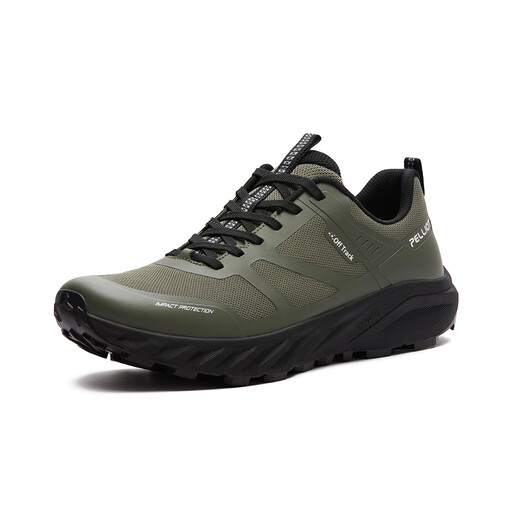
Why this product suits the profile: This version is designed for longer running distances and transitions from paved paths to off-road terrain, and is available in a selection of popular sizes.
Rather than simply promoting long-distance comfort, the material, midsole, outsole and size measurements are specified clearly.
Lightweight upper, highly responsive EVA foam midsole and ROCKYTEC rubber outsole according to the product data.
We have put together a complete, regularly updated list of products that fully meet these strict selection criteria and the safety regulations applicable in the EU.
Durability depends on mileage, body weight, surface, weather and care. Check regularly whether the tread is visibly worn, the midsole appears permanently compressed or the stitching is coming undone. For cleaning, the product description recommends hand washing with mild soap and cold water. The shoe should then be left to air-dry away from direct heat. Machine washing, tumble drying and ironing can put strain on the materials and adhesives.
According to the product description, the models mentioned are intended for transitions between roads, paved paths and off-road terrain. For highly technical mountain trails, climbing sections or very loose scree, buyers should also check the toe protection, lug depth and lateral stability of the specific version.
Measure your foot length in millimetres and compare it with the relevant chart. As a guide, 260 mm corresponds to EU 42 and 265 mm to EU 43. A Slim version may suit narrower feet, while the standard width is intended for standard or wider feet. The specific product page remains the definitive reference.
There is no fixed mileage that applies to everyone. Visible loss of tread, a deteriorating sole shape, damaged stitching and a changed fit are the key indicators. Someone who frequently runs on tarmac may wear their shoes differently from someone who mainly uses them on soft woodland paths or for hiking.