
Lieferung heute & morgen

Qualitätsgarantie

Willkommens-Angebote freischalten: KOSTENLOSE Lieferung | Bis zu 80 % RABATT | Kostenlose 30-Tage-JoyPlus-Testphase
App herunterladen
If you’re looking to buy PELLIOT trail running shoes in black, you’re often after a pair that can handle a range of activities: woodland tracks, gravel paths, hikes and the transition between road and trail. Product descriptions featuring terms such as ‘all-terrain’, ‘slip-resistant’ or ‘particularly lightweight’ may seem clear at first. To choose the right pair, though, it’s worth checking the actual construction, sizing information and intended terrain.
A grippy outsole can provide better traction on wet ground. That doesn’t automatically mean the shoe is waterproof, however. For the PELLIOT models described here, the focus is on the ROCKYTEC outsole, abrasion resistance and grip on wet rocks, mud and loose sand. The product information doesn’t generally mention a membrane or a specific waterproof rating.
The tread can be useful on rainy woodland paths. If you’re planning longer runs through wet grass or puddles, though, look specifically for waterproof trail running shoes.
Lightweight running shoes reduce the weight on your feet, but weight shouldn’t be the only factor in your choice. On uneven paths, a secure heel fit, a construction that resists twisting and a durable outsole all matter. An especially airy upper may also offer less protection from sharp stones or branches.
PELLIOT models combine sandwich mesh and woven material. Selected versions are listed as having TPU reinforcement. This construction helps with ventilation, while reinforced areas can offer better protection when brushing against branches and rocks.
EU sizes 41, 42, 43 or 44 aren’t always enough to make the right choice. The product information also lists foot length in millimetres:
It’s best to measure your feet in the evening, wearing the running socks you plan to use. Leave a little room between your toes and the front of the shoe so your feet can move when you run. The models described here come in a standard fit for wider feet, while a Slim version is listed for narrower feet.
Running shoes with breathable sandwich mesh and a woven upper can release heat and moisture more quickly than more closed materials. This is particularly useful on long summer runs or when you’re changing pace. At the same time, check that the shoe has enough reinforcement around the toes, sides and heel.
An unlined version offers more airflow, but it may feel different from a model with a moisture-wicking textile lining. Details vary by product version, so check the material information on the relevant product page.
PELLIOT models use a highly elastic EVA midsole. EVA stands for ethylene vinyl acetate. It’s commonly used in running shoes to distribute impact forces while keeping the shoe lightweight. How much cushioning you feel depends, among other things, on the sole height, firmness, running style and terrain.
Softer cushioning can feel comfortable on long runs along paved paths. On technical trails, though, controlled contact with the ground is often more important than an especially soft ride. Always consider the product description alongside the terrain you plan to run on.
The ROCKYTEC outsole on the PELLIOT models mentioned here is described as abrasion-resistant and grippy on wet rocks, mud and loose sand. This makes it a potentially good choice for all-terrain running shoes and mixed routes.
There are limits, though: no tread can prevent slipping on every surface. Smooth roots, icy paths and steep, muddy slopes still call for a suitable pace and sure-footed technique. So, the term ‘slip-resistant running shoes’ should be understood as a description of the sole construction, not a guarantee of grip on every surface.
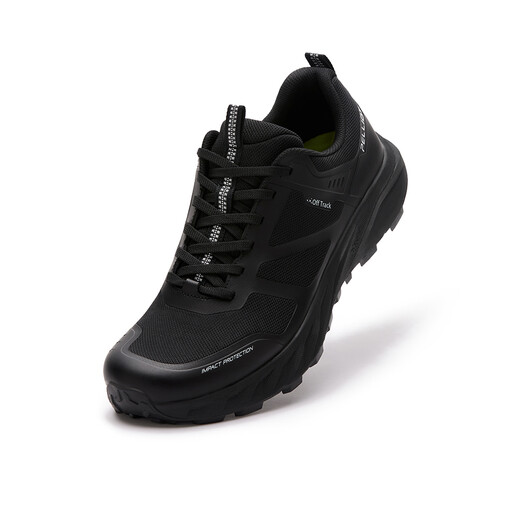
Why this product suits this type of runner: The EU 41 version is intended for runners with a stated foot length of around 255 mm who want a lightweight shoe for roads, park paths and easy trails.
The size guide gives specific foot lengths, making it easier to choose the right fit than relying on EU size alone.
Sandwich mesh and woven upper; highly elastic EVA midsole; ROCKYTEC rubber outsole, according to the product information.
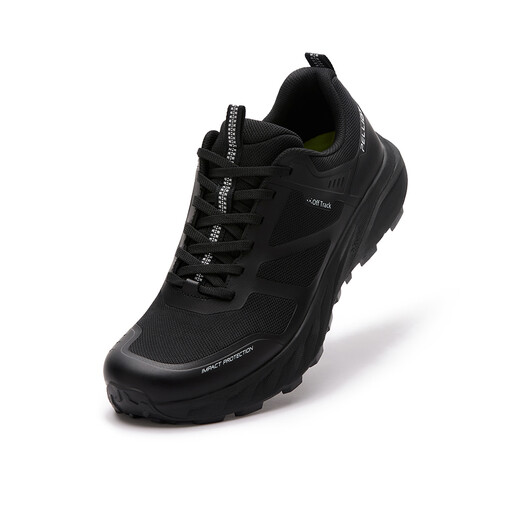
Why this product suits this type of runner: The EU 43 version is designed for a stated foot length of around 265 mm. It combines lightweight materials and EVA cushioning with an outsole intended for mixed terrain.
The product information distinguishes between standard and Slim fits, making it easier to choose a shoe width that better suits your foot shape.
Abrasion-resistant upper; highly elastic EVA midsole; ROCKYTEC outsole specified for use on wet and loose surfaces.
Why this product suits this type of runner: The EU 44 version, with a stated foot length of around 270 mm, may suit those looking for a roomier standard last for long runs and changing terrain.
The product information lists the materials, care instructions and foot length. This helps frequent runners compare durability and fit more easily before buying.
Lightweight mesh and woven construction; EVA midsole; ROCKYTEC rubber compound focused on grip and abrasion resistance.
We’ve put together a complete, regularly updated list of products that meet these strict selection criteria and fully comply with the safety regulations in force in the EU.
After running on muddy or wet ground, let your shoes dry before removing any dirt. Depending on the version, the PELLIOT models mentioned here are recommended for hand-washing with mild soap and cold water, or cleaning with a damp cloth. Direct heat, ironing and machine drying can put strain on the materials and bonded areas.
Lifespan depends on mileage, body weight, terrain, care and storage. The product information doesn’t provide a specific mileage estimate. Signs that it may be time to replace your shoes include noticeably worn-down tread, cracks in the upper, a looser heel fit or a permanently deformed midsole.
The product information available lists breathable mesh and woven materials, with TPU reinforcement on selected versions. It doesn’t specify a general waterproof guarantee or membrane. If you’ll be running in wet conditions, check the information for the specific version.
The size guide matches EU 41 with around 255 mm, EU 42 with around 260 mm, EU 43 with around 265 mm and EU 44 with around 270 mm in foot length. Sock thickness, toe room and your preferred standard or Slim fit also matter.
According to the product information, the models described are designed for switching between roads, paths and off-road terrain. This combination can be practical for paved paths and easy to moderate trails. For alpine, highly technical or icy routes, choose a model with tread and stability features specifically designed for those conditions.