
Lieferung heute & morgen

Qualitätsgarantie

Willkommens-Angebote freischalten: KOSTENLOSE Lieferung | Bis zu 80 % RABATT | Kostenlose 30-Tage-JoyPlus-Testphase
App herunterladen
Choosing a pen set can be overwhelming given the sheer number of options available. Whether for artistic projects, a bullet journal, university, or the office, manufacturers often make grand promises. However, not every set lives up to them. Many users find that pens dry out quickly, ink bleeds through the paper, or the advertised colour variety is disappointing in practice.
As a Joybuy Product Recommendation Officer, I analyse market information to provide you with objective and practical guidance. This guide will walk you through the crucial criteria for selecting the right pen set and help you avoid common purchasing pitfalls.
Before you invest, you should be aware of three widespread issues that can severely limit a set's usefulness.
To find the right pen set for your needs, you should examine three technical aspects. These are the primary determinants of the pens' functionality and longevity.
The type of ink is crucial for the intended application. The three main types are:
Another important feature is whether the ink is quick-drying. This is particularly relevant for left-handers to prevent smudging.
The tip determines the line width and the character of your stroke.
Many modern sets offer dual-tip pens (e.g., a fineliner and a brush tip), providing great flexibility for various techniques.
An ergonomically shaped barrel ensures comfort even during extended use. However, the cap is critical for longevity. A precision-closing mechanism prevents the tip from drying out and preserves the ink's quality. For retractable pens like gel pens or ballpoints, the mechanism should be robust and reliable.
Based on the quality criteria mentioned, we have curated a selection of products for typical user profiles.
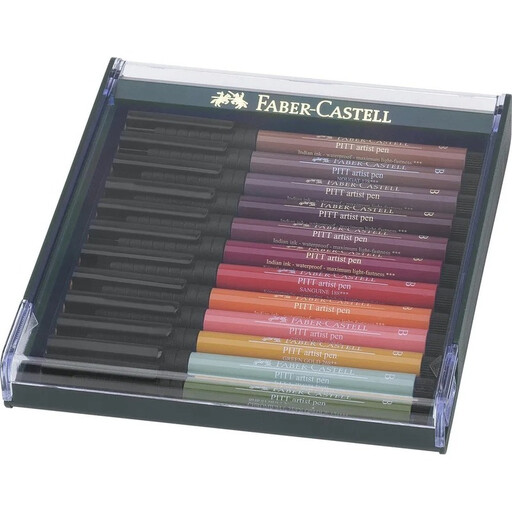
Why This Fits Their Persona: This set is aimed at artists and illustrators who value permanent, archival-quality results. The earth tones are ideal for natural illustrations, sketches, and portraits.
The highly pigmented India ink is permanent and waterproof, preventing bleed-through on suitable paper. The caps close securely, reliably protecting the dimensionally stable brush tip.
Maximum lightfastness ensures the longevity of artworks. The flexible brush tip allows for variable stroke widths for dynamic drawings.
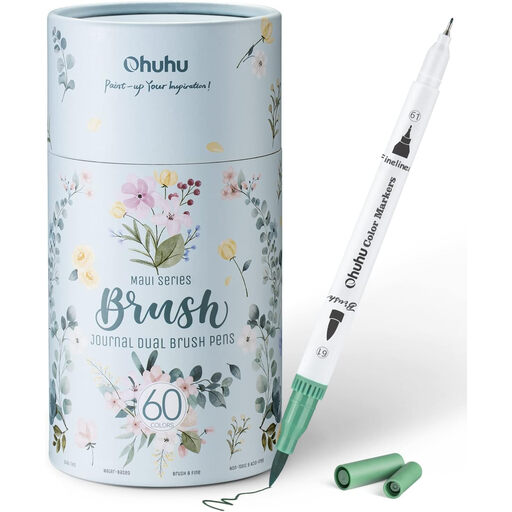
Why This Fits Their Persona: Ideal for bullet journaling, hand lettering beginners, and hobby artists who want a large, functional colour palette and flexible application options for various projects.
The large colour selection is genuinely nuanced and offers real value. The water-based ink minimises bleed-through on thicker paper. The dual tip (fineliner + brush) is functional, not just a gimmick.
The dual-tip system (0.4 mm fineliner and 1-6 mm brush tip) offers maximum flexibility. The set also includes replacement tips, which extends its lifespan.
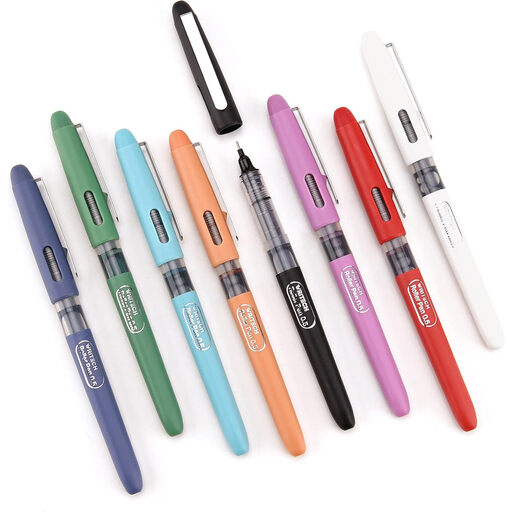
Why This Fits Their Persona: Perfect for students, office workers, and journal enthusiasts who need a reliable, precise, and aesthetically pleasing pen set for daily use.
The free-flow ink system with a precision regulator ensures a smooth, skip-free ink flow. The quick-drying ink effectively prevents smudging, a common problem with rollerball pens.
The extra-fine 0.5 mm tip allows for very precise handwriting. The transparent ink reservoir lets you constantly monitor the ink level, so you're never caught unexpectedly without ink.
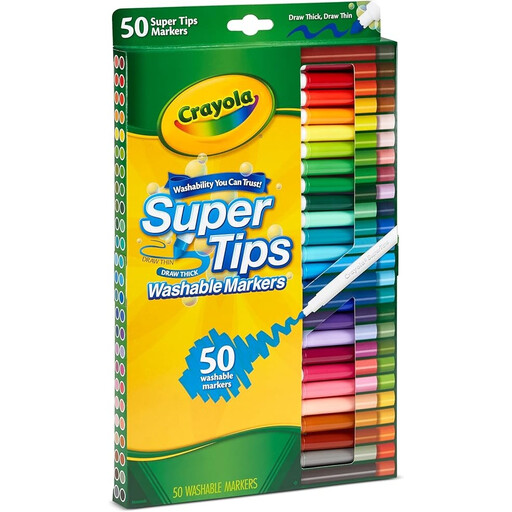
Why This Fits Their Persona: This set is designed for children and families where safety, a wide range of colours, and ease of use are top priorities. It's suitable for school projects, colouring books, and creative fun.
According to the manufacturer, the ink is non-toxic and easily washable from skin and most clothing. This addresses one of the biggest concerns parents have with colouring pens for children.
A broad palette of 50 vibrant colours stimulates creativity. The sturdy fibre tip can withstand heavier pressure, which is an advantage when used by children.
We have compiled a complete, up-to-date list of products that fully meet these strict selection criteria and applicable safety regulations.
Most pens, especially those with fibre tips, should be stored with their caps on tightly. For dual-tip markers and pigmented ink pens, horizontal storage is recommended. This ensures that the ink flows evenly to both tips and prevents one side from drying out.
Lightfastness refers to the resistance of colour pigments to fading when exposed to light, particularly UV radiation. For artworks that will be displayed or preserved for a long time, high lightfastness is a crucial quality feature. Information on this can often be found in the manufacturer's product details.