
Lieferung heute & morgen

Qualitätsgarantie

Willkommens-Angebote freischalten: KOSTENLOSE Lieferung | Bis zu 80 % RABATT | Kostenlose 30-Tage-JoyPlus-Testphase
App herunterladen
The selection of pen sets can be overwhelming. Whether for university, the office, or creative projects, the right writing instrument is crucial for clean notes and a comfortable workflow. However, many buyers discover only after a short time that their new set doesn't meet their expectations. Certain flaws and exaggerated marketing promises often lead to frustration and unnecessary expense.
This guide will help you recognise the common pitfalls. We focus on the objective criteria that truly matter, so you can find a pen set that meets your needs for the long term.
Before you make a decision, you should be aware of the most common flaws that often only become apparent with use.
To avoid these problems, you should focus on three core technical features instead of being swayed by colourful packaging.
The type of ink significantly determines the writing experience.
The line width, specified in millimetres (mm), should match your intended use.
A pen is a tool that must fit comfortably in your hand.
Based on these objective criteria, we have identified some products that are particularly suitable for specific user groups.
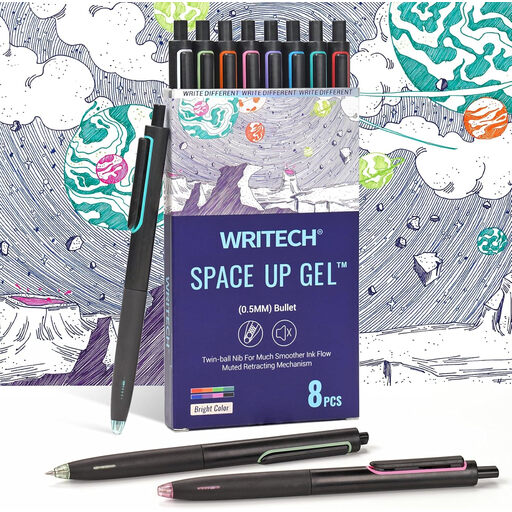
Why This Fits Their Persona: Ideal for students and office workers who colour-code their notes. The silent click mechanism won't disturb others in libraries or open-plan offices, and the fine 0.5 mm tip allows for clean, detailed note-taking.
The quick-drying ink actively counteracts smudging, which is particularly beneficial for left-handers. The ergonomic, triangular barrel prevents fatigue during long writing sessions.
Patented silent click mechanism and a twin-ball tip that, according to the manufacturer, ensures a gap-free ink flow.
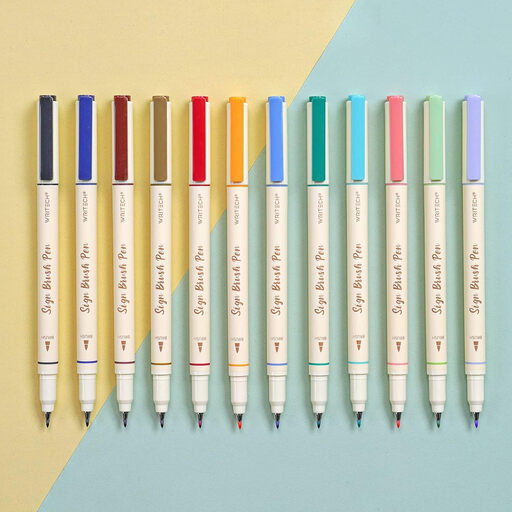
Why This Fits Their Persona: This set is a great choice for **journaling pens** and **brush pens for lettering**. The flexible tip allows for variable line widths, which are essential for calligraphy and creative design. The pastel colours are suitable for illustrations and sketches.
The water-based ink is designed not to bleed through common journaling paper immediately. According to the manufacturer, the flexible felt tip is wear-resistant and avoids the rapid fraying that is often a problem with cheaper brush pens.
Pressure-sensitive, soft brush tip for variable line widths and water-mixable colours to create shading and watercolour effects.
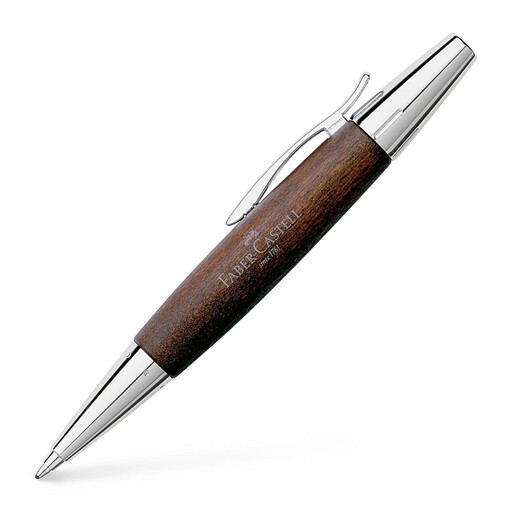
Why This Fits Their Persona: A high-quality writing instrument for professional use or as a stylish gift. The pearwood barrel gives the pen a unique feel and an appealing aesthetic that stands out from standard plastic pens.
Unlike pens with a purely plastic appearance, the barrel is made of real wood, which signals high value and durability. The twist mechanism is robust and designed for long-term use.
Pearwood barrel for a natural feel and a rich, consistent script from the smooth-gliding rollerball tip.
We have compiled a complete, up-to-date list of products that fully meet these strict selection criteria and fully comply with German regulations.
1. How should I store pen sets correctly to prevent the ink from drying out? As a general rule, it is recommended to store pens with liquid ink (gel pens, rollerballs, fineliners) horizontally. This prevents air bubbles from forming in the refill or the tip from drying out. For pens with caps, the cap should always be securely fastened. For retractable mechanisms, the tip should always be retracted. Also, avoid storing them in extreme temperatures, such as direct sunlight or frost.
2. Are gel pens suitable for left-handers? Yes, as long as you choose the right model. Left-handers push their hand across freshly written text as they write. Therefore, a quick-drying pen is essential. Look for terms like "quick-dry," "no-smear," or "fast-drying" in product descriptions. Gel pens with a finer tip (e.g., 0.5 mm) tend to release less ink and therefore often dry faster than those with a broad tip.
3. What is the difference between a fineliner and a gel pen? The main difference lies in the tip and the ink. A fineliner has a hard, porous tip made of fibre or plastic and uses a thin, usually water-based ink. It is excellent for precise lines, sketches, and technical drawing. A gel pen uses a ball tip (similar to a ballpoint pen) through which a thick, pigmented gel ink flows. This provides a particularly soft, gliding writing experience and very vibrant colours.