
Lieferung heute & morgen

Qualitätsgarantie

Willkommens-Angebote freischalten: KOSTENLOSE Lieferung | Bis zu 80 % RABATT | Kostenlose 30-Tage-JoyPlus-Testphase
App herunterladen
A new pendant light can completely transform the atmosphere of a room. It's often more than just a light source—it's a central design element, especially over a dining table or kitchen island. But the selection is vast, and so is the risk of buyer's remorse. Many lights look appealing online but turn out to be impractical or unsuitable after installation. This guide will help you navigate the typical pitfalls and make an informed choice.
Before we dive into the technical details, let's look at the three most common reasons why buyers are unhappy with their new hanging light.
To avoid the pitfalls mentioned above, you should check three core aspects before buying. These determine whether a pendant light not only looks good but also fulfils its function in everyday life.
The harmony of a room depends heavily on the right proportions. Keep the following guidelines in mind:
The quality of light is crucial for the room's atmosphere. Pay attention to these three values:
The material significantly shapes the style and should match your interior design.
Here are some recommendations tailored to different needs and interior styles that take the above criteria into account.
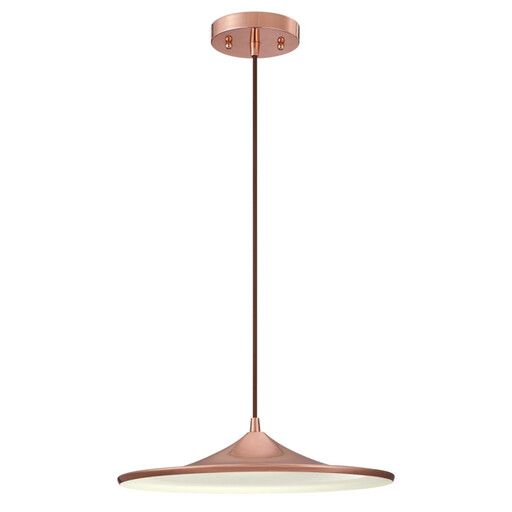
Why this model is a great fit: Its slim, copper-coloured design with integrated LED technology blends seamlessly into minimalist and modern living concepts. It serves as an understated statement piece over a kitchen island or a simple dining table.
Compatibility with an external dimmer bypasses the 'Glare Trap' and allows for flexible lighting moods. The adjustable cord, extending up to 127 cm, solves the 'Inflexibility Trap'.
Integrated 15-watt LED for energy efficiency. The light is suitable for mounting on sloped ceilings, expanding its installation possibilities.
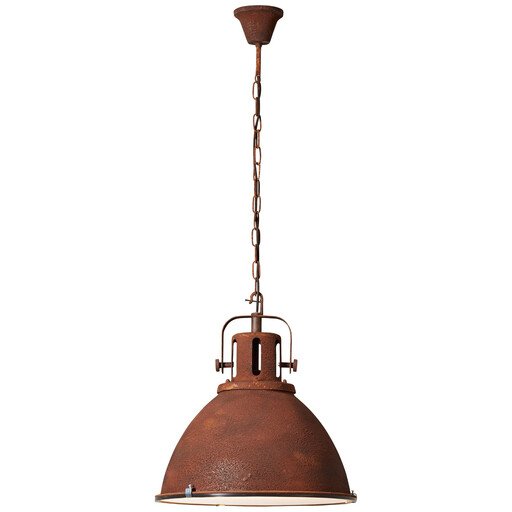
Why this model is a great fit: The combination of rust-coloured metal and a large glass shade embodies the raw charm of the industrial style. With a 47 cm diameter, it's a striking focal point for lofts or characterful dining areas.
The cord can be shortened, avoiding the 'Inflexibility Trap'. Thanks to the standard E27 socket, the user has full control over the bulb's brightness and light colour, thus sidestepping the 'Glare Trap'.
Eye-catching design with a distressed finish. When used with a suitable bulb and an external dimmer, the light is dimmable, adapting to various situations.
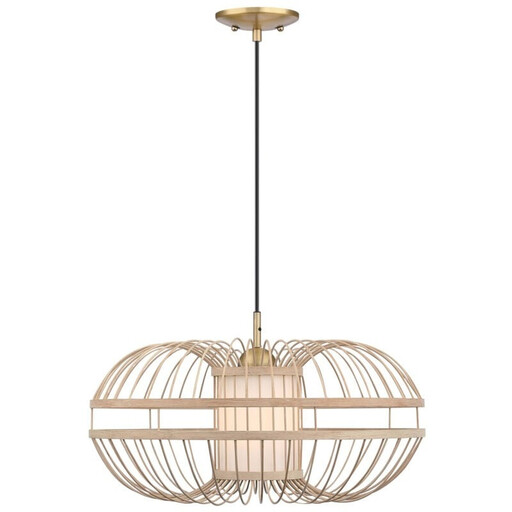
Why this model is a great fit: The combination of natural bamboo, brushed brass accents, and frosted glass creates a warm, inviting atmosphere. It pairs well with Scandinavian or nature-inspired interior styles.
The frosted glass shade ensures even, glare-free light distribution, solving the 'Glare Trap'. The long, adjustable cord offers maximum flexibility in mounting height.
A special feature is its suitability for mounting on sloped ceilings, making it a practical solution for converted attics or rooms with unique architecture.
We have compiled a comprehensive, up-to-date list of products that fully meet these strict selection criteria and adhere to rigorous safety standards.
1. How high should a pendant light hang over a dining table? As a general rule of thumb, the bottom edge of the lampshade should be 75 to 90 centimetres from the tabletop. This ensures good illumination without obstructing the view of the person sitting opposite you. For very high ceilings or very large lights, this distance can be adjusted.
2. Can I dim any pendant light? No. Dimmability depends on three components: the fixture, the bulb, and the wall switch. For lights with integrated LEDs, the manufacturer must explicitly state that they are dimmable. For lights with a replaceable socket (e.g., E27), you must use a dimmable bulb and have a compatible dimmer switch on the wall.
3. What is the difference between a pendant light and a hanging light? In common usage, the terms pendant light and hanging light are largely used interchangeably. Both refer to a light fixture that hangs from the ceiling via a cord, chain, or rod. The term "pendant light" often emphasizes the fixture's suspension from a single cord or stem, like a pendant on a necklace.