
Lieferung heute & morgen

Qualitätsgarantie

Willkommens-Angebote freischalten: KOSTENLOSE Lieferung | Bis zu 80 % RABATT | Kostenlose 30-Tage-JoyPlus-Testphase
App herunterladen
A pendant light can provide targeted illumination in the kitchen, dining room or living room while also influencing the overall feel of the space. However, appearance is not the only consideration when buying one. Unclear information about the lamp holder, missing details about maximum wattage or an unsuitable cable length can mean that the light does not work with your existing furnishings or chosen light source in everyday use.
A modern pendant light or industrial pendant light can often look generously sized in product photos. In a room with a low ceiling, however, a model that hangs down a long way can obstruct the passage. Before buying, you should therefore check the light fitting’s height, cable length and possible height adjustment.
A pendant light can usually hang lower above a dining table than in a hallway. Over walkways, on the other hand, sufficient headroom is essential. With adjustable models, you should also check whether the stated cable length is actually suitable for your ceiling height.
E27 and E14 describe the lamp holder, not the brightness. An E27 pendant light is compatible with many common bulbs, while an E14 ceiling light uses smaller bulbs. The light’s stated maximum wattage also applies and must not be exceeded.
Another common misconception is that a light is dimmable simply because it is used with LED bulbs. For a dimmable pendant light, the bulb, dimmer and, where applicable, integrated driver must be compatible with one another.
A metal pendant light may direct the light more strongly downwards or spread it sideways through an open shade. A fabric shade usually creates a softer lighting effect, but may be more sensitive to dust. With a vintage pendant light or an open wire shade, the choice of bulb is particularly visible.
You should therefore consider the shape of the shade, the opening at the bottom and whether the bulb is within your line of sight. For a kitchen light, controlled illumination of the work surface is usually more important than a purely decorative effect.
Check the following before placing your order:
Wattage describes energy consumption, not brightness directly. The bulb’s lumen value is a more useful indication of the amount of light produced. Warm white light is often chosen for living and dining areas, while a more neutral light colour can be useful in work areas.
Measure the intended installation location before buying. Important measurements include the diameter, overall height, cable length and distance from furniture. A dining room light should not be so wide that it extends beyond the edges of the table. In a living room, a larger shade can work as a central focal point, provided the ceiling height allows for it.
The light should be mounted on the ceiling in accordance with the manufacturer’s instructions. Where a fixed mains connection is required, installation by a suitably qualified person is advisable. Before installation, you should consider the circuit, mounting materials and ceiling construction.
For lights with metal components, the finish should complement your existing décor, such as matt black, nickel or a light-coloured coating. With fabric and paper shades, care instructions and the distance from the bulb are important.
Some product specifications include markings for earthing, polarity or the type of cable used. These details do not replace an inspection of the complete installation. What matters is that the light is suitable for the intended indoor area and that all technical information is read in full.
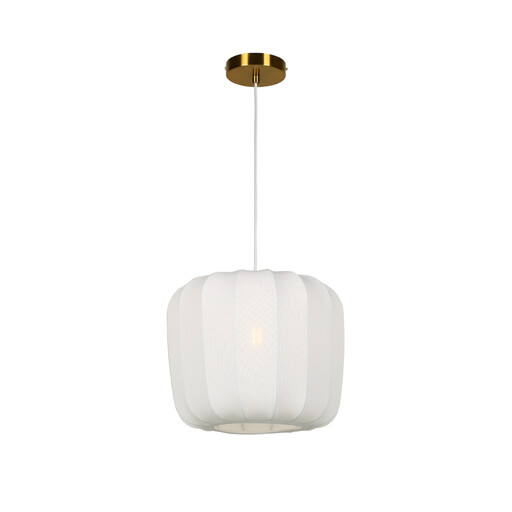
Why this product suits the profile: The light fabric shade works well as a subtle living room light, bedroom light or fitting for a small dining area. The E27 lamp holder makes it easy to choose a compatible bulb.
The product details specify indoor use, an E27 plastic lamp holder and a maximum wattage of 60 W. This means key compatibility details can be checked before purchase.
Seamless fabric shade, E27 lamp holder and transparent connecting cable according to the product description.
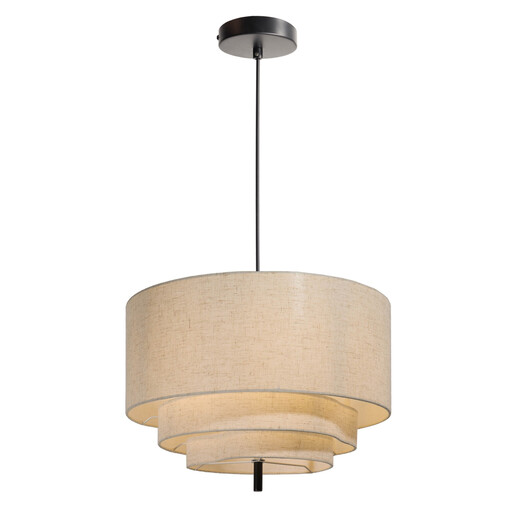
Why this product suits the profile: The three-tier oat-coloured canvas shade complements modern, Scandinavian-inspired and calmly styled living spaces.
The specifications state an E27 ceramic lamp holder, a maximum wattage of 100 W, 1,200 mm of exposed cable and an earth wire. These details help with the initial technical checks.
Three-tier canvas shade and VDE-marked cables according to the product description.
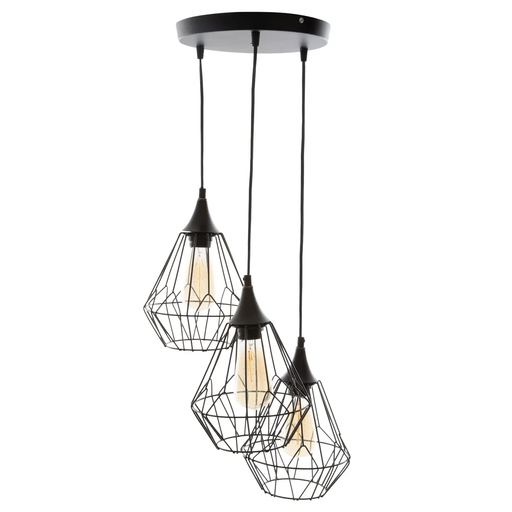
Why this product suits the profile: The 3-light pendant distributes light across a dining table, kitchen island or larger living area. Cable lengths of 30, 40 and 50 cm allow for a staggered arrangement.
The E27 lamp holder and a maximum wattage of 40 W per bulb are specified. The open metal structure also leaves the light source visible, avoiding surprises about the lighting effect.
Black steel wire shade, three different cable lengths and E27 compatibility according to the product details.
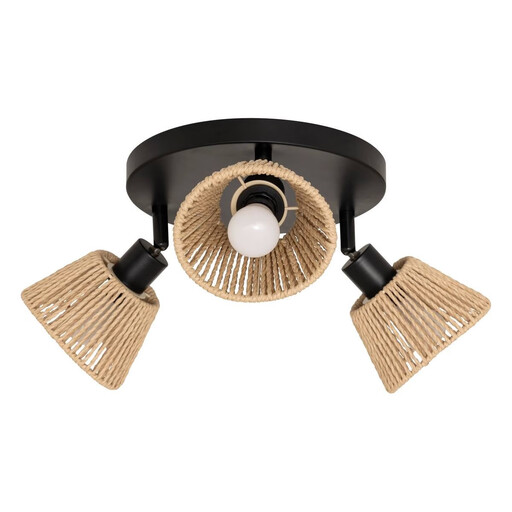
Why this product suits the profile: With a diameter of 25 cm, this compact ceiling light is suitable for hallways, bedrooms or smaller living rooms. Three adjustable light points allow you to direct the light as needed.
The product details list the diameter, a height of 21 cm, an E14 lamp holder and a stated maximum wattage of 25 W. The model is supplied without bulbs.
Three adjustable light points, steel base and FSC-certified paper shades according to the product description.
We have put together a complete, regularly updated list of products that fully meet these strict selection criteria and the safety regulations applicable in the EU.
As a practical guideline, a distance of around 60 to 80 cm between the table surface and the bottom edge of the light is often chosen. The ideal height depends on the shape of the light, the ceiling height and the occupants’ sightlines. The light should be installed higher above walkways.
E27 is a common lamp holder with a wide choice of bulbs. E14 is often used in more compact lights. The key considerations are the lamp holder specified by the manufacturer and the maximum permitted wattage. The lamp holder should not be confused with brightness.
Electricity costs depend on wattage, daily use and your electricity tariff. A simple calculation is: Power in kilowatts × operating hours × electricity price. With three bulbs, their wattages are added together. A suitable LED bulb can reduce consumption compared with a higher-consumption light source, provided it is compatible with the lamp holder and light.