
Lieferung heute & morgen

Qualitätsgarantie

Willkommens-Angebote freischalten: KOSTENLOSE Lieferung | Bis zu 80 % RABATT | Kostenlose 30-Tage-JoyPlus-Testphase
App herunterladen
Choosing the right writing instrument can be a surprisingly complex task. Whether for the office, university, or creative projects, an unsuitable pen often leads to frustration: ink that bleeds through the paper, marks that can no longer be removed, or a tip that becomes unusable after a short time. Many products promise universal compatibility but fail to meet specific requirements. This guide will help you identify the crucial features and make an informed choice that is perfectly tailored to your intended use.
Before investing in new writing materials, it's helpful to know the typical problems that lead to purchase mistakes.
To avoid these pitfalls, you should check three central properties before buying. These define the functionality and suitability of a pen for your purposes.
The composition of the ink is the most important factor. The basic distinction is made between water-based and solvent-based inks and their permanence.
The tip transfers the ink to the paper and forms the stroke. The choice depends entirely on the intended application.
Check which surfaces the manufacturer recommends for the pen. A pen designed for paper may fail on smooth plastic. Pens for drawing on paper have different requirements than a non-permanent marker for an erasable memo board. For creative work on black card, special markers with opaque ink are required.
Based on these criteria, we have identified some products that are particularly suitable for specific user groups.
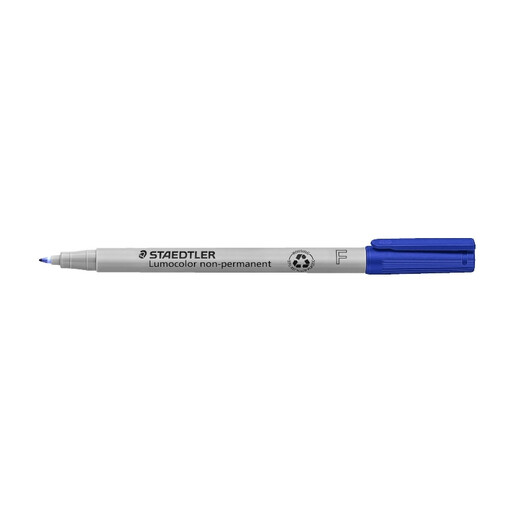
Why This Fits Their Persona: Ideal for dynamic planning in the office. Perfect for labelling laminated plans, whiteboards, or overhead projector transparencies. The fine 0.6 mm tip allows for detailed and clean entries that can be corrected at any time.
The polypropylene (PP) casing effectively prevents drying out. The water-soluble ink is specially designed for smooth surfaces, solving the problem of unsuitable ink.
Airplane-safe technology prevents leakage during pressure changes. Furthermore, the pen can be refilled cost-effectively and sustainably with a refill station.
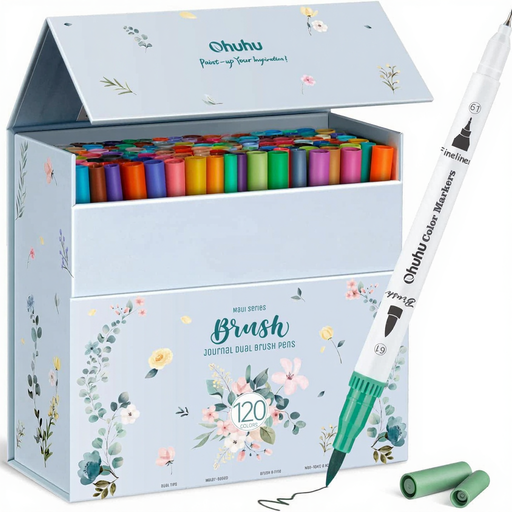
Why This Fits Their Persona: This set offers an immense variety of colours and flexibility for beginners in illustration, hand lettering, or bullet journaling. The combination of a brush tip and a fineliner tip covers almost all creative needs.
The dual-tip design solves the problem of needing to buy separate pens for different line widths. The water-based ink also allows for watercolour effects on suitable paper.
120 colours provide a broad spectrum for shading and gradients. The set also includes replacement tips and a convenient storage case, which adds to its value.
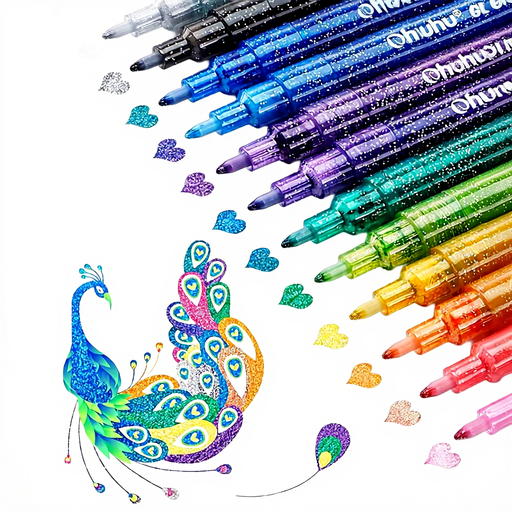
Why This Fits Their Persona: For illustrators, scrapbooking enthusiasts, and artists who want to add bright accents to dark or coloured paper. These pens are specifically designed for drawing details and highlights.
The high-opacity white gel ink solves the problem of conventional pens being invisible on dark surfaces. The ink is also waterproof and quick-drying, which prevents smudging.
The extra-fine 0.8 mm metal tip allows for a smooth ink flow for precise lines. According to the manufacturer, the ink is certified to ASTM-4236, acid-free, and non-toxic.
The right choice of pens and markers can significantly improve the quality of your work and make the process more enjoyable. By paying attention to ink type, tip, and surface suitability, you invest in tools that work reliably and last a long time.
A good white marker is essential, especially for creative work on dark backgrounds. We have compiled a selection of products that meet these specific requirements.
1. How do I store pens and markers correctly so they don't dry out? Most manufacturers recommend storing pens with fibre tips (like felt-tip or brush pens) horizontally. This ensures that the ink flows evenly to the tip and doesn't collect at one end of the wick. Ballpoint and gel pens, on the other hand, can often be stored vertically with the tip facing down. The most important thing is to always close the cap tightly.
2. What exactly does "non-permanent" mean for overhead pens? "Non-permanent" means that the ink is water-soluble. It was specially developed for smooth, non-porous surfaces such as overhead transparencies, glass, or laminated documents. The writing can be removed from these surfaces without a trace using a damp cloth, which allows for corrections and reuse of the surface.
3. Can I use any pen for drawing on black paper? No, most standard inks are transparent and will not be visible on black or very dark paper. You need pens with a high-opacity (opaque) ink. White or metallic gel pens, acrylic markers, or special pigment markers are the right choice for this, as their pigments sit on top of the surface instead of soaking in.