
Lieferung heute & morgen

Qualitätsgarantie

Willkommens-Angebote freischalten: KOSTENLOSE Lieferung | Bis zu 80 % RABATT | Kostenlose 30-Tage-JoyPlus-Testphase
App herunterladen
A good camping chair is more than just a place to sit—it's a cornerstone of comfort and relaxation outdoors. But the market is saturated, and many models fail to live up to their product descriptions. Before you make a decision, it's crucial to understand the common pitfalls that often lead to disappointment and unnecessary expense.
As a Joybuy Product Recommendation Officer, I see it as my duty to provide you with objective, hands-on information. This guide will help you identify the critical features and find a folding chair that truly fits your needs, whether it's for the campsite, a fishing trip, the next festival, or your own garden.
Many buyers rely on marketing promises that often don't hold up in practice. Pay close attention to these three points to avoid a bad purchase:
To find the right outdoor chair, you should focus on verifiable technical specifications rather than advertising claims. The following three criteria are crucial for durability and functionality.
The foundation of any good folding chair is its frame. There are two primary materials here:
Pay attention to the frame construction. An X-shaped cross-bracing under the seat significantly increases stability. The tube diameter is also an indicator of robustness. For the cover fabric, 600D Oxford fabric has established itself as a durable standard. It is tear-resistant and easy to clean.
The static load capacity indicates the weight the chair can support under ideal conditions. Choose a model with a load capacity that exceeds your body weight by at least 20% to have a safety margin. More important, however, is the ratio of load capacity to the chair's own weight. A chair that can support 150 kg but weighs 8 kg itself is unsuitable for a hiking trip. An ultralight festival chair weighing 1 kg with a 100 kg load capacity represents a completely different trade-off.
The pack size describes the dimensions of the chair when folded. Compare this specification with the available storage space in your car or camping gear. A simple folding chair can be collapsed flat, while many camping chairs are folded scissor-style into a long roll and stored in a carry bag. The latter are often more compact, but the folding process can be more complex.
Instead of making a one-size-fits-all recommendation, we have selected models that meet specific requirements and avoid the pitfalls mentioned earlier.
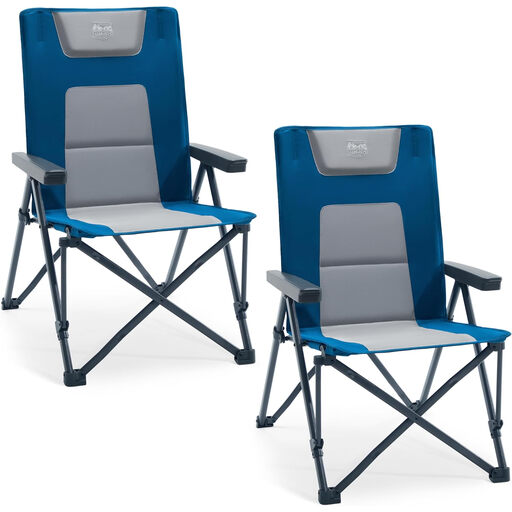
Why This Fits Their Persona: Ideal for those who prioritise maximum stability and seating comfort, such as anglers, RV campers, or users in their own garden. The high load capacity also provides security for heavier individuals.
It avoids the "misleading weight capacity" trap with a robust steel frame featuring X-bracing, enabling a real-world load capacity of up to 260 kg. It counteracts the lack of comfort with a padded, 4-position adjustable backrest.
Very high load capacity; adjustable backrest for customised comfort; reinforced armrests make it easier to stand up.
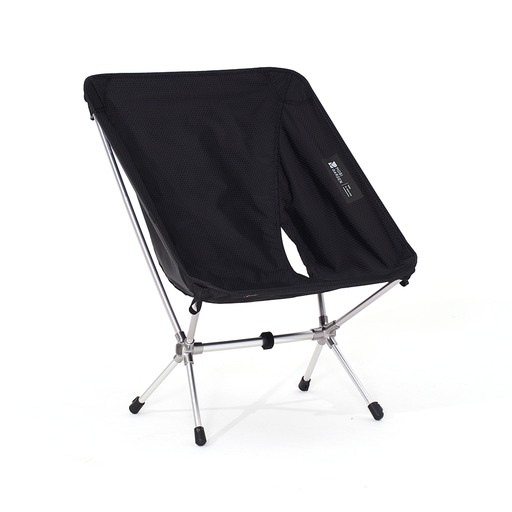
Why This Fits Their Persona: Perfect for trekking, cycling tours, or festival-goers where every gram and centimetre in the backpack counts. It provides a place to sit without adding significant weight.
This chair decisively solves the "impractical pack size" problem. Weighing only approx. 765 g with a pack size of 36 x 11 cm, it is extremely portable. The load capacity of approx. 140 kg is realistic and sufficient for an ultralight chair.
Extremely low weight and minimal pack size; frame made of aluminium alloy; quick assembly via a plug-in system.

Why This Fits Their Persona: A versatile chair for use when camping, at the beach, or on the patio. The sturdy armrests and high backrest offer great comfort, even for older individuals or during extended periods of sitting.
It addresses the "lack of comfort" with a 70 cm high backrest for shoulder support and a breathable mesh panel. The rigid plastic armrests, unlike flimsy fabric loops, provide real assistance when standing up.
High backrest for better support; sturdy armrests; good balance of comfort, stability (up to 180 kg), and practical extras like a cup holder and side pocket.
We have compiled a complete, up-to-date list of products that fully meet these strict selection criteria and safety regulations.
Proper care is simple but crucial. Clean the chair after each use with a damp cloth, paying special attention to the frame and joints to remove dirt and sand. Do not use harsh chemical cleaners. Allow the fabric to air dry completely before folding the chair and storing it in its carry bag in a dry place, protected from direct sunlight.
A steel frame is generally more budget-friendly and allows for a higher maximum load capacity, making it a good choice for a sturdy folding garden chair or a fishing chair. The downside is its heavier weight. An aluminium frame is significantly lighter and does not rust, making it ideal for a portable beach chair or a lightweight hiking camping chair. The load capacity is often slightly lower with these models.
Not necessarily. A high load capacity almost always comes with a heavier product weight and often a larger pack size. If you need to carry the chair over long distances, a lighter model with a load capacity sufficient for your body weight is the more practical choice. For stationary use at a campsite or in the garden, where weight is not a factor, a high-capacity model offers extra stability and a longer lifespan.