Small-batch cooks
If you tend to make dip in individual portions, you’ll want to adjust the quantity and seasoning as you go. Choose your container and blender to suit the portion size you actually make.


For small or varying portions, a hand or mini blender used with a suitably sized container is a natural choice. For a larger batch, consider a jug blender with a suitable usable capacity. The consistency you want, how easy the blender is to clean and the instructions for handling warm ingredients are all important too. A blender won’t keep prepared dip fresh: in its kitchen hygiene guidance from March 2026, the Federal Institute for Risk Assessment recommends storing perishable foods at between 2 °C and no more than 7 °C.
If you tend to make dip in individual portions, you’ll want to adjust the quantity and seasoning as you go. Choose your container and blender to suit the portion size you actually make.
If you make a batch to last for several meals, the dip should be easy to portion out and keep chilled until later.
If you prefer a smooth or slightly chunky texture, look at how much control the blender offers and choose a container that suits the quantity, rather than comparing wattage alone.
| What matters | What to look for | Who it matters most to |
|---|---|---|
| Suitable portion size | Match the recipe quantity to the usable container capacity, and check the minimum fill level in the instructions. | If I blend one portion at a time, I want a container that suits small or varying quantities. Around 36% of consumers prioritise getting the portion size right. |
| Meals at a later time | Check whether the dip can be portioned separately, covered and chilled promptly. | If I make dip for later meals, I need a clear process for portioning and chilling it. Around 29% of consumers put the safe storage of portions for later first. |
| Desired consistency | Compare the speed or pulse controls and how the blender handles the quantity you plan to make. | If I want to adjust the consistency from smooth to slightly chunky, control matters more to me than one power rating. Around 21% of consumers prioritise their preferred dip texture. |
| Cleaning and accessories | Check the instructions for the exact model: which parts can be removed, and which of those are dishwasher-safe? | If I regularly make small quantities, I only want to use accessories I actually need and can clean easily. Around 14% of consumers prioritise easy cleaning and suitable accessories. |
When you’re eating at different times, proper storage matters once you’ve finished blending. A blender jug isn’t automatically suitable for storing food.
Transfer portions for later into separate, suitable containers with lids, and chill them promptly. The Federal Institute for Risk Assessment recommends keeping perishable foods in the fridge at between 2 °C and no more than 7 °C.
The 1.8 l capacity listed for some jug blenders refers to the jug’s capacity, not the minimum fill level or suitability for a single portion.
Compare the recipe quantity with the fill-level guidance in the instructions. For small batches, a hand or mini blender may also be suitable.
A large jug can take up more space and mean more cleaning when you’re making small quantities.
What’s included can vary between versions. The manufacturer’s website lists different power ratings for the Braun MultiQuick 5 Vario MQ 5235 BK, despite referring to the same model, so these aren’t a reliable basis for comparison.
Check the full model number, what’s included and the instructions for the specific version on offer.
An unsuitable attachment may mean you need to make an additional purchase.
The MultiQuick MQ 5235 BK hand blender is available with several attachments.
The ErgoMixx MSM66110 is a hand blender with a removable metal blending foot and blending beaker.
The Kult Pro jug blender is designed for larger quantities; WMF lists dips and purées among its uses.
The range includes compact and larger jug blenders, with specifications that apply to each specific version.
This selection includes hand blenders that, according to their product details, can be used for dips, purées or sauces.
 No image available
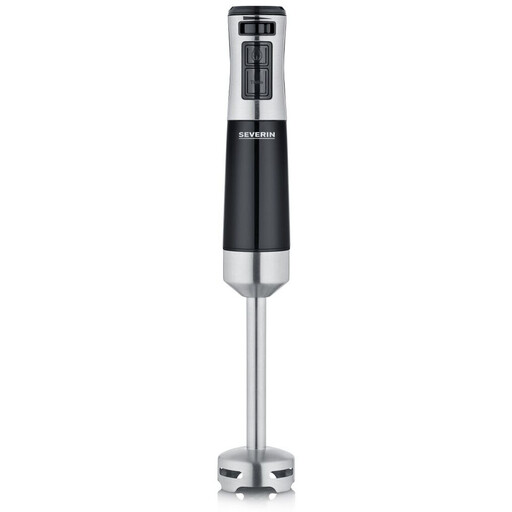
For dips and purées; the stepless speed control lets you adjust the consistency to your liking.
600 W; removable blending shaft.
 No image available
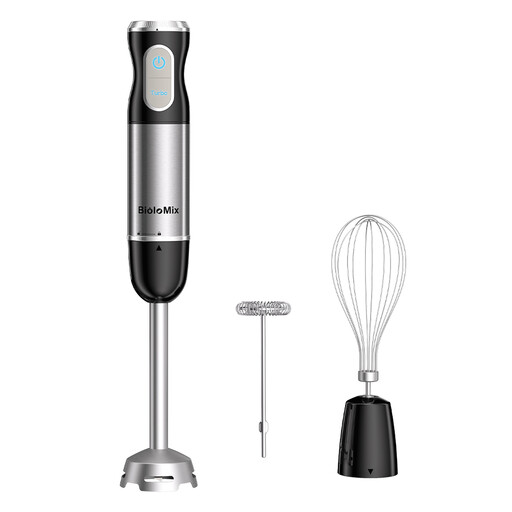
The product description lists purées and sauces among its uses.
Removable design; Turbo function.
 No image available
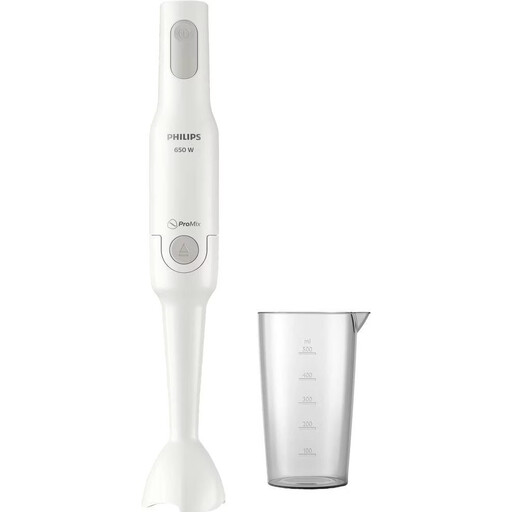
For sauces and purées; the blending beaker gives you a dedicated container for preparation.
650 W; one-button release. Allow hot ingredients to cool before blending, and don’t blend boiling liquids.
 No image available
For purées and sauces; the included containers come in different sizes.
600 W; two speed settings; 500 ml chopper and 800 ml beaker; whisk.
 No image available
For puréeing vegetables; according to the product title, both the chopper and beaker hold 500 ml.
Normal and Turbo modes; 1.5 m cable; removable accessories are dishwasher-safe according to the description.
Only if the instructions for the exact appliance and container allow it. Philips says the HR3760/10 can blend hot ingredients; that doesn’t mean boiling ingredients, other models or every attachment are automatically suitable.
A blender doesn’t replace refrigeration. The Federal Institute for Risk Assessment recommends storing perishable foods in the fridge at between 2 °C and no more than 7 °C, and advises cooling hot food promptly to below 7 °C if you plan to store it for longer. Cover the portions while they’re being stored.
Base your choice on the quantity you usually make at one time. For small or varying portions, check the container size and minimum fill level. For a larger batch, consider a jug blender with a suitable usable capacity.
Clean removable parts according to the instructions for the specific model; only parts explicitly described as dishwasher-safe should go in the dishwasher. If a product is faulty, your statutory rights are against the seller and are separate from any voluntary guarantee, as explained by the Verbraucherzentrale consumer advice centre.