Batch cooks
If you’re preparing several portions, the permitted working capacity matters more than the stated capacity alone. Kenwood distinguishes between the bowl capacity and the working capacity for liquids of the MultiPro Go Blend.


If you want to make a larger batch and blend it as smoothly as possible, a jug blender with a suitable permitted working capacity is an obvious choice. A hand blender is an alternative for smaller batches and limited worktop space. If you want to retain some texture, consider a compact food processor with a pulse function. The key factors are the recipe quantity, permitted fill level and cleaning. The stated capacity or wattage alone doesn’t guarantee a particular result with pepper dip.
If you’re preparing several portions, the permitted working capacity matters more than the stated capacity alone. Kenwood distinguishes between the bowl capacity and the working capacity for liquids of the MultiPro Go Blend.
For a smooth dip, check the suitable fill levels and how the appliance handles thick mixtures. The SWR buying guide notes that hand blenders can be particularly practical for smaller quantities.
If you want to control how chunky your dip is, check for a pulse function and the option to work in smaller batches. Kenwood lists a pulse function for the MultiPro Go Blend.
A good choice if: you want to blend your batch as smoothly as possible in just a few goes and have space for the appliance and jug.
Things to consider: the jug and appliance need space for storage and cleaning; the stated capacity isn’t a confirmed working capacity for thick dip.
A good choice if: you want to blend smaller portions in a suitably tall container and store the appliance without taking up much space.
Things to consider: making a larger batch may mean several rounds of blending and more hands-on work.
A good choice if: you want to control the chopping gradually or deliberately leave some texture in your dip.
Things to consider: the working capacity and recipe quantity may mean preparing several batches; a pulse function doesn’t guarantee a particular dip texture.
| Buying priority | What to look for | Who is this particularly important to? |
|---|---|---|
| Suitable batch size | Check the permitted working capacity for thick mixtures against the recipe quantity. | If I want to blend as few batches as possible for my freezer stash, I compare the working capacity rather than just the jug size. Around 36% of consumers are likely to put batch size first. |
| Smooth blending | Check the instructions for suitable ingredients, minimum quantities and guidance on thick mixtures. | I want my dip to be as smooth as possible, so I check whether the appliance is suitable for the quantity and consistency I have in mind. Around 29% of consumers are likely to prioritise smooth blending above all else. |
| Controlled texture | Check for a pulse function and the working capacity of the specific container. | If I want to leave some texture in my dip, I want to be able to control the blending in stages. Around 21% of consumers are likely to prefer a chunkier texture they can control. |
| Cleaning and storage | Check which parts are removable, whether they are dishwasher-safe and how much space the appliance needs. | If storage space is limited, I want to be able to put the appliance and its accessories away easily, and clean them thoroughly after use. Around 14% of consumers are likely to care particularly about cleaning and storage space. |
The stated capacity doesn’t automatically tell you how much thick dip you can blend at once. For the MultiPro Go Blend, Kenwood lists the bowl capacity separately from its working capacity for liquids.
Compare your recipe quantity with the permitted working capacity and the instructions for the exact model.
If you need several rounds, allow extra time for blending and cleaning.
Manufacturer claims about motors and programmes aren’t a like-for-like test using your pepper dip. With thick mixtures, you also need to consider the recipe quantity and how you use the appliance.
Read the instructions for suitable ingredients and permitted accessories; never put anything into a running jug.
A blending container isn’t automatically suitable for freezing. The Verbraucherzentrale recommends using containers suitable for liquids and leaving enough room for expansion.
Transfer the dip to a suitable container for freezing and follow its filling guidance.
Depending on what you already own, you may also need suitable freezer containers.
The MultiQuick hand blenders are an option for blending smaller portions.
The Kult Pro 1,8 l is a jug blender with a glass jug and a purée programme.
The MultiPro Go Blend FDP23.380RD combines a compact food processor with blending accessories.
The 5000 Series HR3041/00 jug blender is another option to consider.
The Joybuy products below include hand blenders and jug blenders for blending. For thick pepper dip, check the instructions and permitted fill level for the specific model.
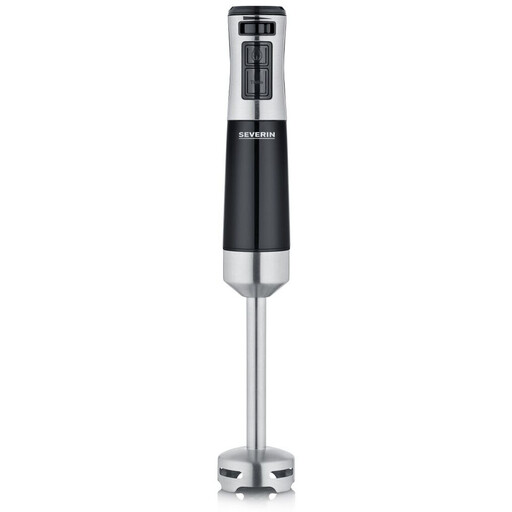 No image available
For blending dips and purées in smaller portions; the speed is continuously adjustable.
The blending shaft is removable; according to the product description, the parts are dishwasher-safe.
 No image available
According to the product information, the blending jug is suitable for sauces and purées.
The set includes a 1.500-ml blending jug, a 600-ml drinking bottle and a 300-ml chopper. Two speeds and a pulse function are listed.
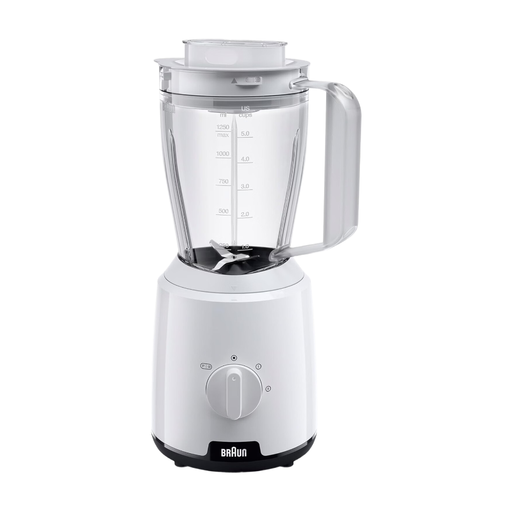 No image available
The product description also lists the jug blender for making purées.
The blending attachment holds 1,5 l; two speeds, a pulse function and an ice-crushing function are listed.
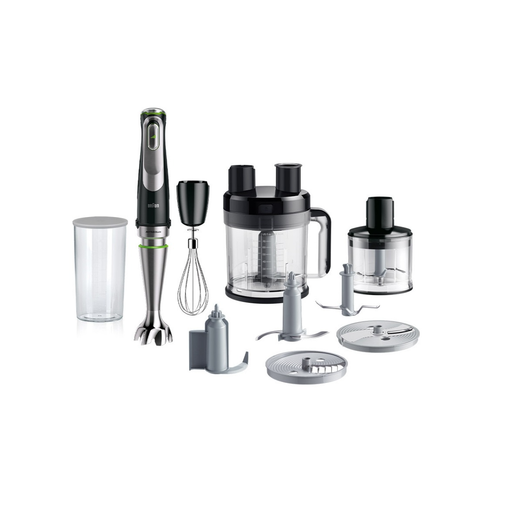 No image available
This hand blender set is an option for blending smaller portions.
The set is described as including a blending foot, a chopper, a whisk and a 2-l blending beaker. Most removable parts are dishwasher-safe.
 No image available
The product description lists blending fruit and vegetables as possible uses.
Three speed settings and an ice-crushing function are listed. According to the description, the parts can be dismantled for cleaning.
Compare the recipe quantity with the permitted working capacity of the specific container, not just its stated capacity. For example, Kenwood distinguishes between a 1,3-l bowl and a 0,75 l working capacity for liquids on the FDP23.380RD. This isn’t a general fill limit for other appliances or thick dips.
Use a container suitable for freezing rather than assuming that a blending jug can go in the freezer. For liquid foods, the Verbraucherzentrale recommends leaving room for expansion; follow the freezer container’s fill guidance for the dip.
Clean the blending foot, blades and container according to the instructions for the specific model, as not every part of a set is necessarily dishwasher-safe. The German Federal Institute for Risk Assessment lists hands, appliances and work surfaces as possible routes for the spread of contamination.
The statutory warranty is separate from a voluntary guarantee; the seller is generally responsible if a product is faulty. The remedies may include a repair or replacement. Special repair rules depend on the product category covered and don’t automatically apply to every blender.
Yes. In the EU, materials intended to come into contact with food must meet the requirements of Regulation (EC) No 1935/2004. This alone doesn’t prove that a particular model complies; nor do a wattage rating or a photograph confirm that the parts in contact with food are suitable for your recipe.