
Lieferung heute & morgen

Qualitätsgarantie

Willkommens-Angebote freischalten: KOSTENLOSE Lieferung | Bis zu 80 % RABATT | Kostenlose 30-Tage-JoyPlus-Testphase
App herunterladen
Freshly ground pepper affects not only the coarseness of the grind, but also when its aroma is released. If you’re buying a pepper mill for your kitchen, dining table or food business, don’t be swayed by its shape, colour or marketing claims alone. What matters are the technical details, including the grinder, moisture resistance, grind settings and cleaning requirements.
As Joybuy Product Recommendation Officer, I’ve picked out the most important things to consider and matched suitable models to different needs. This can help you avoid common buying mistakes.
A wooden or stainless steel pepper mill may look right on your dining table. But the material alone won’t tell you how easy it is to fill, clean or use. Wooden models must not be submerged in water or cleaned in the dishwasher. Moisture can damage the material and the grinder.
With a stainless steel pepper mill, it’s also worth checking whether the storage container is transparent and how the mill opens. An attractive finish is no substitute for practical design.
An adjustable grind can range from fine powder to coarsely cracked pepper. Depending on the model, you may adjust it with a knob, a nut or the top of the mill. If the instructions aren’t clear, it’s hard to know how precisely you can set the grind.
If you use pepper for sauces, salads and steaks, look for clear instructions on adjusting the grind. A simple manual pepper mill is often enough for occasional use.
An electric pepper mill makes seasoning easy at the touch of a button, but it needs batteries. For example, the ALANDEKO model requires four LR6 AA or 1.5-volt batteries, which aren’t included. If you won’t be using it for a while, remove the batteries to prevent leaks or damage.
Electric mills are also more sensitive to water. The casing must not be submerged. If you’re looking for a low-maintenance option, weigh the added convenience against battery use and cleaning requirements.
A pepper mill with a ceramic grinder is often marketed for pepper, salt and other dry spices. The models mentioned here are designed for dry, hard spices. For electric appliances such as the 23 cm stainless steel mill, the instructions specifically advise against grinding wet ingredients, damp salt or hard non-food items.
Metal grinders are also available, including in some wooden models. The material isn’t the only thing that matters: check that the manufacturer clearly explains what the mill is designed for, how to clean it and how to adjust the grind.
A manual pepper mill doesn’t need batteries and works by turning it by hand. It’s a good choice if you want to control the grinding process or use the mill at the dining table. If you season food frequently, consider how much effort it takes to operate.
An electric model is worth considering if you want to season food with one hand. Models with LED lights can also illuminate where the seasoning is dispensed. However, you’ll need to keep batteries to hand and protect the electrical components from moisture.
Choose a capacity to suit how you’ll use the mill. According to its product details, the ALANDEKO Electric Mill holds up to 30 g of peppercorns or 60 g of salt. A 23 cm electric stainless steel mill has the same capacity. This means less frequent refilling if you use it regularly.
With a salt and pepper mill, check whether the model is suitable for both spices. Some pre-filled mills are intended for one-time use and can’t be refilled. Only use a spice mill with suitable, dry ingredients.
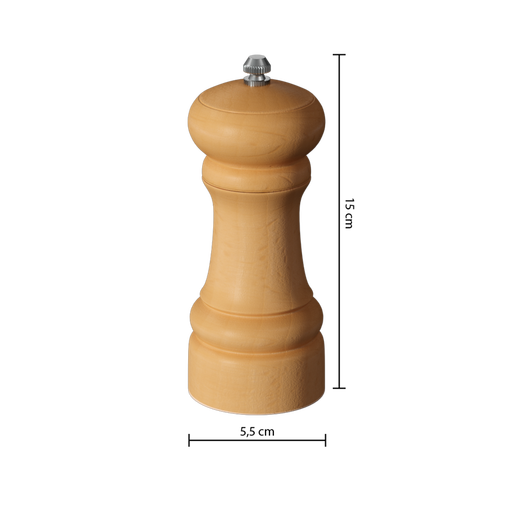
Why this product suits this need: At 14.5 cm, its compact design is ideal for smaller kitchens, the dining table and occasional seasoning. The wooden casing has a classic look.
The product details specify manual operation, a metal grinder and adjustable grind settings. This makes its basic functions clear.
14.5 cm tall, manual operation and easy cleaning with a dry cloth.
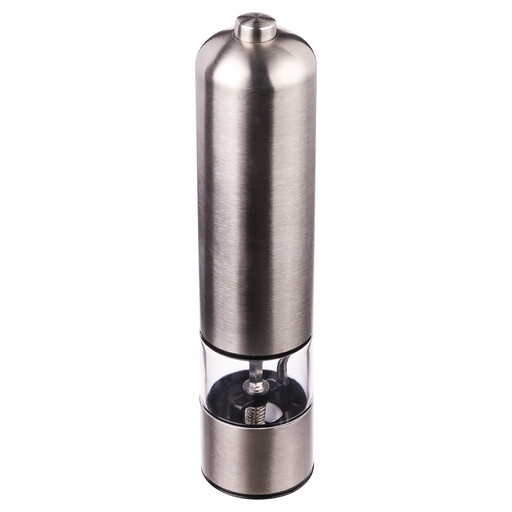
Why this product suits this need: Its 304 stainless steel casing, ceramic grinder, LED light and adjustable grind settings make it a good fit for anyone who values technical features and straightforward operation.
The product details clearly state the battery type, capacity, grind adjustment, cleaning restrictions and suitable dry spices.
23 cm tall, with a 30 g pepper or 60 g salt chamber, a ceramic grinder and LED lighting.
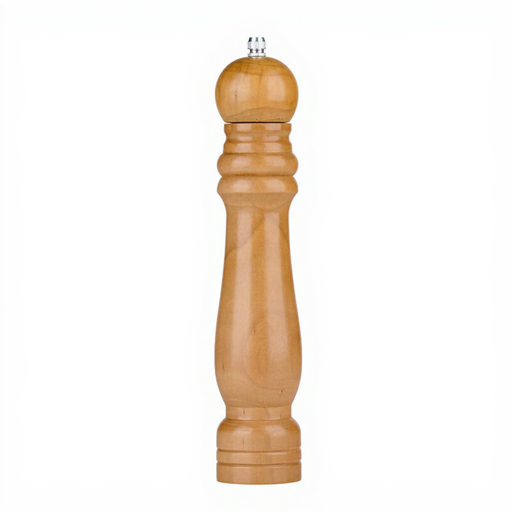
Why this product suits this need: This 25 cm duo keeps pepper and salt separate, making it a good fit for households or food businesses where the mills are used regularly.
The product description specifies separate mills and adjustable grind settings, so the salt and pepper won’t be mixed in the same container.
A two-piece set, 25 cm tall, with grind settings from fine to coarse according to the product description.
We’ve put together a complete, regularly updated list of products that meet these strict selection criteria and fully comply with the safety regulations in force in the EU.
For freshly ground pepper, fill the mill with dry peppercorns only. Damp salt or wet ingredients can block the grinder. If you have an electric pepper mill, you should also:
A manual mill isn’t automatically more resistant to damage. Avoid water, the dishwasher and damp spices unless the product details say otherwise.
That depends on the grinder and the manufacturer’s instructions. The ceramic grinders in the models mentioned here are designed for salt and dry spices. Damp salt can clump, however, and put strain on the mechanism. If you’re buying a salt and pepper mill, check that both spices are explicitly listed as suitable.
It can be a good choice if you want to season food with one hand or regularly grind larger quantities. However, remember to factor in the cost of batteries, the extra weight and limited water resistance. For occasional use, a manual pepper mill is often simpler.
That depends on its capacity and how much you use it. Models that hold 30 g of pepper are suitable for regular household use. Pre-filled mills containing 24 to 45 g are often intended to be used as supplied. Check whether the mill can be refilled before you buy.