
Lieferung heute & morgen

Qualitätsgarantie

Willkommens-Angebote freischalten: KOSTENLOSE Lieferung | Bis zu 80 % RABATT | Kostenlose 30-Tage-JoyPlus-Testphase
App herunterladen
By Joybuy Product Recommendation Officer, August 28, 2026
An illegible mark on a component, a smeared label on a lab sample, or a faded identifier on inventory—these issues don't just waste time; in professional environments, they can lead to significant errors. The search for a reliable, permanent grease pencil might seem straightforward, but the market is filled with products whose properties are often unclearly stated. Many users invest in pencils that fail to meet the demands of the workshop, lab, or logistics.
This guide reveals the two most common pitfalls to avoid and explains which technical parameters truly matter, helping you make an informed choice for a durable and functional permanent grease pencil.
Before choosing a product, it's crucial to understand the typical weaknesses that often only become apparent during practical use.
To avoid these problems, you should check three core aspects before buying. These define the performance of a professional marking pencil.
The most important characteristic of a permanent grease pencil is its resistance to environmental factors.
The composition of the lead determines which surfaces the pencil will work on. A high-quality permanent wax crayon or a wax-based marking chalk offers significant advantages over liquid ink:
A professional grease pencil must adhere to a variety of materials common in industry and trades. These include:
Based on these criteria, we have curated a selection of pencils suitable for specific professional profiles.
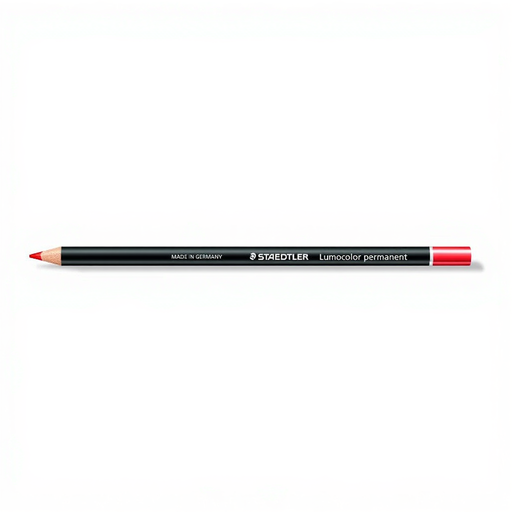
Why This Fits Their Persona: Ideal for users in manufacturing or warehousing who need a durable, highly visible mark on metal parts, plastic containers, or dark surfaces. The red colour offers high contrast for quick identification.
The formula is explicitly waterproof and permanent, avoiding the "permanence trap." The wax lead adheres reliably to smooth and slightly uneven industrial materials without beading.
Lightfast pigments ensure long-lasting legibility even with UV exposure. The lead doesn't dry out, making it always ready for use.
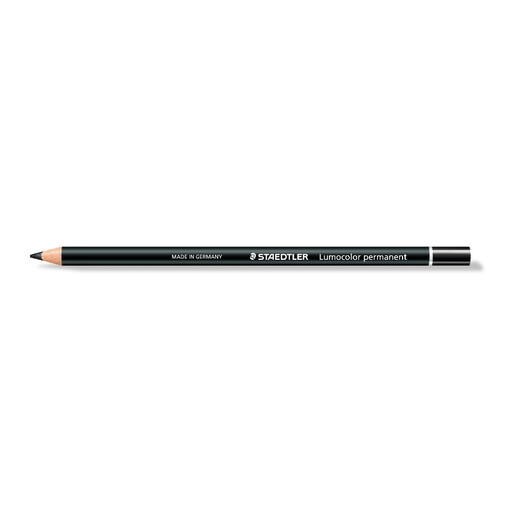
Why This Fits Their Persona: Perfect for lab technicians and engineers who need to label glass slides, beakers, or small plastic parts with precision and durability. The black colour provides maximum opacity and legibility.
It solves the problem of surface incompatibility. The special wax lead adheres to extremely smooth surfaces like glass, where liquid ink often fails or smears.
The lead is temperature-resistant, and the marking remains stable even when exposed to many chemicals. The label is waterproof and permanent.
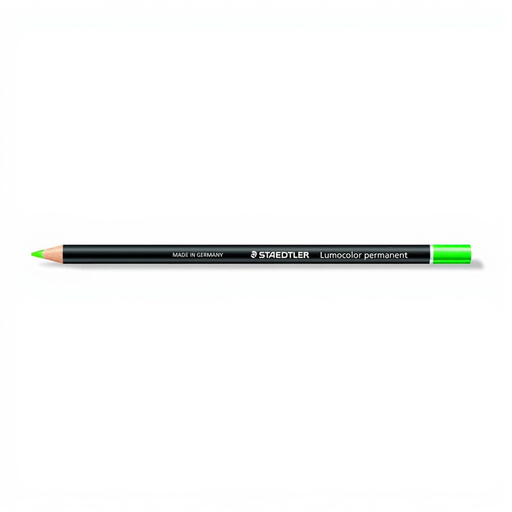
Why This Fits Their Persona: For tradespeople who work with a wide variety of materials on construction sites or in workshops—from wood and stone to metal and plastic. A true all-surface marker for daily use.
Thanks to the solid wax lead, the colour doesn't bleed through on porous surfaces like wood or paper—a common problem with liquid markers. It's a reliable partner for mixed materials.
According to the manufacturer, the wood barrel is sourced from PEFC-certified, sustainably managed forests. The lead is suitable for a wide range of surfaces, eliminating the need to carry multiple pens.
We've compiled a complete, up-to-date list of products that fully meet these strict selection criteria and current regulations.
The main difference is their permanence. Glasochrom (permanent) pencils are waterproof and designed for durable markings. Their pigments are not water-soluble. Omnichrom (non-permanent) pencils are water-soluble and intended for temporary labelling, as they can be easily wiped off smooth surfaces with a damp cloth.
Although classified as "permanent," markings on smooth, non-porous surfaces like glass or metal can usually be removed mechanically (e.g., with a scraper) or with the help of solvents like isopropyl alcohol or mineral spirits. On porous materials like untreated wood or paper, removal without a trace is nearly impossible.
No, a key advantage of grease pencils or marking chalks with a solid wax lead is that they cannot dry out. Unlike felt-tip markers with liquid ink, they don't require a cap and are ready to use immediately, even after long periods of storage. However, extreme heat should be avoided as it can soften the wax lead.