
Lieferung heute & morgen

Qualitätsgarantie

Willkommens-Angebote freischalten: KOSTENLOSE Lieferung | Bis zu 80 % RABATT | Kostenlose 30-Tage-JoyPlus-Testphase
App herunterladen
A good permanent marker is an indispensable tool for the office, workshop, and home. Yet, the search for a reliable marker often ends in frustration: the ink dries out unexpectedly, writing on plastic fades within weeks, or the tip is simply wrong for the job. Before you invest in a product that fails to deliver on its promises, it's essential to understand the key quality characteristics. This guide will help you navigate the common pitfalls and select the perfect marker for your specific needs.
Many products on the market claim to be long-lasting, but the reality is often quite different. Look out for these two weak points to avoid a disappointing purchase:
To find the right all-purpose marker, you shouldn't be guided by marketing promises, but rather focus on verifiable technical specifications.
The ink's composition determines its longevity and range of applications. A high-quality ink is quick-drying, making it ideal for left-handers and for writing on smooth surfaces, as it won't smudge. For outdoor use, high lightfastness is essential to prevent fading from sun exposure.
Some manufacturers also offer special technologies. For example, STAEDTLER's DRY SAFE technology, according to the manufacturer (tested according to ISO 554), allows the marker to be left uncapped for days without drying out. This is a clear indicator of a well-engineered product. For users who write a lot, a refillable marker is an economically and ecologically sound choice.
The tip must be suited to the surface and the task.
Instead of making a blanket recommendation, we have selected products for three typical user profiles that meet the criteria mentioned above.
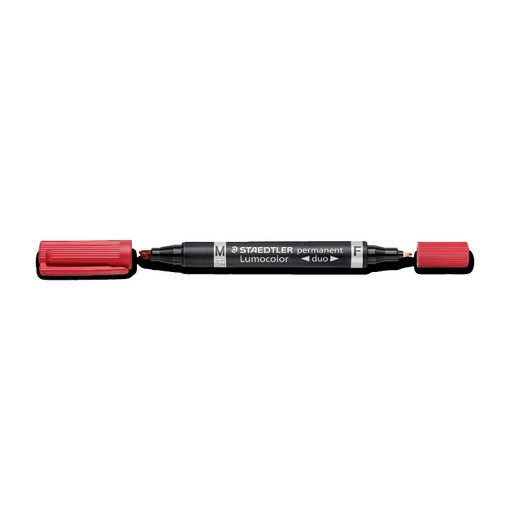
Why This Fits Their Persona: Ideal for users in logistics, the office, or the workshop who constantly need to switch between broad marking and fine labelling. This marker combines both, saving space and time.
The all-purpose ink adheres reliably to almost all surfaces and is smudge-proof and waterproof, solving the problem of poor permanence on smooth materials. The dual tip prevents you from buying the wrong type of marker for the job.
Two tips in one marker (M, 1.5 mm and F, 0.6 mm) for maximum flexibility. The ink is quick-drying and suitable for many surfaces.
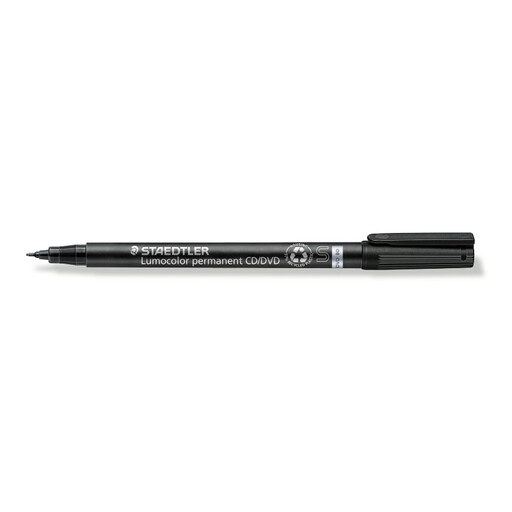
Why This Fits Their Persona: Perfect for archiving media, labelling lab samples, or making fine marks on electronic components. Ideal for any application where precision and material safety are required.
The extra-soft tip won't damage delicate surfaces—a common problem with unsuitable markers. The DRY SAFE technology prevents it from drying out during repeated, short-term use while cataloguing.
Superfine line width of 0.4 mm for precise labelling. The special ink does not penetrate the data layer of CDs/DVDs and is lightfast.
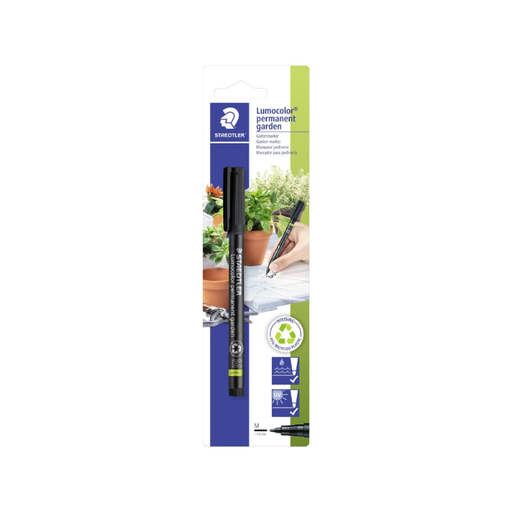
Why This Fits Their Persona: For gardeners, landscapers, and tradespeople who need durable labelling on plant tags, wooden stakes, stone, or metal outdoors that can withstand any weather.
The specially formulated ink is extremely lightfast and weatherproof. It solves the core problem of fading and washing away that occurs with conventional permanent markers used outdoors.
Exceptional weather and UV resistance for long-lasting legibility. The robust 1.0 mm bullet tip is also suitable for rough surfaces.
We have compiled a complete, up-to-date list of products that fully meet these strict selection criteria and quality standards. Whether for creative projects with a permanent marker set or for special industrial requirements, you'll find the right tool here.
The lifespan depends heavily on the quality of the marker and how it's stored. Models with high-quality polypropylene barrels and technologies like DRY SAFE can, according to the manufacturer, still write even after days of being left uncapped. As a general rule: always store markers horizontally and cap them tightly after use to maximize their lifespan.
Removing permanent ink from a marker for plastic is intentionally difficult. However, on smooth, non-porous plastics, it can sometimes be achieved with solvents like isopropyl alcohol or special ink removers. The result depends on the ink, the exposure time, and the type of plastic. Always perform a test on an inconspicuous area first.
For high-volume users, refillable markers are a very smart choice. They not only reduce waste but are also more cost-effective in the long run. Brands like Staedtler Lumocolor offer compatible refill stations that cleanly and easily supply the marker with the exact amount of ink needed, without overfilling it.