
Lieferung heute & morgen

Qualitätsgarantie

Willkommens-Angebote freischalten: KOSTENLOSE Lieferung | Bis zu 80 % RABATT | Kostenlose 30-Tage-JoyPlus-Testphase
App herunterladen
A good permanent marker is an indispensable tool—whether in the office, workshop, garden, or for creative projects. But the selection is vast, and not every pen lives up to its promise. Often, small but crucial flaws lead to frustration: the ink smudges, the colour fades, or the pen dries out after a short time.
This guide will help you navigate the common pitfalls of buying a permanent marker. We focus on the essential features that separate a reliable marker from a useless one, ensuring your next label is durable and precise.
Before you choose a model, you should be aware of the most common weaknesses that often only become apparent after purchase.
To avoid a bad buy, you should carefully examine three technical parameters. These determine the performance and longevity of your marker.
The ink's composition determines which materials the pen will write on reliably. Most permanent markers use an alcohol-based ink that adheres well to almost all surfaces—from paper and cardboard to metal, glass, and plastic.
The marker's tip determines how precisely or broadly you can work. The choice depends entirely on your application.
Certain features indicate higher product quality and thoughtful design. These include refillable ink systems, which are not only more sustainable but also save costs in the long run. Brands like Staedtler Lumocolor or Sharpie Marker often offer well-designed systems. A permanent marker set containing various colours (coloured markers) or line widths can be a practical solution for diverse tasks.
We have selected a few products based on the criteria above for typical user profiles.
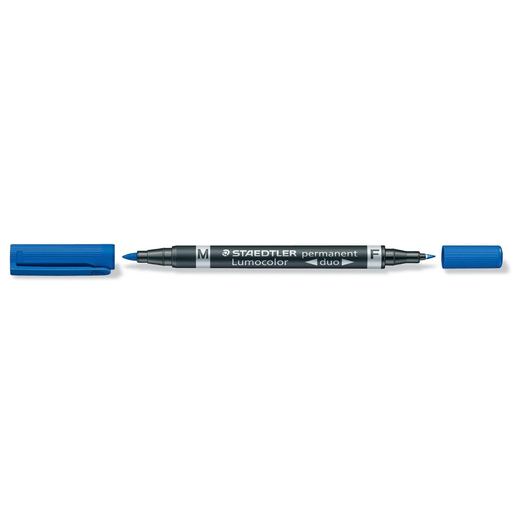
Why This Fits Their Persona: Ideal for dynamic work environments like offices or warehouses, where both fine notes and highly visible markings are needed. This pen combines two functions in one tool.
The quick-drying ink prevents smudging on almost all surfaces. According to the manufacturer, its DRY SAFE technology protects it from drying out, even if the caps aren't replaced immediately.
Two tips in one pen (fine tip 0.6 mm and broad tip 1.5 mm) for maximum flexibility. The ink is low-odour and suitable for many surfaces.
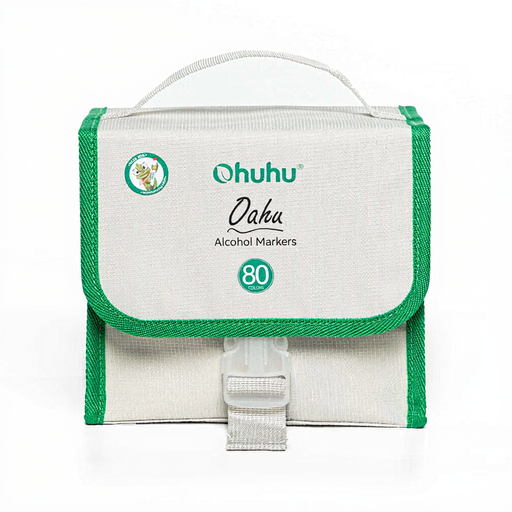
Why This Fits Their Persona: Perfect for artists, illustrators, and crafters who need a wide range of colours and versatile tips for drawing, sketching, and colouring. The included case keeps everything organised.
This permanent marker set solves the problem of having to buy many individual pens. The alcohol-based ink is designed for smooth colour blending, which often results in unsightly streaks with standard markers.
A comprehensive set with 80 colours and a colourless blender. Each pen features both a fine tip and a broad chisel tip for maximum creative freedom.
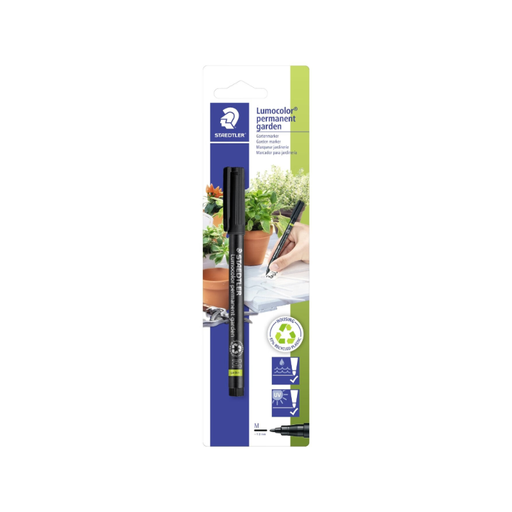
Why This Fits Their Persona: Designed for gardeners, landscapers, and anyone who needs durable outdoor labels. Ideal for plant tags, wooden stakes, or tools exposed to the elements.
This garden marker solves the problem of fading. Its ink is explicitly formulated to be light- and weather-resistant, ensuring labels remain legible even after months outdoors.
High weather and UV resistance. The ink is waterproof and adheres reliably to typical garden materials like plastic, wood, and terracotta.
We've compiled a complete, up-to-date list of products that fully meet these strict selection criteria and quality standards.
The most important step is to replace the cap firmly after each use. Ideally, store the pens horizontally to keep the ink evenly distributed to the tip. When buying, look for models with special protective caps or technologies like "DRY SAFE," which manufacturers claim allow for a longer cap-off time.
For most common plastics (e.g., PP, PET), an all-purpose marker with alcohol-based ink is suitable. The ink dries quickly and adheres permanently. For special, coated, or very smooth plastics, a specialty film marker or a specialised marker like the STAEDTLER Lumocolor Permanent Special may yield better results, as its ink is optimised for such demanding surfaces.
Most markers labelled "permanent" are water-resistant once dry. However, the degree of resistance can vary. A water-resistant pen for indoor use can withstand splashes but is not necessarily suitable for prolonged rain or UV exposure. For outdoor use, you should explicitly look for a product declared as "weatherproof" or "light-resistant," such as a garden marker.