
Lieferung heute & morgen

Qualitätsgarantie

Willkommens-Angebote freischalten: KOSTENLOSE Lieferung | Bis zu 80 % RABATT | Kostenlose 30-Tage-JoyPlus-Testphase
App herunterladen
A permanent marker should produce long-lasting, legible writing, start cleanly and suit the surface in question. In practice, unsuitable purchases are often the result of product claims not matching the intended use. For example, a waterproof marker for paper is not automatically suitable for glass, metal or long-term outdoor use. A large marker set can also be the wrong choice if the nib width and ink type are not suited to the project.
A waterproof permanent marker will often withstand moisture better after drying than a water-soluble pen. However, this does not automatically indicate how long the marking will remain legible in direct sunlight. For plant labels, garden pots or outdoor signs, a lightfast marker with specified weather or UV resistance is therefore the more sensible choice.
A marker for almost all surfaces will typically adhere to paper, card, plastic, glass, metal or wood. On porous materials, however, the ink can penetrate deeply. Any residue may then be difficult or impossible to remove. Before using it for the first time, testing it on an inconspicuous area is recommended.
A nib measuring around 0.4 to 0.6 mm is suitable for small labels, technical notes and fine outlines. For cardboard boxes, information signs or robust markings, a 1.0 mm nib or broad chisel tip is more practical. If you regularly write with a nib that is too fine on rough wood or stone, it may wear out more quickly.
A classic permanent pen uses fast-drying, water- or alcohol-based ink. It is particularly suitable for labelling, packaging and smooth materials. Check the manufacturer’s information for the specific surface:
An acrylic marker usually contains opaque, pigmented paint and is an interesting option for creative projects on wood, stone, glass, ceramics or canvas. An aquarelle marker, on the other hand, uses water-soluble ink and is designed for paper and blendable colour gradients. It is not a substitute for a permanent marker when waterproof labelling is required.
Pay attention to the actual line width rather than just descriptions such as “Fine” or “Medium”. A fineliner measuring 0.05 to 0.3 mm enables precise drawings and hatching. A 0.6 mm marker is suitable for small labels and outlines. Medium nibs of around 1.0 mm offer a compromise for labelling and general marking. Depending on their angle, chisel tips can produce both narrow and broad lines.
A fast-drying marker reduces smudging, which is particularly useful for left-handed users and when writing on smooth surfaces. For outdoor applications, also look for specifications such as waterproof, weather-resistant and lightfast. A refillable model can extend its service life and is practical for frequent users in the office, workshop or warehouse.
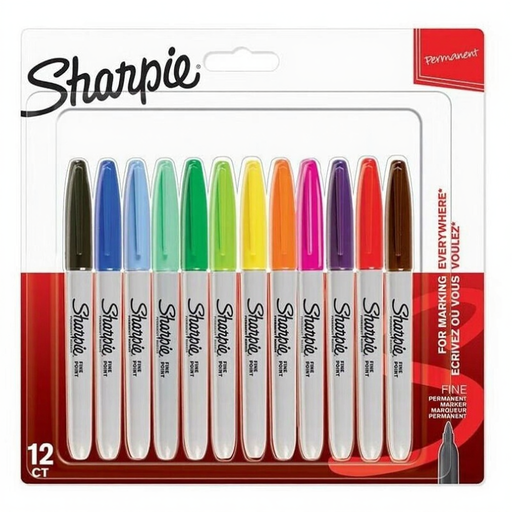
Why this product suits the profile: The set of 12 offers several colours and a fine tip of around 0.5 mm for labelling, creative projects and everyday use.
The specified fine metal tip and range of colours make it easier to choose the right option for different label sizes without having to buy several individual pens.
12 markers, a line width of around 0.5 mm and, according to the product information, waterproof and lightfast ink.
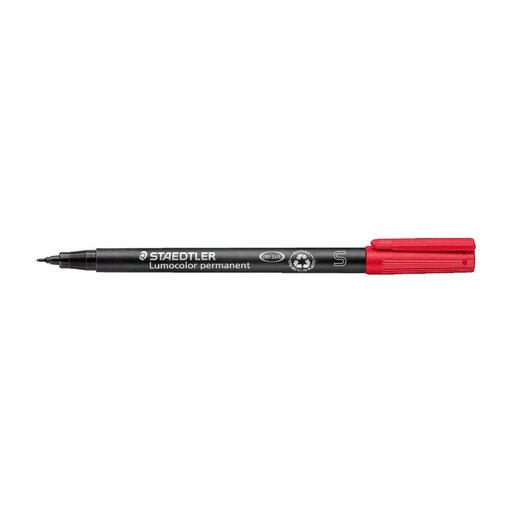
Why this product suits the profile: The 0.4 mm tip is designed for precise labelling on a wide range of smooth, solid materials.
The defined line width prevents fine writing from becoming illegible because of an overly broad tip. According to the product description, the DRY-SAFE specification refers to several days without the cap.
0.4 mm synthetic tip, fast-drying ink and the option to refill it using the specified STAEDTLER refill station.
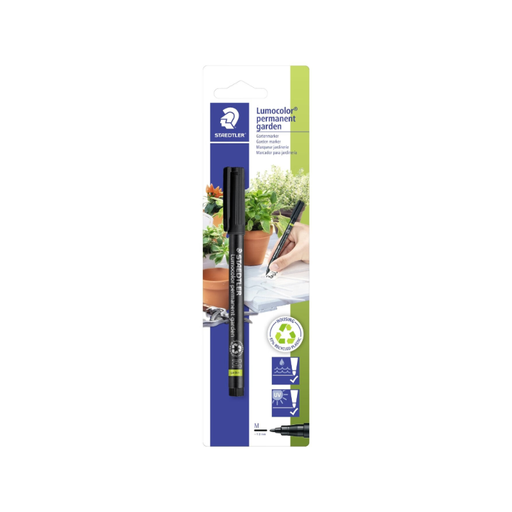
Why this product suits the profile: For gardeners and outdoor areas, the product description specifies a tip of around 1.0 mm as well as waterproof, weather-resistant and lightfast properties.
Its specified weather and light resistance addresses the difference between a standard indoor marking and labelling for plant labels, wood, ceramics or stone outdoors.
A line width of around 1.0 mm and, according to the product information, waterproof performance for use on a wide range of outdoor materials.
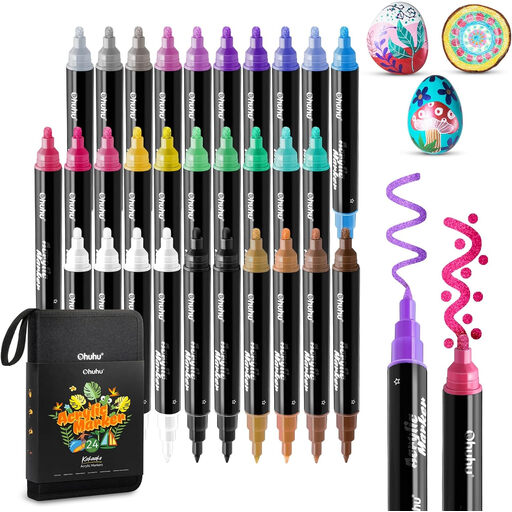
Why this product suits the profile: Two tips per pen and 30 colours are ideal for detailed designs on stones, wood, glass, plastic and ceramics.
The opaque acrylic paint is designed for creative surfaces, clearly distinguishing it from water-soluble aquarelle markers or classic writing markers.
30 markers, fine and round dual tips, plus eight replacement tips according to the product description.
We have put together a complete, regularly updated list of products that fully meet these strict selection criteria and the safety regulations applicable in the EU.
Before marking, the surface should be dry, clean and as free from grease as possible. A short test is recommended on smooth materials. Allow the ink to dry completely before touching or stacking the marked item.
Replace the cap firmly after every use. With refillable models, the appropriate refill station extends the product’s service life. Markers should be stored according to the manufacturer’s instructions; for many products, horizontal storage is advisable. Permanent ink must not be used on skin, food or surfaces that come into contact with food. When children are using markers, follow the guidance on caps that could be swallowed and the recommended minimum age.
This depends on the amount of ink, frequency of use, strain on the tip and storage conditions. A marker that is capped after every use will dry out less quickly. For outdoor markings, UV radiation, rain, frost and the condition of the surface also affect legibility.
No. Glass and plastic are smooth, often non-absorbent materials. So check whether the manufacturer explicitly lists these surfaces. Before completing the labelling, test the adhesion on a small area.
A permanent pen is primarily designed for long-lasting labelling. An acrylic marker usually contains opaque paint for creative work on a range of surfaces. An aquarelle marker contains water-soluble ink and is suitable for blendable effects on paper. Your choice should therefore be based on the surface, the desired opacity and water resistance.