
Lieferung heute & morgen

Qualitätsgarantie

Willkommens-Angebote freischalten: KOSTENLOSE Lieferung | Bis zu 80 % RABATT | Kostenlose 30-Tage-JoyPlus-Testphase
App herunterladen
A permanent marker should write where a pencil, biro or standard highlighter is not up to the job. In practice, however, it is easy to buy the wrong product: the tip may be too broad for the intended use, the ink may not adhere to the surface or the writing may fade after only a short time.
Whether you need to label plant markers, plastic boxes, glass, cardboard, technical drawings or school notes, the key factor is not simply the colour description “permanent”, but the combination of ink type, tip width and suitable surface.
A water-resistant permanent marker may withstand splashes or brief wiping once dry. That does not automatically mean the marking will resist UV radiation, frost and changing temperatures over time. For gardening or landscaping, look specifically for a stated suitability for outdoor use or for light or weather resistance.
Many markers write on several smooth materials, including glass, plastic and metal. On absorbent wood, untreated ceramics or textiles, however, the ink may run, soak in deeply or become impossible to remove. Before using it over a large area, test it in an inconspicuous spot.
A broad chisel tip is suitable for headings and large labels, but hardly ideal for small labels. A fine-tip permanent marker writes more precisely, but requires more time on rough surfaces and may wear down faster when used with heavy pressure. The measurement in millimetres is therefore more important than simply choosing “Fine” or “Broad”.
Fast-drying, solvent- or alcohol-based inks are generally used for permanent markings on smooth surfaces. They often adhere to glass and plastic, but are not intended for use on skin. A water-resistant permanent marker is a sensible choice if the writing will come into contact with water. For plant markers, wooden fences and garden signs, you should also look for information on light resistance or weather resistance.
For children, craft projects and clothing, however, washable markers for children with water-based ink are more suitable. “Washable” does not mean that every mark will disappear completely from every material. Jar Melo markers are stated to be 90 per cent washable from skin and most fabrics. Such claims should be understood as a product feature and tested on a small area before use.
A fibre tip feels comfortable on paper, while a metal-reinforced or particularly robust tip can offer advantages when used frequently on plastic, glass or rough materials.
A refillable marker can reduce running costs if the pen is used regularly. The refill station and ink type must be compatible, however. During longer breaks, the cap should click audibly into place. Some Lumocolor models feature DRY-SAFE technology, which, according to the product information, can delay drying out for several days when the pen is left uncapped. Even so, this feature does not replace careful recapping.
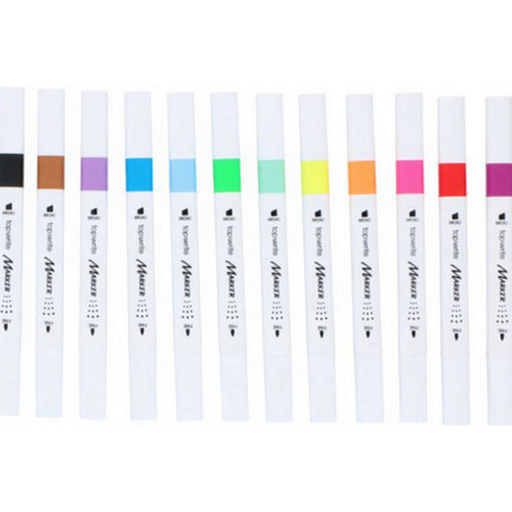
Why this product suits this profile: The 12-piece set combines a fine 3.5 mm tip with a 5.8 mm chisel tip, covering notes, headings and colour coding.
The two tips eliminate the need to buy several individual markers for different line widths. The ink is intended for paper surfaces and is not a substitute for a weather-resistant marker.
12 colours, two tips per pen and fast-drying ink for paper projects.
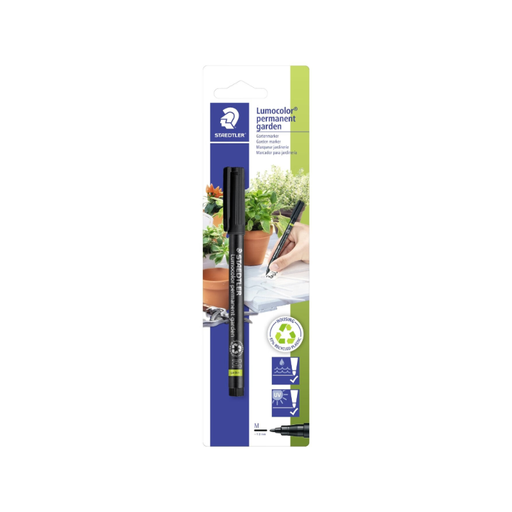
Why this product suits this profile: For gardeners, landscapers and hobby users who want to label plant markers, wooden sticks, ceramic pots or garden signs permanently.
The product description specifies water-resistant, light- and weather-resistant black ink, along with a line width of approximately 1.0 mm.
Black marking, medium round tip and suitability for plastic, wood, metal, glass and stone according to the product information.
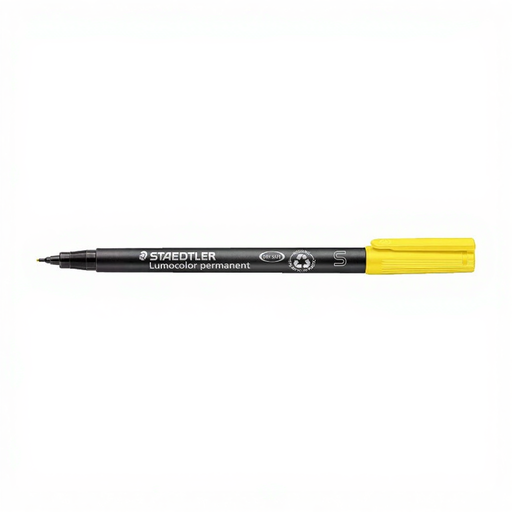
Why this product suits this profile: The 0.4 mm tip is designed for users who need very fine, permanent markings on smooth surfaces.
The defined line width prevents a broad marker from being used for small labels or technical markings.
0.4 mm synthetic tip, permanent ink, DRY-SAFE feature and refillability via a compatible STAEDTLER refill station.
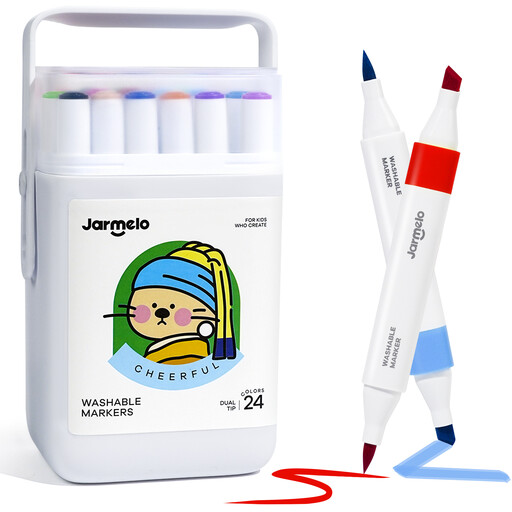
Why this product suits this profile: The set offers 24 colours, plus a brush tip and chisel tip on each marker for drawing, lettering and filling larger areas.
The water-based, alcohol-free and odour-free ink is designed to be washable, making it an alternative to permanent ink for children’s projects.
24 colours, two tips, ventilated caps and a storage bag with carrying handle.
We have compiled a complete, regularly updated list of products that fully meet these strict selection criteria and the safety regulations applicable in the EU.
For glass and plastic, choose products whose manufacturers explicitly list these surfaces. A Lumocolor Permanent Marker with a fine or medium tip may be suitable for smooth, non-absorbent surfaces. The surface should be dry, clean and free from grease. Before applying permanent lettering, it is advisable to test a small mark.
Its service life depends on the amount of ink, tip shape, writing pressure and storage conditions. Keeping the cap firmly closed prevents the ink from drying out. If you use it frequently, a refillable marker may be more economical. DRY-SAFE systems can delay drying when the cap is left off, but should not be regarded as a permanent storage solution.
A highlighter set usually uses water-based ink for paper and highlights text without fixing it permanently to many materials. A permanent marker, on the other hand, is designed for long-lasting markings. Highlighters should therefore not be used as a substitute for a water-resistant or weather-resistant marker on plant markers, plastic or metal.