
Lieferung heute & morgen

Qualitätsgarantie

Willkommens-Angebote freischalten: KOSTENLOSE Lieferung | Bis zu 80 % RABATT | Kostenlose 30-Tage-JoyPlus-Testphase
App herunterladen
A permanent marker should leave lines that stay legible. In practice, though, problems are common: the nib frays on rough wood, the ink smudges on plastic or the colour fades outdoors. If you focus only on bold colour names or large packs, you could miss important technical details.
This buying guide explains what individuals, office workers, teachers, students, crafters, gardeners and tradespeople should look for when choosing a marker. The aim is to help you make an informed choice based on line width, ink type, surface compatibility and intended use.
A marker for all surfaces may work on paper, glass, metal, plastic or wood. But that doesn’t automatically mean the mark will adhere equally well to every surface. Dust, grease, moisture and a heavily textured surface can all affect the result.
Before writing, clean and dry the surface where possible. If you’re marking a valuable item or a visible area, it’s worth testing the marker on an inconspicuous spot first.
A waterproof marker may withstand occasional splashes or damp conditions. For plant labels, wooden sticks and outdoor signs, lightfastness and weather resistance matter too. UV rays can alter colours, even if the ink doesn’t run straight away.
For the garden, a specialist waterproof garden marker is therefore a better choice than an ordinary office marker designed for paper.
Depending on how you hold it, a marker with a chisel nib can produce lines of different widths. A model with a line width of around 2 to 5 mm is suitable for headings, marking and larger areas. For small labels, technical lettering or fine outlines, a fine-tip marker is a better choice.
Also check whether the stated width refers to the actual range of line widths or just describes the shape of the nib.
Permanent ink is designed for marks that aren’t meant to be removed easily. On porous materials such as untreated wood, cardboard or stone, it can soak in deeply, making corrections difficult later.
For presentations, you’ll often need a flipchart marker with water-based ink. This ink is designed for paper and should bleed through as little as possible on suitable flipchart paper. A flipchart marker isn’t the same as a permanent marker.
For creative projects, art markers with water-based ink can be a good choice. The key factors are the colour range, nib shape and paper you’re using. Water-based inks can run or show through thin paper.
The nib affects how precisely and quickly you can work:
A metal casing or reinforced fibre tip can be useful for certain applications. Even so, the nib should always suit the surface: a fine fibre tip will wear down more quickly on rough material than on smooth plastic.
Before buying, check what you’ll be writing on:
Please note: permanent marks can be difficult or impossible to remove from porous surfaces, textiles or wallpaper. Don’t use the marker on skin or food packaging unless the manufacturer expressly says it’s suitable.
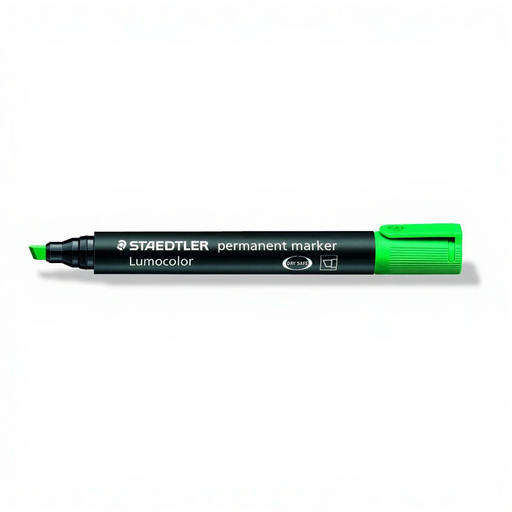
Why this product suits this profile: According to the product details, the chisel tip covers a range of around 2 to 5 mm, making it suitable for general labelling, marking and creative projects.
The clearly stated tip width helps you avoid choosing a tip that’s too fine or too broad for the job.
Green ink, a chisel tip and suitable for writing, drawing and marking.
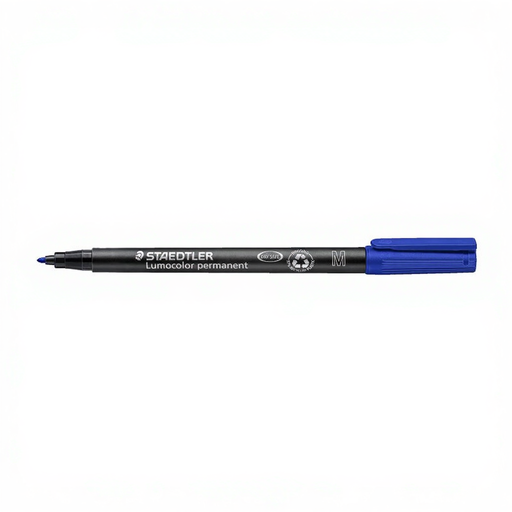
Why this product suits this profile: The medium tip, at around 1.0 mm, is suitable for even lettering when you need a precise, easy-to-read line.
The product details specify permanent, quick-drying ink, DRY-SAFE properties and refillability.
Blue ink, a line width of around 1.0 mm and, according to the product description, suitable for a wide range of smooth surfaces.
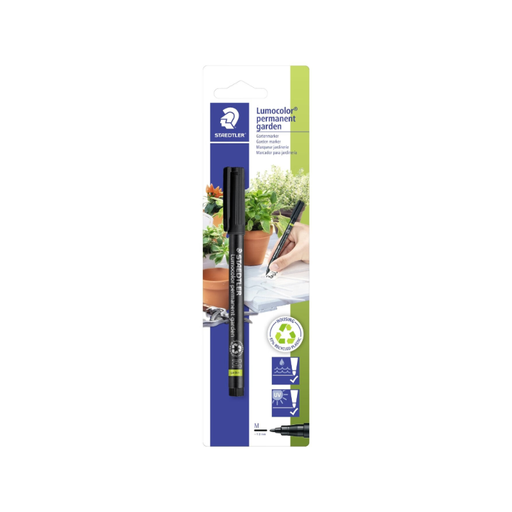
Why this product suits this profile: The round tip, around 1.0 mm wide, is designed for plant labels, wooden sticks, pots and other garden materials.
The product description specifies waterproof, lightfast and weather-resistant ink, setting it apart from a standard office marker.
Black ink, a medium round tip and designed for outdoor labelling.
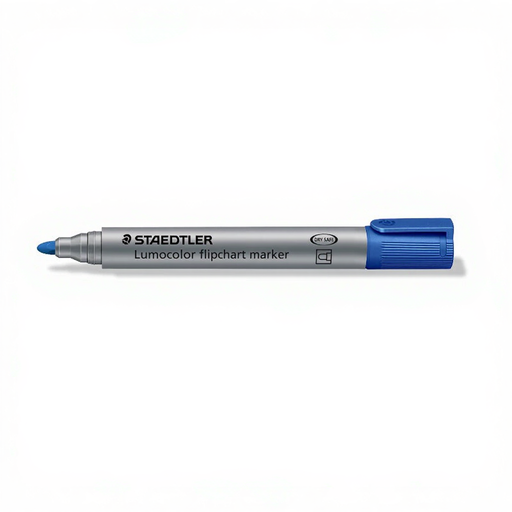
Why this product suits this profile: The 2 mm round tip and water-based ink are designed for flipchart paper, meetings and teaching.
Its clear focus on paper helps you avoid using a permanent marker for presentations, where bleed-through or strong odours may be unwelcome.
Blue, low-odour ink, a 2 mm round tip and refillable according to the product details.
We’ve put together a complete, regularly updated list of products that meet these strict selection criteria and fully comply with the safety regulations in force in the EU.
How long it lasts depends on the amount of ink, line width, writing pressure, surface and cap. A fine tip usually uses less ink than a broad chisel tip when covering the same area. Refillable models can be used for longer with the right refill ink. It isn’t possible to give a general figure for how long a marker will last without information from the manufacturer.
No. Check the terms separately. For a waterproof marker, it’s important to know which surfaces and conditions the claim applies to. For long-lasting marks outdoors, lightfastness and weather resistance matter too.
Suitable cleaning products may help on smooth, non-sensitive surfaces. On porous materials, the ink often soaks in and can be difficult to remove. Test the cleaning product on an inconspicuous spot first. Skin, textiles and painted surfaces may all react differently.