Holidaymakers with limited kitchen space
If you want to make one portion and keep the number of containers to a minimum, a blending cup with a drinking lid is a practical choice.


For stoned, chopped apricots and liquid, a compact blender with a cup sized for the portion you want is a sensible place to start; a drinking lid means you won’t need another container. Choose a mains-powered model if there’s a suitable socket where you plan to blend, or consider a rechargeable blender if you’d like to blend without a socket. For ice and firmer ingredients, check that the specific model is explicitly approved for them; wattage alone isn’t enough.
If you want to make one portion and keep the number of containers to a minimum, a blending cup with a drinking lid is a practical choice.
If you’d like to blend away from a mains socket, a rechargeable model could be a good option. Remember to plan how you’ll charge it.
If you’d like to use ice or firmer ingredients as well as fresh apricots, check the specific model’s approved ingredients and operating limits.
| What to look for | What to check | Who it matters most to |
|---|---|---|
| Portion size and storage | Check the number of cups, capacity and drinking lid included with the specific set. | If I have limited space in my holiday cottage kitchen, I want the cup to hold my portion and be easy to take with me. Around 36% of consumers put portion size and space-saving design first. |
| Cleaning and taking it with you | Only put parts in the dishwasher if they’re explicitly approved for it; check the lid and what’s included. | If I use the blender often during my stay, I want the cup and lid to be easy to clean and the drink to be easy to seal. Around 29% of consumers prioritise easy cleaning and portability. |
| Blending without a socket | Check for a socket where you plan to blend; for rechargeable models, check the charging accessories and approved ingredients. | If there’s no mains socket where I want to blend, I’d like the freedom to choose where I use it and can plan to charge it. Around 21% of consumers particularly value being able to blend without a socket at their chosen location. |
| Ice and firm ingredients | Check the specific model’s instructions for approval to blend ice, any required liquid and the permitted operating time. | If my recipe includes ice or firmer ingredients, I want to know which ones the blender is explicitly approved to process. Around 14% of consumers put ingredient versatility first. |
The German Federal Institute for Risk Assessment warns that bitter apricot kernels can cause poisoning because they contain amygdalin.
Remove the stones and use only the prepared apricot flesh.
An independent comparison by IMTEST highlights differences in how blenders process fibrous ingredients. Wattage alone therefore doesn’t tell you how well a particular recipe will turn out.
For ingredients other than ripe apricots and liquid, check which ingredients the exact model is approved for and look for relevant comparison results.
The models mentioned here differ in the number of cups supplied and whether they’re approved for ice. Features of one appliance don’t automatically apply to other models from the same brand.
Before buying, compare what’s included and which ingredients the specific model is approved to process.
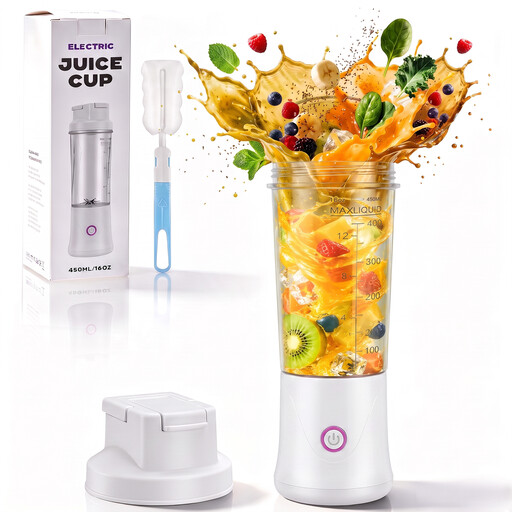
The Kult X Mix & Go is a compact mains-powered blender with a blending and drinking cup.
The Blend & Go HR2672/00 is designed for people who want two drinking cups and dishwasher-safe parts.
The Flex NBP013OR is a rechargeable option, while the Turbo NBT1004MW is a separate mains-powered model.
The SM 3743 is a mains-powered blender with an explicitly stated crushed ice function.
The BlendBoss is a tested personal blender with a travel cup; this assessment applies only to this model.
This selection includes personal blenders for smoothies, including models with cups for blending and drinking, as well as explicitly rechargeable options.
 No image available
The travel cup is designed for a smoothie you can make and take with you in the same cup.
710 ml travel cup; three pre-set automatic programmes; described in the product name as suitable for crushing ice; removable, dishwasher-safe parts.
 No image available
If you’re looking for a personal blender for smoothies or shakes, the product name describes a portable blender with a drinking cup.
 No image available
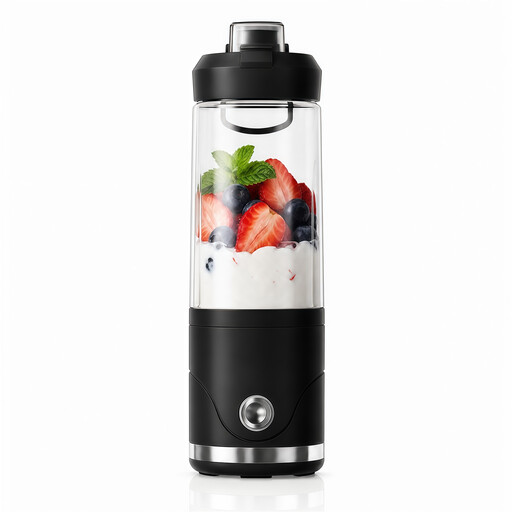
If you don’t want to use a socket where you’re blending, a blender described as rechargeable in the product name could be a suitable type of appliance.
USB-C charging port; six blades.
 No image available
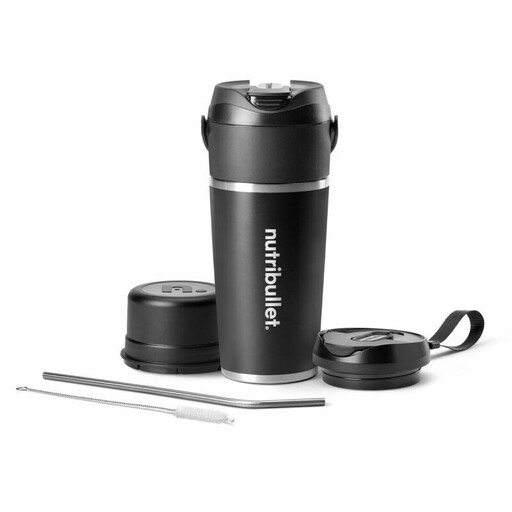
This portable blender is worth considering if you’re looking for a rechargeable blender to take with you.
According to the product description, ice crushing is limited to ice cubes, with a maximum of 3–4 cubes per use. The blade assembly must be washed by hand; the cup is dishwasher-safe.
 No image available
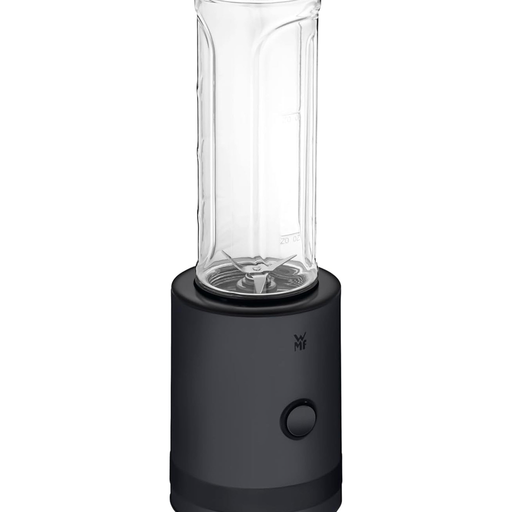
Two containers for blending and drinking make this a good option if you want to prepare several portions.
Two containers, each with a capacity of 0.6 litres; 300 W. According to the product description, don’t run it for more than one minute at a time, don’t use boiling liquids and observe the maximum temperature of 60 °C.
Use fresh fruit with no signs of spoilage. Wash it and remove the stone before chopping the flesh and blending it with liquid. Bitter apricot kernels should never go in a smoothie: the German Federal Institute for Risk Assessment warns of the risk of poisoning.
The German Federal Institute for Risk Assessment recommends drinking freshly made smoothies as soon as possible. Until then, it advises keeping them at no more than 7 °C where possible and consuming them on the day they’re made. Check whether your holiday cottage has suitable refrigeration.
Only if the manufacturer approves this for the specific part. Philips lists dishwasher-safe parts for the HR2672/00; nutribullet describes the removable blade on the Flex as dishwasher-safe. This doesn’t mean the motor base or every part of the appliance is approved for the dishwasher.
According to the Verbraucherzentrale (German consumer advice centre), you have statutory rights against the seller for two years from the date the product is handed over; a manufacturer’s guarantee is separate. For sales contracts from 31 July 2026, the Verbraucherzentrale also describes an additional information duty for the seller and the possibility of a one-off extension to the time limit if you choose a repair.
No. The European Union explains that, by applying the CE marking, the manufacturer declares that the product meets the relevant EU requirements; electrical and electronic equipment is among the product groups covered. You need to assess the relevant rules for the specific mains-powered or rechargeable version, and whether it complies, on a product-by-product basis. The CE marking alone isn’t an independent test.