
Lieferung heute & morgen

Qualitätsgarantie

Willkommens-Angebote freischalten: KOSTENLOSE Lieferung | Bis zu 80 % RABATT | Kostenlose 30-Tage-JoyPlus-Testphase
App herunterladen
A personal blender should work quickly in everyday life, take up little space and be easy to transport. For professionals, sportspeople, commuters or travellers, a portable blender with a rechargeable battery may initially sound like a straightforward solution. In practice, however, some product claims and design details can lead to disappointing purchases.
A high wattage sounds like plenty of power, but on its own it says little about the actual blending results. What matters is how the motor, blade design, container size, speed, operating time and ingredients work together.
A compact mini blender with a rechargeable battery is not automatically suitable for large ice cubes, nuts or very thick mixtures. A corded appliance such as the HoninJoy Smoothie Blender, on the other hand, is specified with 650 W peak power and a pulse function. This may be relevant for shakes, soft fruit and certain grinding tasks, but it does not replace checking the instruction manual.
The cup size does not always correspond to the maximum recommended filling quantity. According to the product specifications, the Ninja Blast Blender’s cup holds 530 ml, but the maximum blending fill is 470 ml. If a container is overfilled, ingredients may circulate less effectively or liquid may escape.
A rechargeable blender is only practical for everyday use if its charging port, charging time and number of cycles per charge suit your routine. You should also check which parts can be removed and which are dishwasher-safe. A permanently integrated blade can simplify operation, but requires particular care when cleaning.
For a blender for shakes and smoothies, the following specifications are particularly relevant:
An ice-crushing blender should only be chosen if the manufacturer explicitly states that it is suitable for processing ice. With portable appliances, the quantity and size of the ice cubes, as well as the amount of liquid, may be limited.
A USB-C blender can generally be charged conveniently using suitable power sources. However, charging times and battery life vary. The Ninja Blast Blender is specified with a full charging time of approximately two hours and more than ten blending cycles per charge. For the nutribullet Flip NBP016B, more than 14 cycles of 30 seconds each are stated.
You should also look out for:
A portable stand blender with an integrated drinking vessel saves you having to transfer your drink. On longer journeys, a double-walled stainless-steel cup can help maintain the temperature. However, this often increases the weight.
With a smoothie maker, the cup, lid, blades and motor unit regularly come into contact with food or liquid. Statements such as ‘BPA-free’ should refer specifically to the plastic parts named. The motor unit must not be immersed in water on the models featured.
Useful features include:
Hot liquids are expressly not intended for use with several compact models. Hard objects such as metal, stones or unsuitable bones should never be placed in a personal blender either.
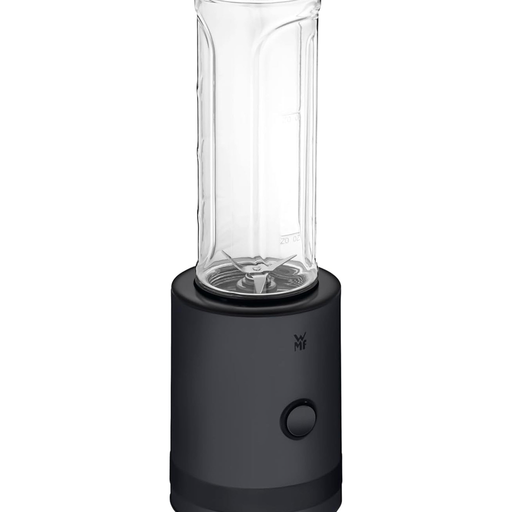
Why this product suits this profile: This compact appliance works at 300 W, comes with two 0.6-litre containers and does not need charging. This straightforward set-up is ideal for the kitchen, office or occasional smoothies.
The maximum fill quantity of 600 ml is clearly stated. According to the product description, the containers and lids are dishwasher-safe.
Two 0.6-litre drinking containers, 23,000 rpm according to the product specifications, and a safety shut-off.
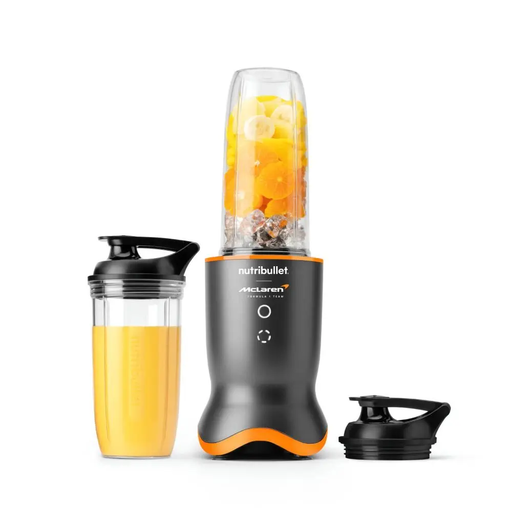
Why this product suits this profile: The 1200 W motor, two Tritan Renew cups with capacities of 700 and 900 ml, and an illuminated control panel make this a good choice for users who regularly prepare larger individual portions.
The instructions specify 30-second cycles and a cooling break. This helps put the stated motor power into context within the intended operating limits.
1200 W, titanium-coated extraction blades and two cups with to-go lids according to the manufacturer’s specifications.
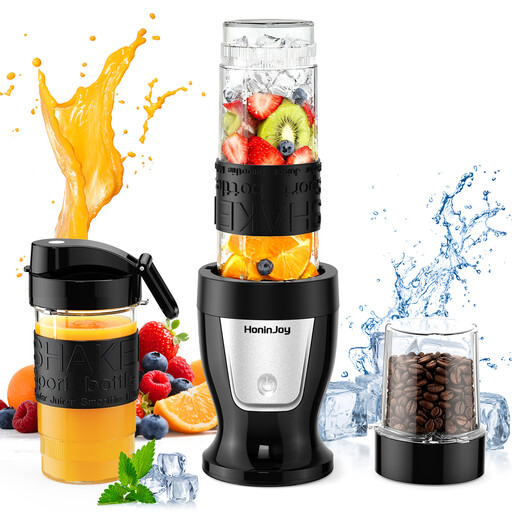
Why this product suits this profile: Two portable cups with capacities of 20 and 14 oz, plus a grinding cup, make this model appealing to households that want to process coffee or spices as well as prepare smoothies.
The pulse function, overheating protection and cup locking mechanism address common issues during frequent use.
650 W peak power, two BPA-free sports cups and an additional grinding cup according to the product description.
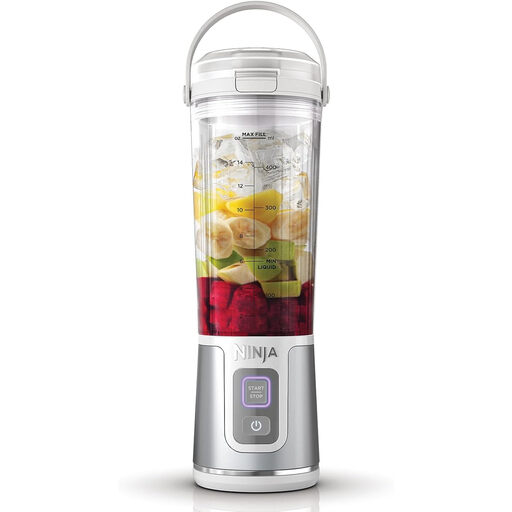
Why this product suits this profile: Its cordless design, carrying handle and drinking lid make it suitable for the office, gym, park or travel luggage.
The maximum blending fill of 470 ml is listed separately. The USB-C port and rechargeable battery eliminate the need for a fixed power cable at the point of use.
USB-C charging, more than ten blending cycles per charge according to the product specifications, plus a dishwasher-safe cup and lid.
We have put together a complete, regularly updated list of products that fully meet these strict selection criteria and the safety regulations applicable in the EU.
That depends on the model and the manufacturer’s specifications. Some appliances explicitly list ice or frozen fruit as suitable ingredients. Even so, use enough liquid, observe the maximum fill quantity and follow the specified size or number of ice cubes.
Battery life is usually given as a number of blending cycles. Examples from the product data include more than ten cycles for the Ninja Blast Blender and over 14 cycles for the nutribullet Flip NBP016B. Actual battery life depends on the ingredients, temperature, charge level and operating time per cycle.
A rechargeable blender offers greater flexibility for use in the office, gym or while travelling. A corded mini blender, on the other hand, does not need recharging and can be more practical for a fixed place in the kitchen. The key considerations are therefore less about broad promises and more about where you will use it, the portion size you want, the cleaning involved and the ingredients you regularly intend to process.