
Lieferung heute & morgen

Qualitätsgarantie

Willkommens-Angebote freischalten: KOSTENLOSE Lieferung | Bis zu 80 % RABATT | Kostenlose 30-Tage-JoyPlus-Testphase
App herunterladen
A personal blender should make smoothies, shakes and dips quickly without taking up much space. In practice, though, different models can vary considerably. A portable smoothie maker for your commute has different requirements from a countertop blender for the kitchen. A low price can also be misleading if the battery life, container size or cleaning requirements don’t suit the way you plan to use it.
This guide explains which technical details matter and which features are best suited to different everyday needs.
A high wattage may sound impressive, but on its own it tells you little about the results. You should also consider:
A battery-powered blender won’t always match the performance of a mains-powered countertop blender. It can be handy for individual portions, while larger quantities call for more motor power and a bigger capacity.
A portable blender with a stainless steel container may be sturdy and insulated, but it can weigh more than a plastic cup. Before buying, check whether it will actually fit in your work bag, rucksack or cup holder.
Look out for:
A mini blender with a hard-to-reach blade fitting can mean extra work after every use. With a battery-powered model, you’ll also need to think about charging. A model with USB-C is convenient to charge on the go, but you should only use the supplied cable and a suitable power adapter.
Many models have a motor unit that must not be immersed in water. The blades and lid therefore need to be cleaned separately and with care.
If you regularly want to blend frozen fruit, ice cubes or nuts, check the manufacturer’s guidance on what the blender can handle. A stated ice-crushing function is more useful than wattage alone. Some models are specifically designed for frozen ingredients, while others are better suited to soft fruit, liquids and lighter mixtures.
A blender with a grinder can also process dry ingredients such as coffee or spices. Make sure it comes with a separate grinding cup. Using containers that aren’t approved for the appliance may affect its safety and performance.
A capacity of around 400 to 700 millilitres is often enough for one portion. A larger container is useful if you’re making drinks for several people or want to prepare bigger quantities.
If you’re looking for a BPA-free blender, check that this is stated explicitly in the product details. BPA-free plastic can be lightweight and shatter-resistant, while stainless steel offers extra durability and, in a double-walled design, insulation. An insulated container doesn’t replace proper refrigeration, though, and shouldn’t be used for hot liquids if the manufacturer advises against it.
A smoothie blender for on the go usually runs on preset cycles or has a start button. Check:
Mains-powered models don’t need charging breaks. However, they’re less flexible and need a permanent spot in the kitchen.
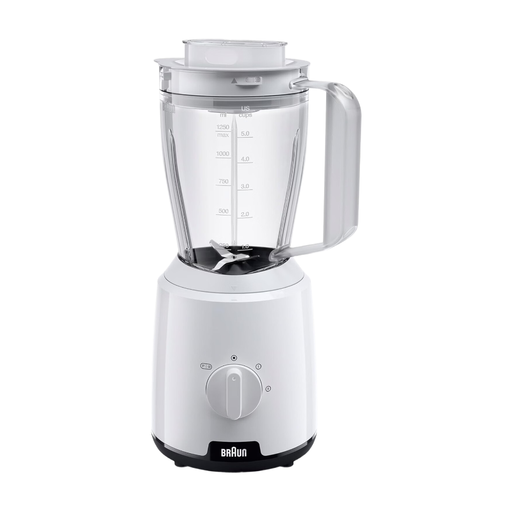
Why it suits this profile: This mains-powered countertop blender is a good choice for households that want to avoid battery charging and regularly prepare larger quantities. Its 1.5-litre jug is suitable for smoothies, purées and dips.
The 600 W power rating is backed up by two speeds, a pulse function and a separate ice-crushing function. A safety system prevents the blender from operating if the jug isn’t locked in place correctly.
1.5-litre jug, two speeds plus pulse function, and removable parts that are dishwasher-safe according to the product details.
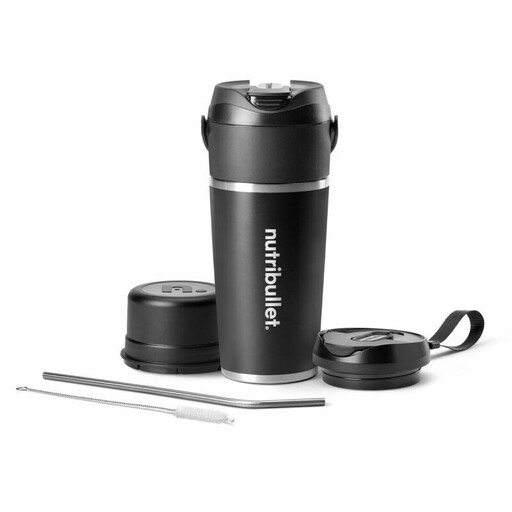
Why it suits this profile: This battery-powered blender combines portability with an insulated stainless steel cup. It’s designed for commuters, sports enthusiasts and travellers who want to drink straight from the container.
The product details list an 11.1 V battery, USB-C charging and more than 14 blending cycles per full charge. It’s recommended for short cycles; avoid overfilling it or adding hot liquids.
590 ml insulated stainless steel cup, USB-C port, carry handle, and a drinking lid and stainless steel straw included.
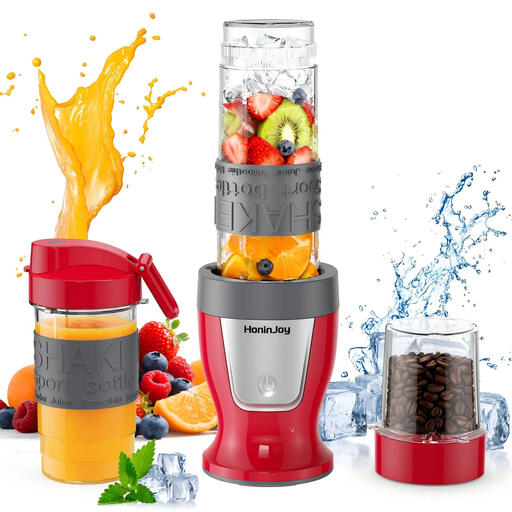
Why it suits this profile: This model is well suited to small kitchens, student accommodation and households that want to use a separate grinding cup for coffee or spices as well as making smoothies.
The model combines 650 W of power with a pulse function, overheat protection and a locking mechanism. The separate grinding cup means you don’t have to process dry ingredients in the smoothie cup.
Two BPA-free cups, a grinding cup, and cups and lids that are dishwasher-safe according to the product description.
We’ve put together a complete, regularly updated list of products that meet these strict selection criteria and fully comply with the safety regulations in force in the EU.
It depends on the model. Look for an explicit recommendation for frozen ingredients or an ice-crushing function. Depending on the instructions, you may need to add enough liquid and stay within the maximum fill level. Hard objects such as metal or stones should never go in the container.
Battery life is usually given in blending cycles. The product description for the nutribullet Flip NBP016B states that it can manage more than 14 cycles per full charge, each with short operating intervals. The actual number of cycles you get will depend on the ingredients, temperature, charge level and how often you use it.
Many models can be rinsed straight after use with water and a little washing-up liquid. Some removable cups and lids are suitable for the top rack of the dishwasher. However, the motor unit and charging port must not be immersed in water. Only handle sharp blades by their designated plastic fitting.