
Lieferung heute & morgen

Qualitätsgarantie

Willkommens-Angebote freischalten: KOSTENLOSE Lieferung | Bis zu 80 % RABATT | Kostenlose 30-Tage-JoyPlus-Testphase
App herunterladen
A personal blender should be quick to use at the office, gym, halls of residence or when travelling. In practice, though, not every model suits every lifestyle. A high wattage rating doesn’t automatically mean a blender can reliably handle frozen ingredients. And while a cordless blender may be portable, a small battery or limited capacity could make it unsuitable for preparing several portions.
This buying guide explains which specifications really matter when choosing a smoothie maker, portable blender or USB-C blender, and how to avoid common buying mistakes.
Corded appliances often list a motor power rating in watts. This may refer to the maximum or nominal power. A 900-watt personal blender won’t automatically be suitable for every ingredient. Other important factors include:
An ice-crushing blender should only be used as described in the instruction manual. Large ice cubes, hard dry ingredients or an overfilled container can put strain on the motor and blades.
A compact blender for on-the-go use may come with a travel cup, but still need to be plugged into a socket. A truly cordless blender has a battery and is usually charged via USB-C. Battery life, charging time and the number of blending cycles are therefore useful points of comparison.
Weight matters too: an insulated stainless steel cup keeps drinks cool for longer, but can be considerably heavier than a small Tritan or plastic cup.
The stated cup capacity isn’t always the same as the usable blending capacity. There may be a difference between the total volume and the maximum fill mark. For commuters, a container of around 470 to 590 millilitres is often enough. If you want to make larger portions or prepare several drinks, look for a capacity of around 700 to 925 millilitres or a model with multiple cups.
For soft fruit, yoghurt and liquids, a compact motor is enough for many uses. Frozen fruit, nuts and ice, on the other hand, require a suitable design and enough liquid. Always check claims such as ‘suitable for ice’ alongside the maximum permitted number of cubes and recommended running time.
Short bursts are best when using corded models. For example, the nutribullet Pro NB907CP specifies pulse use for less than 60 seconds at a time. According to its product specifications, the WMF Küchenminis Smoothie-to-Go Mini Blender has 300 watts of power and runs at 23,000 revolutions per minute. These are technical specifications, but they don’t prove quality on their own.
A BPA-free blender may appeal if you look for containers made from materials specifically labelled as such. The product description should clearly state whether the cup, lid and blades are dishwasher-safe. The motor unit of a battery-powered blender must never be immersed in water.
Useful features include:
Before buying, check that the product comes with a German instruction manual, and read the manufacturer’s information and electrical safety guidance. Look for a CE marking, a suitable power supply and clear instructions on indoor use. Battery-powered models should also include charging instructions, battery disposal information and warnings about moisture.
Only blend hot liquids if the manufacturer explicitly says it is safe to do so. Heat can cause pressure to build up inside sealed containers. Never touch the blades while the blender is running or being cleaned.
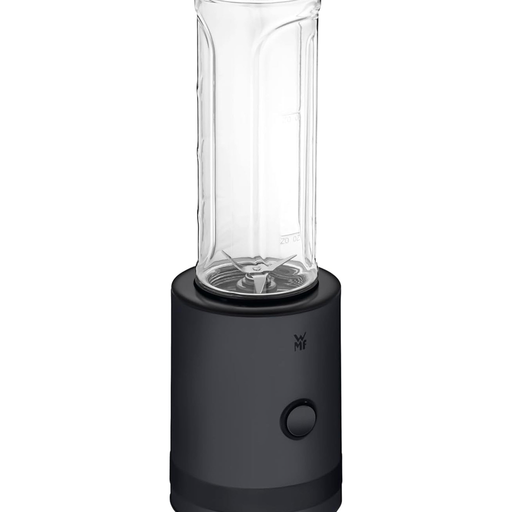
Why it suits this type of user: This corded model is designed for small kitchens and single portions, and comes with two 0.6-litre containers.
The product specifications state a power rating of 300 watts, a maximum capacity of 600 millilitres and a safety cut-out that works when the container is correctly fitted.
Two Tritan containers with leak-proof lids, a compact design and dishwasher-safe containers.
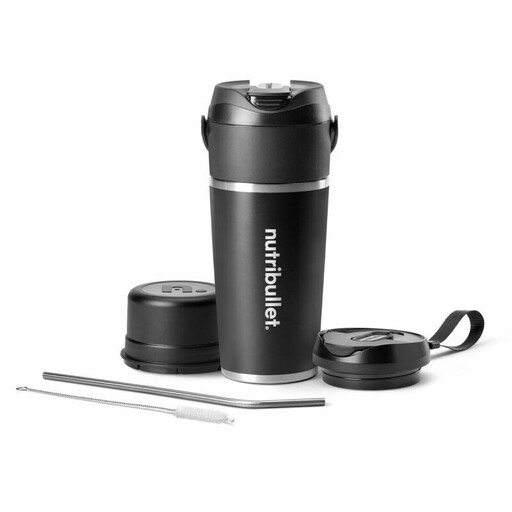
Why it suits this type of user: This portable blender combines a rechargeable battery and USB-C charging with an insulated stainless steel cup holding 590 millilitres.
The product description states that it provides more than 14 cycles per charge and specifies a limit for ice cubes. This makes it easier to set realistic expectations for battery life and use.
USB-C charging port, insulated stainless steel cup and an integrated blade mechanism in the lid.
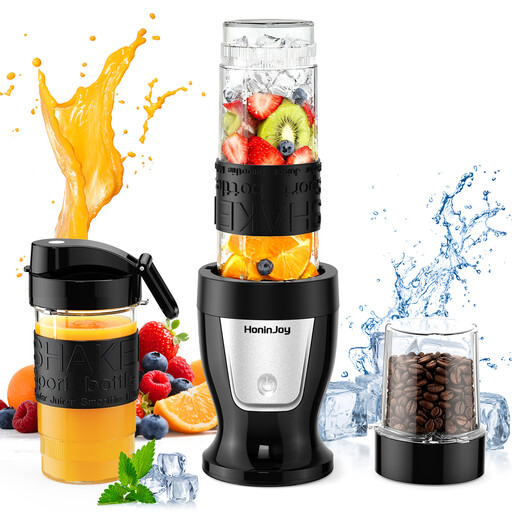
Why it suits this type of user: This model combines a 650-watt motor with two BPA-free travel cups and a separate grinding cup for dry ingredients.
The specifications list a pulse function, overheat protection and a locking mechanism that prevents operation if the cup isn’t fitted correctly.
Two cups holding 20 and 14 ounces, dishwasher-safe accessories and an extra grinding cup.
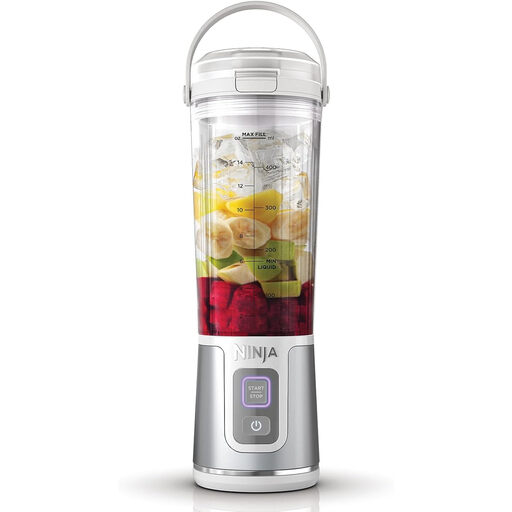
Why it suits this type of user: According to the product specifications, this cordless blender weighs 790 grams, has a carry handle and runs on a USB-C rechargeable battery.
The maximum blending capacity of 470 millilitres is clearly stated. This makes it easy to distinguish the usable fill level from the nominal 530-millilitre capacity.
BPA-free cup, leak-proof drinking lid, carry handle and, according to the supplier, more than ten blending cycles per charge.
We’ve put together a complete, regularly updated list of products that meet these strict selection criteria and the safety regulations in force in the EU.
It depends on the motor, blade shape, amount of liquid and the manufacturer’s guidance. Frozen fruit should usually be cut into smaller pieces and blended with enough liquid. When blending ice, stick to the stated maximum quantities.
Battery life is usually given as the number of blending cycles per charge. This varies depending on the ingredients, temperature, amount in the cup and how long you use the blender for. A USB-C blender should be fully charged and stored somewhere dry. Stop using it if the battery swells, you hear unusual noises or the blender becomes very hot.
For a corded model, electricity use depends on its power rating and how long it runs. A blending cycle often takes just a few seconds, so each use is usually brief. Battery-powered models also lose some energy during charging. For running costs, the main factors are how often you use the blender, how frequently you charge it and its actual running time.