
Lieferung heute & morgen

Qualitätsgarantie

Willkommens-Angebote freischalten: KOSTENLOSE Lieferung | Bis zu 80 % RABATT | Kostenlose 30-Tage-JoyPlus-Testphase
App herunterladen
A personal blender should be quick to use day to day, take up little space and ideally let you enjoy your smoothie straight from the blending cup. That makes a compact model a more practical choice than a large countertop smoothie blender for people with busy jobs, commuters, sports enthusiasts, students and anyone with a small kitchen.
However, a high wattage or claims such as ‘suitable for ice’ don’t automatically mean a blender is right for you. What matters is how you plan to use it, the cup size, the power supply and how much effort it takes to clean.
A powerful motor can indicate good blending performance, but wattage alone doesn’t tell you everything. The blade design, pulse function, maximum fill level and permitted running time all affect the results. A lower-powered cordless blender should also be judged differently from a mains-powered mini blender.
If you regularly blend frozen fruit, nuts or ice, check the manufacturer’s guidance on suitable ingredients and maximum load. Portable models often have lower capacity and need shorter blending cycles.
A USB-C blender is handy for the office, the gym or travelling. However, its compact design usually means a smaller capacity. For example, the nutribullet Portable NBP003B has a 475 ml cup. That’s enough for one serving, but not designed for several people.
You should also check how many blending cycles the manufacturer says you can get from a full charge. Actual use may vary depending on the recipe, ingredients and charge level. A cordless blender is particularly useful when there isn’t a socket nearby.
A blender with a travel cup saves you having to transfer your drink, provided the drinking lid and blending cup work well together. However, the blade assembly, seals and lid still need cleaning. Claims such as ‘dishwasher-safe’ often apply only to certain parts, and may specify the top rack.
Never immerse the motor base or plug in water. For cordless models, keep the motor area out of water too. Take care when handling sharp blade attachments.
For soft fruit, yoghurt and liquids, a compact smoothie maker will be enough for many recipes. When blending frozen ingredients or ice, a suitable stainless steel blade attachment, enough liquid and an appropriate serving size matter more than the wattage alone.
A blender used for crushing ice should be specifically designed for it. Some models allow only a limited number of small ice cubes. Hard objects, oversized ice cubes or dry ingredients without liquid can overload the blades and motor.
For a single serving, around 450 to 600 ml is often enough. Larger cups of 700 to 925 ml are better suited to bigger portions. The products mentioned use different materials, including BPA-free Tritan and suitable plastic or stainless steel containers.
It’s also worth looking for a clearly marked maximum fill line, a secure-fitting lid and a shape that fits in your bag, rucksack or cup holder. An insulated stainless steel cup can be handy on longer journeys, but it’s usually heavier than a plastic one.
Mains-powered appliances, such as a conventional smoothie blender, need a socket but usually provide a steady power supply. USB-C models are more flexible to charge, but need to be sufficiently charged before use. Check whether the product includes a charger or just a cable, and how many cycles the manufacturer says you can get per charge.
An automatic start function or one-button operation makes blending simpler. On some models, safety locks prevent the blender from working if the cup or blade base isn’t fitted correctly.
The selection below compares different personal blenders by their features and how they suit everyday use.
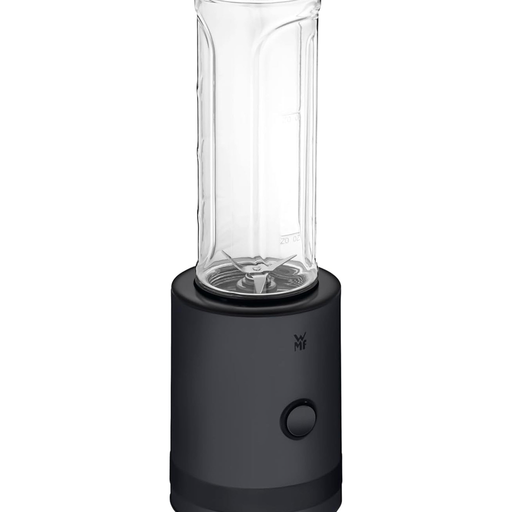
Why it suits this profile: This compact mini blender has a 300-watt motor and comes with two 0.6-litre cups. It’s ideal for single servings in small kitchens.
The maximum fill level is clearly marked at 600 ml. The cups are used for both blending and drinking, so there’s no need to transfer your drink.
Two Tritan cups, leakproof screw lids and a four-blade stainless steel assembly. The cups and lids are dishwasher-safe.
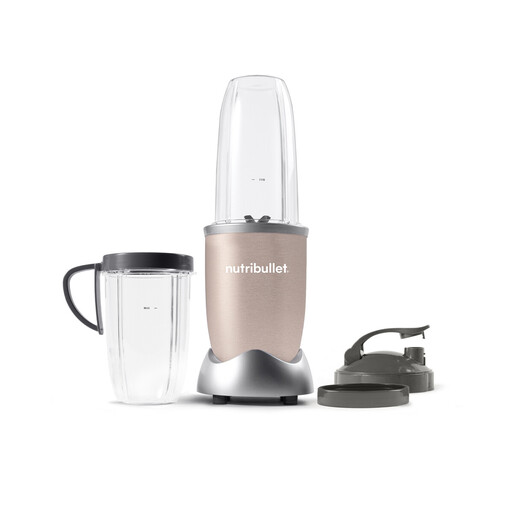
Why it suits this profile: This mains-powered personal blender has a 900-watt motor and comes with two BPA-free cups, with capacities of 925 ml and 700 ml.
Blend in short bursts of less than 60 seconds. The instructions also point out the maximum fill line and the need to allow the appliance to cool down between uses.
A 900-watt motor, six stainless steel blades, and cups, lids and blade assembly that are listed as dishwasher-safe in the product details.
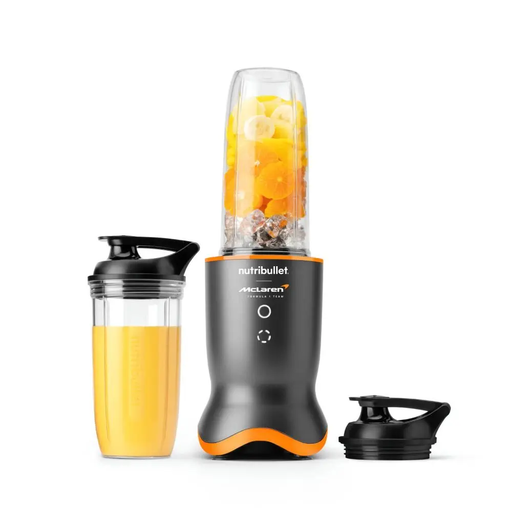
Why it suits this profile: This 1,200-watt blender is designed for people who regularly make larger single servings and blend frozen ingredients, nuts or ice.
It’s designed for short blending cycles of around 30 seconds. A suction base and maximum fill line help keep it stable and make blending easier to control.
A 1,200-watt motor, pulse function and two Tritan Renew cups, with capacities of 700 ml and 900 ml. The cups are listed as BPA-free in the product details.
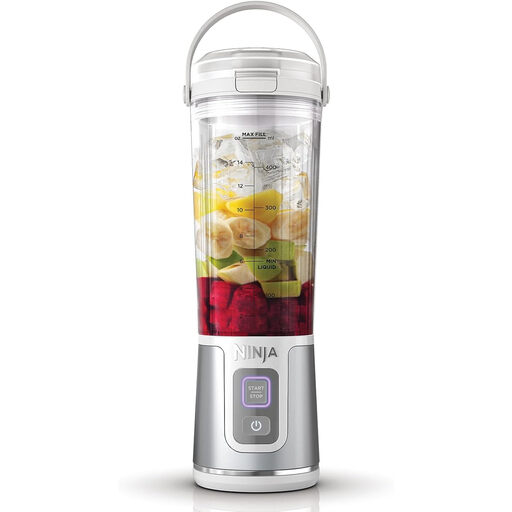
Why it suits this profile: This portable blender works wirelessly, charges via USB-C and has a carry handle and drinking lid.
The maximum blending capacity is 470 ml, clearly distinguished from the cup’s total capacity of 530 ml. The blade cover is used for storage.
According to the product details, it offers more than ten blending cycles per charge, takes around two hours to charge and comes with a two-year warranty.
We’ve put together a complete, regularly updated list of products that meet these strict selection criteria and fully comply with the safety regulations in force in the EU.
For an even blend, add liquids to the cup first, followed by soft ingredients and then hard or frozen ones. Don’t exceed the maximum fill line. For thicker mixtures, use short pulses and pause briefly if needed.
Only add hot liquids if the manufacturer explicitly says it’s safe to do so. Steam can build up pressure in many personal blenders. Rinse the blades carefully after use, and clean the motor base with a damp cloth only.
Yes, as long as the cup is large enough and the ingredients stay within the recommended fill level. Add the liquid first. A short pulse can help break up lumps when using protein powder, yoghurt or frozen fruit.
There’s no single answer, as it depends on how often you use it, what you blend, how you clean it and whether you follow the recommended running times. Overfilling, hard foreign objects and continuous use without a cooling break can put extra strain on the motor and blades.
Small cordless blenders use relatively little electricity per blending cycle, but consumption depends on the battery capacity, charge level and number of cycles. For running costs, the main factors are how often you recharge it and how frequently you use it. It’s also important to keep the USB-C port dry and use a suitable charger.